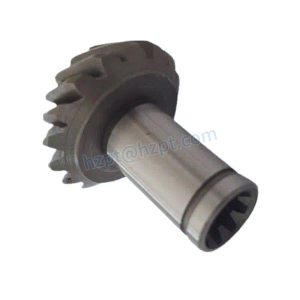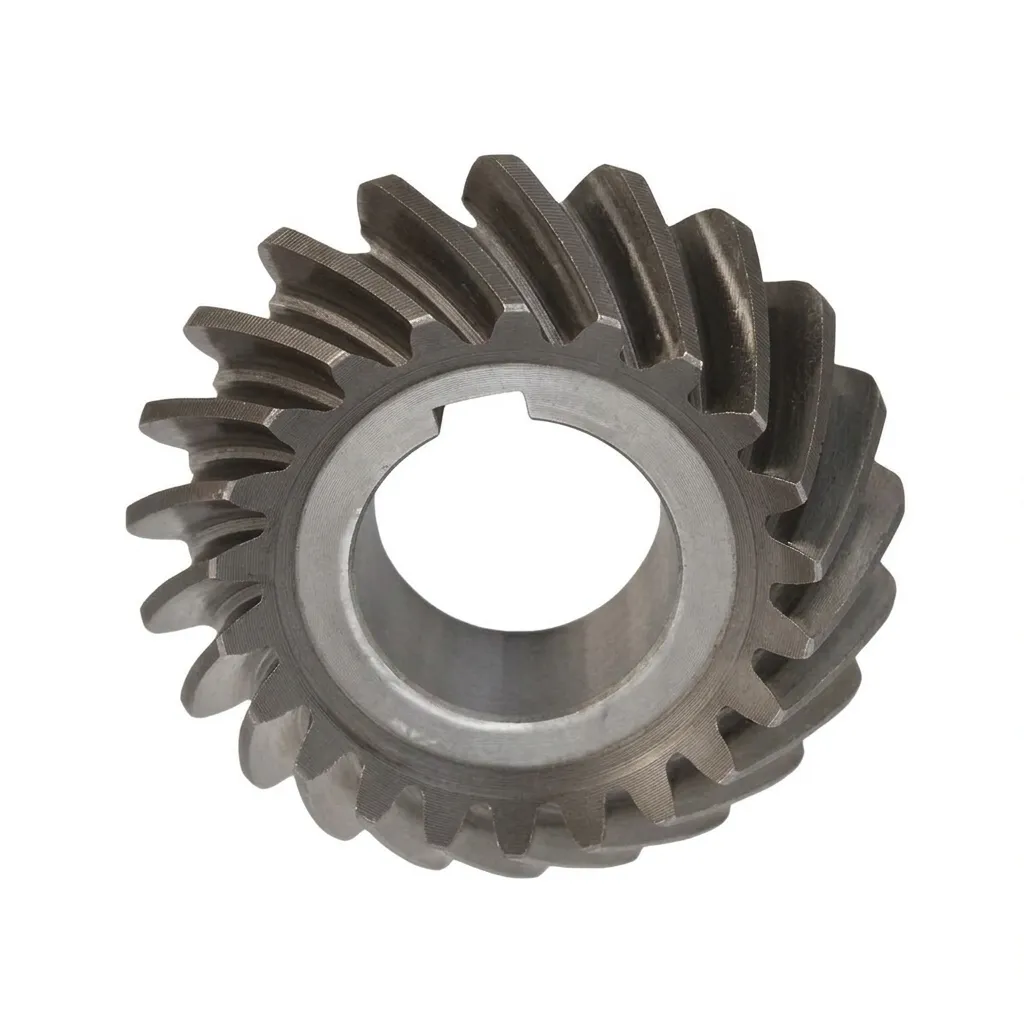
Industrial Bevel Gears
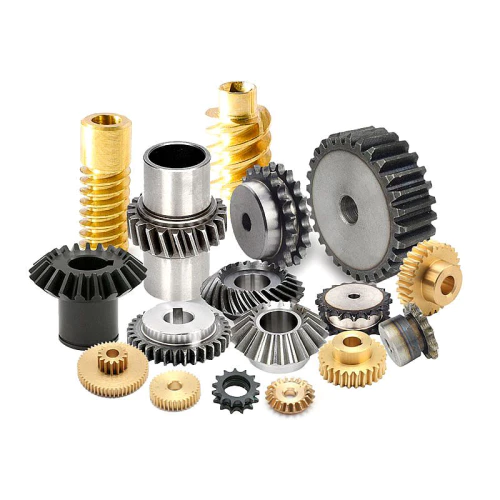
As one of the bevel gears manufacturers, suppliers, and exporters of mechanical products, We offer bevel gears and many other products.
Please get in touch with us for details.
Mail:[email protected]
The Complete Sourcing Guide for Australian Heavy-Industry Buyers
Unplanned drivetrain failures in Australian heavy industry cost an average of $15,000–$80,000 per incident when industrial bevel gears are under-specified or incorrectly sourced — a figure that climbs significantly in mining and oil-machinery operations where hourly production losses stack rapidly. An industrial bevel gear, manufactured in modules M3 through M20 with outer diameters up to ⌀1,200 mm in case-hardened alloy steel, is the backbone of right-angle power transmission in reducers, agricultural machinery, construction equipment, and marine drives across Australia. Australia Ever-Power, based at 27 Harley Crescent, Condell Park NSW 2200, supplies ISO and DIN-compliant industrial bevel gears in standard and custom configurations with same-week dispatch to Sydney, Melbourne, Brisbane, Adelaide, and Perth.
What Is an Industrial Bevel Gear?
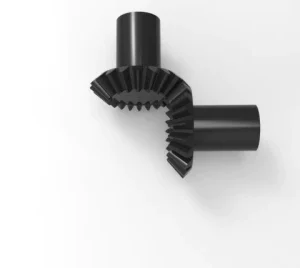
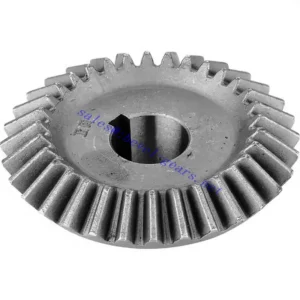
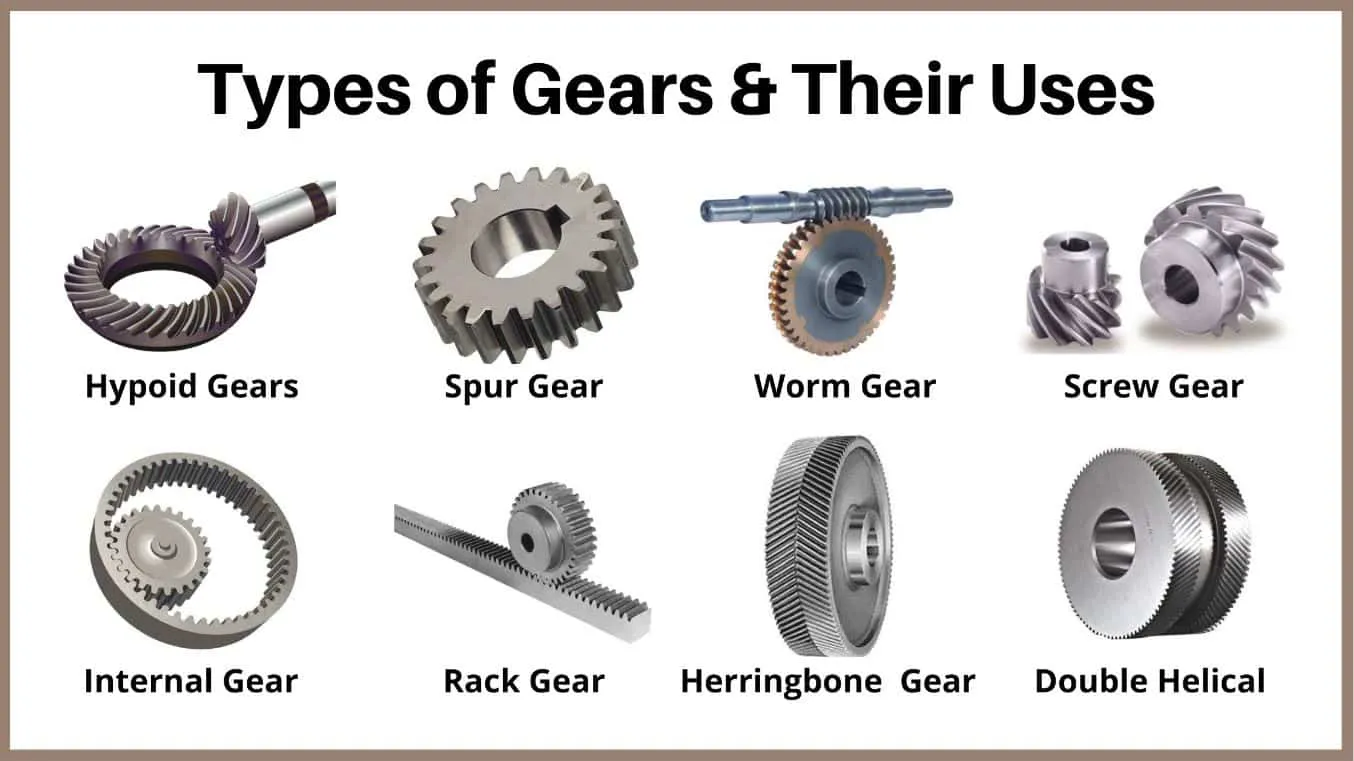
An industrial bevel gear is a large-module, high-torque conical gear component — typically Module 3 to Module 20 with outer diameters from ⌀80 mm to ⌀1,200 mm — engineered to transmit rotational power between intersecting shafts in heavy-duty drivetrain applications such as speed reducers, oil machinery, construction equipment, agricultural drives, and marine propulsion systems.
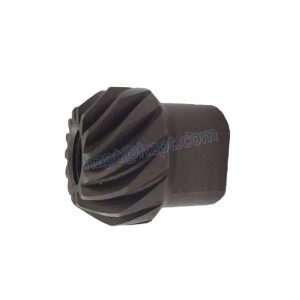
The conical tooth geometry allows shaft directions to change — most commonly at 90° — while maintaining mechanical efficiencies of 96–99% for well-specified spiral bevel configurations.
What distinguishes industrial bevel gears from precision or miniature variants is their design priority: load capacity and durability over dimensional miniaturisation. Case-hardened alloy steel grades — principally 20CrMnTi, 20CrMnMo, 42CrMo, and 20CrNi2MoA — are ground to 58–62 HRC tooth surface hardness, enabling rated torque values from several hundred newton-metres to tens of thousands of newton-metres depending on module and face width.
According to ISO 23509:2006 (Bevel and Hypoid Gear Geometry) and AGMA 2003-C10 (Rating the Pitting Resistance and Bending Strength of Generated Bevel Gear Teeth), industrial-grade bevel gears must meet specific tooth geometry, surface finish, and hardness criteria to achieve rated load capacity under AGMA service factors. In Australia, machinery containing industrial bevel gears is governed by AS 4024.1 (Safety of Machinery) and must comply with AS 2938 (Gears — General) for geometric and tolerance documentation. Accuracy classes 5–8 per GB/DIN/JIS/AGMA cover the range from high-precision CNC machine tool drives down to heavy-construction equipment where some tooth profile deviation is acceptable in exchange for cost efficiency.
For Australian procurement managers: the key distinction between an industrial bevel gear and a standard commercial bevel gear is the combination of large module (M3+), specified alloy steel chemistry, controlled heat treatment to 58–62 HRC, and full QA documentation traceability — all of which are standard requirements in mining, oil and gas, and heavy-vehicle drivetrain supply chains operating under AS 4024 and IATF 16949 quality frameworks.
Types of Industrial Bevel Gears: Tooth Forms and Steel Grades
Industrial bevel gears are specified by two independent variables — tooth form and alloy steel grade — and the interaction between them determines suitability for a given duty cycle, load profile, and operating environment.
The tables below provide a structured reference for Australian procurement managers and maintenance engineers evaluating options.
Tooth Form Comparison
| Tooth Form | Speed Range | Load Capacity | Noise Level | Primary Use |
|---|---|---|---|---|
| Straight Bevel | <500 rpm (heavy) | Medium | Moderate–High | Agricultural drives, slow construction machinery |
| Spiral Bevel | Up to 3,000 rpm | High (+25–35%) | Low | Reducers, oil machinery, marine, trucks |
| Hypoid | Medium–High | Very High | Very Low | Heavy trucks, marine final drives |
| Zerol Bevel | Medium | Medium–High | Low–Moderate | Oil machinery, moderate-duty reducers |
Alloy Steel Grade Comparison
| Steel Grade | Tensile Strength | Case Hardness | Shock Resistance | Typical Application |
|---|---|---|---|---|
| 20CrMnTi | 1,080–1,280 MPa | 58–62 HRC | High | Truck gearboxes, agricultural drives |
| 20CrMnMo | 1,100–1,350 MPa | 58–62 HRC | Very High | Heavy reducers, construction machinery |
| 42CrMo | 1,000–1,250 MPa | 38–42 HRC (through) | High | Oil machinery, marine, general heavy industry |
| 45# Steel | 600–800 MPa | 45–55 HRC (HF) | Moderate | Light-duty industrial, cost-sensitive drives |
| 40Cr | 850–1,000 MPa | 48–55 HRC | Moderate–High | Medium-duty reducers, machine tools |
| 20CrNi2MoA | 1,200–1,500 MPa | 60–64 HRC | Exceptional | Mining, offshore, heavy military drivetrains |
20CrMnTi is the most widely specified grade for industrial bevel gears across Australian manufacturing, covering the majority of truck drivetrain, agricultural machinery, and medium-duty reducer applications in New South Wales, Victoria, and Queensland. Its combination of 1,080–1,280 MPa tensile strength, excellent carburisability, and broad supplier availability makes it the cost-performance benchmark against which other grades are evaluated.
20CrNi2MoA is reserved for the most demanding industrial environments — underground mining equipment in Western Australia's iron ore operations, offshore oil platform deck machinery in the Bass Strait, and heavy military vehicle drivetrains. Its 1,200–1,500 MPa tensile strength and 60–64 HRC case hardness push the boundary of what is achievable in gear steel, at a significant cost premium of 35–60% over 20CrMnTi for the same module and geometry.
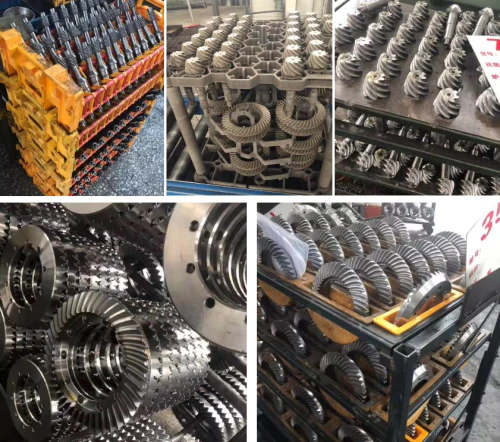
Key Specifications & Parameters for Industrial Bevel Gears
Industrial bevel gear datasheets carry more parameters than precision miniature types — getting all of them right simultaneously is what separates a gear that runs 30,000 hours from one that fails in 3,000.
The reference table below covers the full specification range available through Australia Ever-Power for standard stock and custom-manufactured industrial bevel gears.
| Parameter | Standard Range | Reference Standard |
|---|---|---|
| Module | M3 – M20 | ISO 54 preferred series |
| Outer Diameter | ⌀80 mm – ⌀1,200 mm | Custom geometry on request |
| Material | 20CrMnTi / 20CrMnMo / 42CrMo / 45# / 40Cr / 20CrNi2MoA | DIN EN ISO 683-17 |
| Heat Treatment | Carburising & quenching / Tempering / Nitriding / Carbonitriding / Induction hardening | Per material grade |
| Tooth Surface Hardness | 58–62 HRC (case-hardened) | ISO 18265 |
| Accuracy Class | Class 5–8 (GB / DIN / JIS / AGMA) | ISO 17485:2006 |
| Manufacturing Method | CNC grinding gear | Gleason / Klingelnberg method |
| Gear Position | External gear | Standard industrial configuration |
| Gear Shaft Model | Customised per customer drawing or sample | OEM / ODM |
| Quality Standard | GB / DIN / JIS / AGMA | Full QA documentation supplied |
| Warranty | 12 months from dispatch | Manufacturing defects covered |
| Delivery | Sea / Air / Express (DHL & UPS) | Standard: 30 days; express available |
Industrial Bevel Gear Manufacturing Process
The manufacturing process for industrial bevel gears in the M3–M20 range is more demanding than smaller precision types — larger modules amplify any geometric deviation, and heat treatment distortion at this scale requires precise post-grind correction to achieve rated accuracy class.
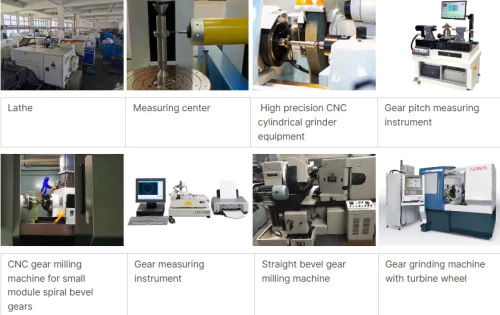
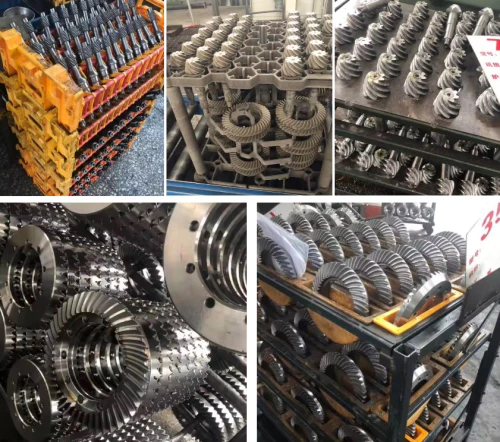
Australia Ever-Power's supply partners operate with 30+ sets of CNC machining centres, 15 CNC turning machines, and dedicated gear grinding equipment, with every production step logged in a computerised tracking system for full order traceability from raw material receipt to final shipping.
Engineering & CAD Design
Gear geometry generated in SolidWorks or AutoCAD from customer drawings, samples, or Australia Ever-Power's standard design library. FEA tooth-root stress analysis performed for M8+ modules before cutting commences. All design files retained in a password-protected document management system.
Raw Material Verification
All alloy steel ingots or forgings verified against mill certificates covering chemical composition and mechanical properties per DIN EN ISO 683-17 before any machining commences. Environmentally compliant materials used throughout — RoHS and REACH compliant where applicable. Non-conforming material is rejected at incoming inspection, not discovered at final QC.
Rough Machining
CNC turning produces gear blanks to ±0.05 mm on bore, face, and OD dimensions. Runout at this stage is verified with CMM — any blank exceeding 0.02 mm total runout is re-machined or rejected before tooth cutting. Rough machining stock allowance calculated precisely for post-heat-treatment finish grinding.
Gear Tooth Cutting
Industrial bevel gear teeth generated on CNC Gleason gear-cutting machines using face-milling (spiral bevel) or face-hobbing methods. For M3–M8, cutting cycle repeatability held to ±3 µm tooth-spacing error. For M10–M20, gear cutting is performed in multiple roughing and finishing passes to manage cutting forces and maintain geometry throughout the tooth depth.
Heat Treatment
Case carburising and quenching achieves 58–62 HRC tooth surface hardness with a case depth of 0.8–1.5 mm (module-dependent). Carbonitriding and induction hardening are available for specific steel grades where distortion must be minimised. Full time-temperature curve records are retained for every batch per QA traceability requirements.
CNC Grinding
Post-heat-treatment CNC grinding corrects thermal distortion and achieves the rated accuracy class (5–8 per DIN/GB/JIS/AGMA). Grinding removes 0.05–0.2 mm of stock to restore profile, lead, and pitch to specification. Surface finish achieved: Ra 0.8–1.6 µm for Class 7–8; Ra ≤ 0.4 µm for Class 5–6. Contact pattern confirmed by blue-dye check before final inspection.
Final QA & Dispatch
100% CMM dimensional inspection against the order specification. Full QA documentation package compiled: chemical composition report, mechanical performance report (tensile, hardness, impact), dimensional inspection report, and heat treatment records. Gears dispatched by sea freight (standard 30-day lead time) or air/express for urgent Australian orders. Every shipment is trackable through our computerised order management system.
How to Select the Right Industrial Bevel Gear for Heavy-Duty Applications
Industrial bevel gear selection involves eight interdependent parameters — and in heavy-duty applications, the consequences of getting any single one wrong are proportionally greater than in precision miniature gear drives.
The following process reflects the engineering review methodology used by Australia Ever-Power when assisting customers across Sydney, Melbourne, Brisbane, Perth, and Darwin with large-module gear specifications.
① Define Application, Shaft Angle & Gear Ratio
Confirm the application category (reducer, oil machinery, construction, agricultural, marine) — each carries different duty cycle assumptions in AGMA 2003-C10 rating calculations. State shaft intersection angle (typically 90° for industrial bevel gears) and required ratio. Ratios above 4:1 in a single stage should be reviewed for two-stage arrangement feasibility, as single-pair efficiency and load rating drop at high ratios for large-module gears.
② Calculate Design Torque with AGMA Service Factor
Design torque (kNm) = Nominal torque × KA. For heavy industrial applications: KA = 1.25 for smooth loads (pumps, fans); 1.50–1.75 for moderate shock (conveyors, compressors); 2.0–2.5 for heavy shock (crushers, mining drives). Industrial gears must be rated at a minimum 1.5× design torque — in mining applications, a 2.0× safety margin is standard per industry practice in WA and QLD mine sites.
③ Select Module Based on Torque and Space
Module selection drives gear OD, face width, and weight. For industrial drives above 5 kNm, start with M6–M10 and verify OD against the gearbox housing envelope. For very high torque (>50 kNm), M12–M20 with face widths of 80–200 mm is the typical range. Avoid selecting the smallest module that just passes the torque rating — in industrial applications, a one-size-up module selection typically improves gear life by 40–80% with modest cost impact.
④ Choose Steel Grade for Duty Cycle and Environment
20CrMnTi for standard industrial drives, trucks, and agricultural equipment across NSW, VIC, and QLD. 20CrMnMo for heavy reducers and construction machinery subject to shock loading. 42CrMo for oil machinery and marine drives where through-hardening is preferred over case carburising. 20CrNi2MoA for mining and offshore applications where failure consequences are severe and maximum material properties are required. Stainless grades available for corrosive or hygiene environments on request.
⑤ Specify Heat Treatment Method
Carburising and quenching is the standard process for case-hardened industrial gears, achieving 58–62 HRC at 0.8–1.5 mm case depth. Specify carbonitriding where simultaneous hardening and nitride layer formation provides enhanced surface wear resistance for abrasive environments. Induction hardening is used for large gears where full furnace carburising would cause excessive distortion. Tempering after quenching relieves residual stress and improves core toughness — critical for shock-loaded mining gears.
⑥ Define Accuracy Class for the Application
Class 5–6 (DIN/GB) for high-speed reducers, precision oil machinery, and marine drives where noise and positional accuracy matter. Class 7–8 for construction machinery, agricultural drives, and slow-speed heavy reducers where tooth geometry tolerance has minimal impact on performance. Over-specifying accuracy class on slow heavy drives is a common waste — Class 7 industrial bevel gears at M10 cost 20–35% less than Class 5 equivalents with no measurable performance difference below 200 rpm.
⑦ Confirm Lubrication System
Industrial bevel gears in the M3–M20 range virtually always require forced oil or splash lubrication — grease is insufficient for any continuous-duty application above 100 kW. Specify ISO VG 220 or VG 320 industrial gear oil (ISO 12925-1 Category CKD) for most reducer and oil-machinery applications. For mining and construction equipment operating in dusty environments, specify oil with anti-contamination additives and shorter change intervals (1,500–2,000 hours versus the standard 3,000–5,000 hours for clean environments).
⑧ Request QA Documentation Package
For all industrial applications, require the full documentation package: chemical composition report, mechanical performance report (tensile strength, impact, hardness), dimensional CMM inspection report against the accuracy class specification, and heat treatment records with time-temperature curves. For IATF 16949-audited automotive or mining supply chains, also specify PPAP documentation. Australia Ever-Power provides the complete package as standard — no additional charge — supporting customers' own AS 4024, ISO 9001, and industry-specific compliance requirements.
Applications of Industrial Bevel Gears in Australian Industry
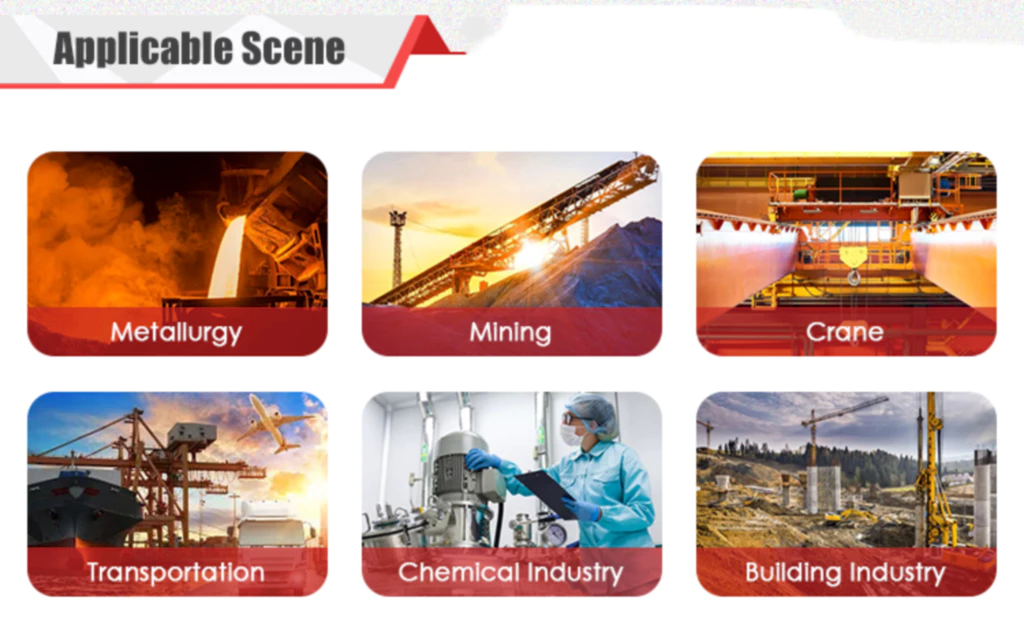
Industrial bevel gears in the M3–M20 range are the workhorses of Australian heavy industry — wherever large-scale power must change direction under sustained load, these components are at the centre of the drivetrain.
The application matrix below maps primary sectors to typical gear specifications, drawn from Australia Ever-Power's customer base across all Australian states.
| Industry | Application | Typical Module | Steel Grade | Key Requirement |
|---|---|---|---|---|
| Speed Reducers | Industrial gearboxes, wind turbine yaw (NSW, VIC) | M4–M12 | 20CrMnTi / 20CrMnMo | High efficiency, low noise |
| Oil & Gas Machinery | Pump drives, compressor heads (WA, QLD) | M6–M16 | 42CrMo / 20CrNi2MoA | Corrosion resistance, full traceability |
| Construction Machinery | Excavator swing drives, crane slewing (QLD, NSW) | M8–M20 | 20CrMnMo / 42CrMo | Shock resistance, dust environment |
| Heavy Trucks | Axle differentials, PTO units (VIC, SA) | M5–M10 | 20CrMnTi | High load, PPAP documentation |
| Agricultural Machinery | Harvesters, tractor PTOs, sprayers (SA, WA, VIC) | M3–M8 | 20CrMnTi / 40Cr | Field serviceability, cost-efficiency |
| Marine | Propulsion gearboxes, winches (QLD, VIC, WA) | M6–M16 | 42CrMo / 20CrNi2MoA | Corrosion resistance, shock loading |
| Mining | Conveyor head drives, crusher feeds (WA, QLD) | M10–M20 | 20CrNi2MoA | Maximum load capacity, extreme shock |
Mining and resources represents the largest-volume industrial bevel gear application in Australia by total gear weight, with operations in the Pilbara (WA), Bowen Basin (QLD), and Hunter Valley (NSW) driving demand for M10–M20 20CrNi2MoA gears capable of withstanding the combined effects of extreme shock loading, abrasive contamination, and wide ambient temperature swings from −5°C to +55°C. Australia Ever-Power works with mine-site procurement teams in Perth and Brisbane to ensure continuous stock availability of critical replacement gears, reducing the risk of extended unplanned shutdowns.
Agricultural machinery manufacturers in South Australia's Riverland, Victoria's Western District, and Western Australia's Wheatbelt use M3–M8 industrial bevel gears extensively in tractor PTO drives, grain harvester headers, and precision seeding machinery. The critical procurement factor in this sector is not just gear specification but guaranteed parts availability during the narrow planting and harvest windows — a supply disruption during these periods can cost a farming operation $50,000–$200,000 in delayed work.
Maintenance, Inspection & Replacement Guide for Industrial Bevel Gears
Industrial bevel gears operating within their rated torque and with correct lubrication are designed for 20,000–30,000 hours of service — but without a structured inspection programme, most fail between 5,000 and 12,000 hours due to preventable degradation modes.
The five failure categories below cover over 85% of reported industrial bevel gear failures in Australian heavy-industry operations.
⚠ Pitting & Spalling
Cause: Contact stress exceeding fatigue limit, typically from overload or insufficient service factor specification.
Fix: Verify applied torque vs. rated capacity; increase service factor to 2.0 for shock-loaded drives; upgrade to higher-strength steel grade if torque cannot be reduced.
⚠ Abrasive Tooth Wear
Cause: Contamination ingress — dust, grit, or metal particles in lubricant, common in mining and construction environments.
Fix: Upgrade housing seals to IP67; reduce oil change interval to 1,500 hours; specify oil filtration to 10 µm absolute in high-contamination environments.
⚠ Tooth Breakage
Cause: Shock load exceeding tooth bending fatigue limit, insufficient case depth, or undiscovered heat treatment defect.
Fix: Review case depth specification — minimum 1.2 mm for M8+ shock-loaded gears; request hardness survey cross-sections on next order; consider 20CrNi2MoA for improved toughness.
⚠ Misalignment Damage
Cause: Housing distortion, bearing wear, or installation error shifting contact to tooth toe or heel.
Fix: Blue-dye contact check at next shutdown — contact patch should cover 50–65% of face width, centred. Realign with shims; replace worn thrust bearings; re-check backlash against manufacturer specification.
⚠ Lubricant Failure
Cause: Overextended oil change interval, wrong viscosity grade, or thermal degradation in high-ambient environments.
Fix: Implement oil analysis programme (ISO 4406 particle count + viscosity check every 500 hours); switch to synthetic ISO VG 320 for high-temperature installations above 70°C sump temperature.
Replacement Criteria
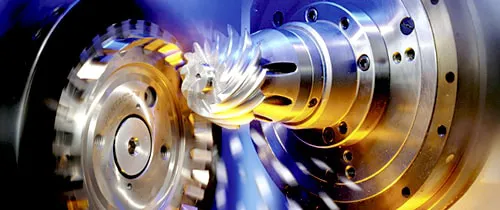
Industrial bevel gears should be replaced when: pitting or spalling covers more than 20% of the active face width (more conservative than the 30% threshold for precision gears, due to higher consequences of failure); tooth root cracks are detected by magnetic particle inspection; backlash has increased beyond 2× the design value; or hardness testing reveals case depth below 0.8 mm on M3–M6 or 1.0 mm on M8+ gears. As with all bevel gear types, replacement must be in matched pairs — mixing a new pinion with a worn crown gear drives accelerated failure of the new component within 800–1,500 hours. Australia Ever-Power maintains matched-pair dimensional records for repeat customers to simplify reordering.
Industrial Bevel Gear Price Guide for Australian Buyers
Industrial bevel gear pricing scales non-linearly with module — an M12 gear can cost 8–15× more than an M4 equivalent in the same steel grade, due to increased forging, machining, and heat treatment complexity at large diameters.
Indicative prices below are in Australian dollars (AUD) inclusive of GST, based on market data current to Q1 2026.
| Module Range | OD Range | Steel Grade | Accuracy Class | Price (AUD / pair) |
|---|---|---|---|---|
| M3 – M5 | ⌀80–200 mm | 20CrMnTi | Class 7–8 | $380 – $1,200 |
| M6 – M8 | ⌀200–450 mm | 20CrMnTi / 42CrMo | Class 6–7 | $1,200 – $4,800 |
| M10 – M12 | ⌀450–700 mm | 20CrMnMo / 42CrMo | Class 6–7 | $4,800 – $18,000 |
| M14 – M20 | ⌀700–1,200 mm | 20CrNi2MoA | Class 5–6 | $18,000 – $85,000+ |
| Custom OEM | Any | Per specification | Per requirement | POA — quote within 48 hrs |
Prices are indicative market ranges including GST. Final pricing depends on quantity, exact geometry, heat treatment depth specification, accuracy class, documentation requirements, and delivery method. Contact Australia Ever-Power for a firm itemised quotation within 24–48 hours of enquiry.
Sustainability, Compliance & Global Trade Context
🌿 Material & Scrap
Large-module industrial bevel gears generate significant machining swarf — M12 gears can remove 40–60% of the original forging weight in machining. Australia Ever-Power's supply partners operate certified closed-loop alloy steel scrap recovery, diverting >95% of machining waste to electric arc furnace recycling, reducing the carbon intensity of each finished gear by 20–28% versus virgin steel production.
⚡ Efficiency vs. Alternatives
Industrial spiral bevel gear drives achieve 96–99% mechanical efficiency. Compared with equivalent worm gear arrangements (60–85% at similar ratios), this represents 11–39 percentage points improvement — at 500 kW motor ratings, that gap means 55–195 kW recovered per drive point. Across a typical Australian mine site with 20+ right-angle drives, the annual electricity saving can reach AUD $800,000–$2.5M.
📋 Australian Regulatory Framework
Machinery incorporating industrial bevel gears must comply with AS 4024.1 series (Safety of Machinery — guarding, risk assessment), AS 2938 (Gears — General), and where applicable, AS 3788 (Pressure Equipment in Service) for gear-driven compressor and pump assemblies. Mine-site equipment in QLD and WA must also comply with state-specific mining machinery regulations under the Mines Safety and Inspection Act.
🌏 Global Trade & Export
Australia Ever-Power exports industrial bevel gears to New Zealand, Papua New Guinea, Indonesia, and Pacific Island markets under HS code 8483.10. Full export documentation — country-of-origin certificates, commercial invoices, packing lists — is provided. For customers with multinational supply chains, we coordinate multi-destination shipments and provide CPTPP tariff preference documentation for qualifying Australian-incorporated orders.
Why Choose Australia Ever-Power for Industrial Bevel Gears?
Australia Ever-Power brings together local stock availability, engineering knowledge, and a 12-month warranty to give Australian heavy-industry buyers a sourcing partner that understands the cost of downtime — not just the cost of the gear.
Six capabilities distinguish our industrial bevel gear service from standard overseas catalogue suppliers.
🏭 Sydney Stock & Fast Dispatch
Standard industrial bevel gear pairs M3–M8 in 20CrMnTi and 42CrMo held at 27 Harley Crescent, Condell Park NSW 2200. Same-week air freight dispatch to urgent Australian destinations. Sea freight for large M10–M20 orders: standard 30-day lead time.
🔧 30+ CNC Machines, Full Capability
Supply partners equipped with 30+ CNC machining centres, 15 CNC turning machines, and dedicated Gleason gear grinding equipment. All steps handled in-house — no subcontract chain to introduce quality or schedule risk. Every production step tracked in a computerised order management system.
📋 Full QA Documentation
Complete documentation package as standard: chemical composition, mechanical performance (tensile, impact, hardness), CMM dimensional inspection, and heat treatment records. PPAP documentation available for automotive and mining supply-chain customers.
🛡️ 12-Month Warranty
All industrial bevel gears supplied with a 12-month warranty against manufacturing defects. Warranty claims for Australian customers handled from our Condell Park office — replacement parts dispatched by express freight without delay. No overseas warranty claim process to navigate.
🔬 Engineering Support
Free pre-purchase engineering review for any industrial bevel gear application. We review torque, service factor, module, steel grade, heat treatment, and lubrication — and identify specification gaps before the order is placed, not after a warranty event. Customer IP protected under NDA throughout.
📍 Our Address
Australia Ever-Power
27 Harley Crescent
Condell Park NSW 2200
Mon–Fri, AEST business hours
What Australian Customers Say
Brett Sanderson
Senior Mechanical Engineer — Mining OEM, Kalgoorlie WA
"We ordered M12 spiral bevel gears in 20CrNi2MoA for a conveyor head drive at a gold mine site. The previous supplier sent Class 7 gears when we'd specified Class 6 — a mismatch we didn't discover until the gears were noisy within 800 hours of operation. Ever-Power's team reviewed the full specification before quoting, flagged our bearing selection as undersized for the axial thrust load, and delivered Class 6 gears with a full CMM report. Eighteen months in — zero issues. The upfront engineering review saved us a second costly replacement."
Angela Voronova
Procurement Manager — Agricultural Machinery Manufacturer, Horsham VIC
"Our harvester PTO bevel gear requirement spikes every August ahead of the grain harvest — and our previous supplier couldn't guarantee delivery inside six weeks during peak season. Ever-Power set up a buffer stock arrangement for our M5 20CrMnTi spiral bevel pairs: they hold 20 matched pairs at Condell Park year-round, reserved for our priority dispatch. We've had zero harvest-season parts delays in two years. The arrangement also reduced our per-unit cost by 12% compared with spot buying. That's the kind of supply chain thinking we needed."
Nathan Grigoriev
Plant Manager — Oil Machinery Manufacturer, Gladstone QLD
"We needed M8 42CrMo industrial bevel gears for an offshore platform pump drive — corrosion resistance, full material traceability, and dimensional inspection reports were all mandatory. Ever-Power supplied 316-equivalent 42CrMo with passivated surface treatment, full mill certs, CMM report, and heat treatment records. The offshore client's QA team accepted the documentation package without a single RFI. Lead time was 28 days for a non-standard configuration — exactly as quoted. That level of reliability on a first order is what gets a supplier onto our approved list."
Craig Whitfield
Maintenance Superintendent — Construction Equipment Distributor, Brisbane QLD
"We had three excavator swing drive bevel gear failures in six months — all from the same batch of M10 gears from our original supplier. Post-failure analysis showed inadequate case depth (0.6 mm vs. the specified 1.2 mm). Ever-Power replaced all remaining units from that batch under warranty discussion, supplied M10 20CrMnMo gears with hardness survey cross-section reports confirming 1.2 mm case depth, and helped us write a revised incoming inspection procedure. Twelve months later — zero failures across the fleet. Their 12-month warranty actually means something."
Frequently Asked Questions About Industrial Bevel Gears
Customer Success Cases
Case Study: Eliminating Repeat Failures on a WA Iron Ore Conveyor Drive
Mining OEM — Pilbara WA | Component: M12 20CrMnMo spiral bevel gear pairs, Class 6
Challenge: The customer experienced three M12 bevel gear failures in 14 months on a conveyor head drive — each causing a 36-hour production shutdown costing approximately $190,000 in lost ore throughput. Post-failure analysis identified two compounding problems: the gears were under-specified at Class 7 for a drive requiring Class 6, and the case depth was averaging 0.7 mm against a 1.2 mm specification.
Solution: Australia Ever-Power conducted a full drivetrain review, specified M12 20CrMnMo spiral bevel gears at Class 6 with minimum 1.2 mm case depth, and supplied hardness survey cross-sections as part of the QA package for customer hold-point verification before gear installation.
Result: Zero failures in 22 months of continuous operation since changeover. The three-failure sequence had cost the operation an estimated AUD $1.4M in combined downtime, labour, and emergency freight. The gear upgrade cost AUD $42,000 — a 33:1 return on the specification improvement investment.
Case Study: Reducing Drive Energy Costs at a QLD Construction Equipment OEM
Construction Equipment Manufacturer — Yatala QLD | Component: M8 spiral bevel gear pairs replacing worm gear drives
Challenge: The customer's excavator swing drive design used worm gear right-angle drives rated at 68% efficiency. With 185 kW motors, each drive was losing approximately 59 kW as heat — adding thermal management cost and increasing fuel consumption of diesel-powered machines by an estimated 8% versus a more efficient drive arrangement.
Solution: Australia Ever-Power proposed M8 20CrMnMo spiral bevel gear pairs replacing the worm stage, achieving 97% efficiency in the same installation envelope. Pre-purchase engineering review confirmed the existing housing could be adapted with modified bearing supports at modest tooling cost.
Result: Post-retrofit efficiency measured at 96.8% — a 29-percentage-point improvement. Fuel consumption reduction per machine: approximately 6.2%. Across a fleet of 40 machines, the annual fuel saving exceeds AUD $320,000 at current diesel prices. The retrofit also reduced gearbox operating temperature by 28°C, extending lubricant change interval from 1,000 to 2,500 hours and cutting annual maintenance cost per machine by AUD $1,800.
Source the Right Industrial Bevel Gear — Before the Next Shutdown
Talk to Australia Ever-Power's engineering team at 27 Harley Crescent, Condell Park NSW 2200.
We review your application, confirm steel grade, accuracy class, and documentation requirements, and return a firm quote within 24–48 hours.
Stock items dispatch same week. Custom M3–M20 gears manufactured in 30 days.
Serving Sydney, Melbourne, Brisbane, Adelaide, Perth, and all remote Australian sites.
📍 27 Harley Crescent, Condell Park NSW 2200 | 12-Month Warranty | ISO 9001:2015 Certified | Sea & Air Dispatch