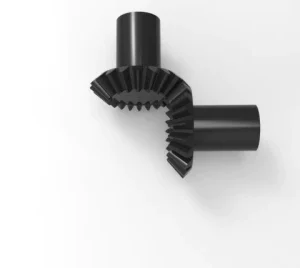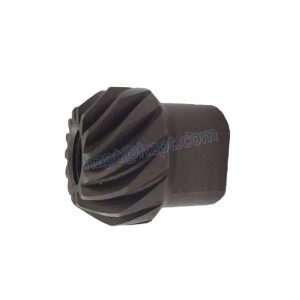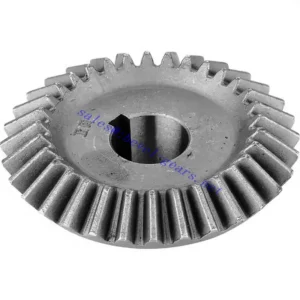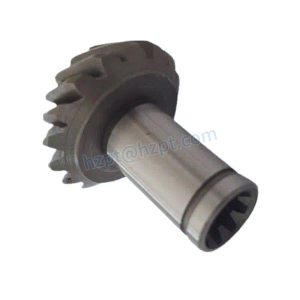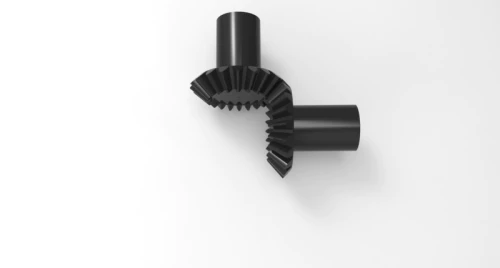
90 Degree Bevel Gear
As one of the bevel gears manufacturers, suppliers, and exporters of mechanical products, We offer bevel gears and many other products.
Please get in touch with us for details.
Mail:[email protected]
Industry data shows that up to 38% of unplanned drivetrain failures in Australian manufacturing facilities stem from incorrect right-angle transmission component selection.
A 90 degree bevel gear — engineered to redirect rotational power between two shafts intersecting at precisely 90° — is one of the most compact and efficient solutions available for this challenge.
Whether you manage a processing line in Sydney, a fabrication shop in Melbourne, or a mining-support workshop in Brisbane, specifying the correct bevel gear set from day one reduces maintenance expenditure by an average of 30–40% and extends drivetrain service life significantly.
Australia Ever-Power, based at 27 Harley Crescent, Condell Park NSW 2200, supplies ISO-compliant right-angle bevel gears with same-week dispatch across Australia.
What Is a 90 Degree Bevel Gear?
A 90 degree bevel gear — also called a right-angle bevel gear — is a conical gear pair engineered to transmit rotational torque and motion between two shafts whose centrelines intersect at a 90-degree angle.
Unlike parallel-shaft systems (spur or helical gears), bevel gears redirect motion, making them indispensable wherever a mechanical system must "turn a corner" without chain drives or universal joints.
The defining geometric feature is the pitch cone: each gear in the pair is machined on a conical blank so that the imaginary cone apexes meet exactly at the shaft intersection point.
When the two gears mesh, their tooth surfaces roll against one another along a shared pitch line, producing smooth, continuous rotation transfer with minimal sliding friction and drivetrain losses typically under 3%.
According to AGMA 2003-C10 (Rating the Pitting Resistance and Bending Strength of Generated Straight, Zerol, and Spiral Bevel Gear Teeth), right-angle bevel gears must satisfy strict criteria for tooth geometry, surface finish (Ra ≤ 0.8 µm on contact flanks), and material hardness (58–62 HRC for case-hardened steel) to achieve rated load capacity.
Australia Ever-Power designs and sources bevel gear sets meeting or exceeding AGMA, ISO 23509, and DIN 868 standards — the same benchmarks referenced in Australian Standards AS 2938 for general-purpose gear units.
In practical terms: if your drive shaft runs east–west but your output shaft must run north–south, a matched pair of 90° bevel gears is almost always the most compact, most efficient, and most cost-effective direction-change solution available to Australian engineers and procurement managers.
Mechanical efficiency for a correctly lubricated spiral bevel gear pair typically reaches 97–99%, far exceeding worm gear alternatives (typically 60–90%) for the same right-angle power-transfer function.
This efficiency advantage directly translates to lower electricity consumption — an increasingly important factor for Australian manufacturers managing rising energy costs.
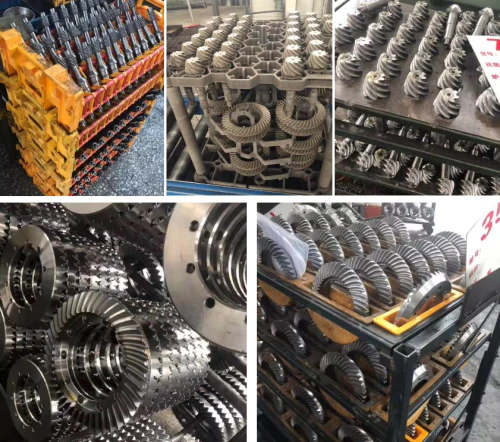
Types of 90 Degree Bevel Gears: Which Style Suits Your Application?
Selecting the correct bevel gear tooth style is the single most impactful engineering decision in right-angle drive design.
Each configuration offers a different balance of noise, load capacity, speed capability, and manufacturing cost.
The table below summarises the four principal types stocked and fabricated by Australia Ever-Power for Australian industrial buyers.
| Type | Tooth Form | Max Speed | Noise Level | Load Capacity | Best For |
|---|---|---|---|---|---|
| Straight Bevel | Straight radial teeth | < 1,000 rpm | Moderate | Medium | Conveyors, slow machinery, hand tools |
| Spiral Bevel | Curved oblique teeth | Up to 8,000+ rpm | Low (−8 to −15 dB vs straight) | High (+25–35%) | Automotive differentials, robotics, aerospace |
| Zerol Bevel | Curved, zero helix angle | Up to 3,500 rpm | Low–Moderate | Medium–High | Printing presses, agricultural drives |
| Hypoid Bevel | Offset spiral teeth | High (offset axes) | Very Low | Very High | Heavy trucks, marine, high-ratio reducers |
Straight bevel gears are the simplest and most affordable option, produced via face-milling or the Gleason generation method.
They are preferred for speeds below 1,000 rpm in applications such as packaging conveyors and hand-operated lifting mechanisms widely used across Sydney industrial estates.
Their straightforward geometry also makes replacement and maintenance fast — an advantage valued by maintenance teams in regional Queensland and Western Australia.
Spiral bevel gears feature curved, oblique teeth that engage progressively, distributing load across multiple teeth simultaneously.
This increases load capacity by approximately 25–35% compared with straight bevel gears of the same module size, while reducing operating noise by 8–15 dB(A) — a critical advantage for food-processing plants in Melbourne subject to Safe Work Australia noise-exposure limits of 85 dB(A) averaged over eight hours.
Zerol and hypoid bevel gears are manufactured using the Gleason Coniflex™ or Klingelnberg Palloid process and are typically specified for high-torque, low-noise environments such as marine propulsion systems in Brisbane port facilities or underground mining drivetrains in Queensland's Bowen Basin.
Hypoid gears, with their offset axes, allow lower floor mounting in automotive and heavy-vehicle axle designs — a configuration adopted widely by Australian commercial vehicle manufacturers.
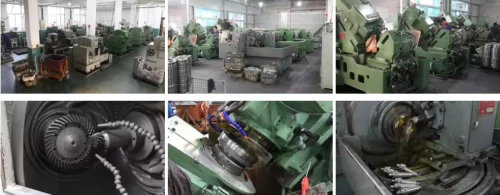
Key Specifications & Parameters for 90 Degree Bevel Gears
Understanding the core dimensional and performance parameters allows procurement managers to compare suppliers on an equal basis and avoid costly over- or under-specification.
The table below reflects the standard parameter range available from Australia Ever-Power's catalogue; custom specifications are available on request from our Condell Park, NSW facility with typical lead times of 4–6 weeks for non-stock items.
| Parameter | Standard Range | Reference Standard |
|---|---|---|
| Module (m) | 1 – 25 mm | ISO 54 preferred series |
| Number of Teeth | 10 – 120 T | Ratios 1:1 to 6:1 standard |
| Pitch Cone Angle | 15° – 75° (sum = 90°) | AGMA 2003-C10 |
| Pressure Angle | 20° / 22.5° / 25° | Higher angle = stronger root |
| Material — Industrial | 20CrMnTi / 40Cr / 42CrMo4 | DIN EN ISO 683-17 |
| Material — Food/Marine Grade | 304 SS / 316 SS | FSANZ / AS 4020 compatible |
| Surface Hardness | 58 – 62 HRC (case-hardened) | Carburise + quench + temper |
| Tooth Surface Finish | Ra ≤ 0.8 µm (ground/lapped) | ISO 1302 |
| Accuracy Grade | ISO Grade 5 – Grade 8 | ISO 17485:2006 |
| Max Operating Speed | Up to 8,000 rpm (spiral) | Pitch-line velocity ≤ 25 m/s |
| Mechanical Efficiency | 97 – 99% | Properly lubricated spiral pair |
| Shaft Bore Diameter | 10 – 160 mm | Keyway to AS 1456 / ISO 773 |
Gear ratio is determined by the tooth count ratio: a 20-tooth pinion meshing with a 40-tooth gear produces a 2:1 ratio, halving output speed and theoretically doubling torque.
Standard stock ratios from Australia Ever-Power range from 1:1 (equal miter gears) to 6:1.
Custom ratios can be manufactured at our Condell Park facility on a 4–6 week lead time, with full CMM inspection reports supplied upon request.
For procurement managers comparing bevel gears against worm gear alternatives: at equivalent right-angle reduction ratios, bevel gears offer 7–39 percentage points higher efficiency, which at 75 kW motor ratings translates to 5–30 kW of recovered energy per drive — a compelling case for total-cost-of-ownership assessments aligned with Australian energy-efficiency incentive programmes.
How to Select the Right 90 Degree Bevel Gear: A Step-by-Step Guide
Correct gear selection begins with six engineering inputs; every downstream specification follows logically from these fundamentals.
The following process has been developed in alignment with AGMA 2003-C10 and ISO 10300 rating methods and reflects the selection workflow used by Australia Ever-Power's engineering support team for clients in Sydney, Melbourne, Brisbane, Adelaide, and Perth.
Step 1 — Define the Required Gear Ratio
Divide input shaft speed (rpm) by desired output shaft speed (rpm).
Example: a 1,450 rpm motor driving a 290 rpm output conveyor requires a 5:1 ratio.
Confirm ratio against the full load cycle — ratios above 4:1 may require a two-stage arrangement for optimal efficiency and thermal performance within AS 2938 gearbox operating limits.
Step 2 — Calculate Design Torque with Service Factor
Torque (Nm) = Power (kW) × 9,549 ÷ Speed (rpm).
Apply an AGMA 2001 service factor (KA): 1.00 for smooth uniform loads; 1.25 for moderate shock (conveyors, compressors); 1.50–1.75 for heavy shock (crushers, hoists).
Always select a gear rated above Design Torque = Actual Torque × KA.
Failing to apply the service factor is the most common cause of premature bevel gear failure reported by Australian maintenance engineers.
Step 3 — Choose Tooth Style Based on Speed and Noise Requirements
Use straight bevel gears for pitch-line velocities below 5 m/s and where low cost is the primary driver.
Use spiral bevel gears for velocities above 5 m/s, high-load applications, or where ambient noise must remain below Safe Work Australia's 85 dB(A) action level.
As a practical rule: if pitch-line velocity exceeds 3 m/s and the application is noise-sensitive, spiral bevel gears recover their cost premium within the first 12 months of operation through reduced noise-control expenditure and lower maintenance frequency.
Step 4 — Select Material and Heat Treatment
For standard industrial drives, specify 20CrMnTi or 42CrMo4 alloy steel, case-carburised to 58–62 HRC.
For food-processing lines in Sydney or Melbourne operating under FSANZ hygiene requirements, specify 316 stainless steel or food-grade acetal/nylon bevel gears rated for wash-down service.
For corrosive marine environments in Brisbane, Darwin, or Fremantle, 316 SS or non-ferrous bronze alloys are preferred per AS/NZS 4020 potable-water compliance.
Step 5 — Confirm Module and Envelope Dimensions
Larger modules carry greater load but increase gear OD and centre distance.
Verify the selected module and gear OD fit within your available installation envelope — critical in compact robotic joints or aerospace accessory gearboxes.
Use ISO 54 preferred modules: 1, 1.25, 1.5, 2, 2.5, 3, 4, 5, 6, 8, 10, 12, 16, 20, 25 mm.
Australia Ever-Power maintains stock across all preferred modules for immediate despatch from Condell Park.
Step 6 — Specify Mounting, Bore, and Lubrication
Confirm shaft bore, keyway dimensions (AS 1456 / ISO 773), and hub style (set-screw, interference fit, or flanged).
For speeds above 1,000 rpm, specify splash or forced oil lubrication using ISO VG 220 or ISO VG 320 gear oil (ISO 12925-1 Category CKD).
For sealed or slow-speed applications, NLGI Grade 2 lithium-complex grease is appropriate.
Correct lubrication alone extends bevel gear service life by 200–400% compared with under-lubricated installations — a finding consistently supported by tribology reports published in the Journal of Tribology (ASME).
Applications of 90 Degree Bevel Gears in Australian Industry
Australian manufacturers across every major sector rely on 90 degree bevel gears to solve the fundamental challenge of redirecting rotational power in confined drivetrain spaces.
The following application landscape reflects the primary sectors served by Australia Ever-Power from its Sydney base, with products shipped to customers in every state and territory.
| Industry | Typical Application | Gear Type Used | Key Requirement |
|---|---|---|---|
| Mining & Resources | Conveyor drives, crusher feeds (QLD, WA) | Spiral Bevel | High load, shock resistance |
| Food & Beverage | Mixer drives, filling lines (VIC, NSW) | 316 SS Bevel | Hygiene, wash-down rated |
| Agriculture | Tractor PTO, harvester headers (SA, WA) | Straight / Spiral Bevel | Durability, serviceability |
| Marine | Propulsion, steering, winches (QLD, VIC) | Hypoid / 316 SS Bevel | Corrosion resistance |
| Robotics & Automation | Arm joints, pick-and-place systems | Precision Spiral Bevel (ISO Gr.5) | Low backlash, high accuracy |
| Machine Tools | Milling heads, lathe cross-slides | Spiral Bevel (ground) | Precision, low noise |
| Printing & Packaging | Web-offset press drives, cartoners | Zerol Bevel | Smooth, quiet, precise phasing |
| Aerospace & Defence | Accessory gearboxes, landing gear | Spiral Bevel (ISO Gr.5–6) | Weight, reliability, traceability |
Mining and resources represent the highest-volume application for 90 degree bevel gears supplied by Australia Ever-Power.
Operations in the Pilbara (WA), Bowen Basin (QLD), and Hunter Valley (NSW) demand gears rated for continuous duty under extreme shock loads, abrasive dust ingress, and wide ambient temperature ranges from −5°C to +50°C.
Spiral bevel gears in hardened 42CrMo4 with ISO Grade 6 accuracy are the standard specification for this environment.
Food and beverage manufacturers in Melbourne's western industrial corridor and Sydney's Horsley Park precinct require bevel gears manufactured from 316 stainless steel with electropolished surfaces (Ra ≤ 0.4 µm) to satisfy HACCP audit requirements and eliminate product contamination risk.
Australia Ever-Power stocks a dedicated food-grade bevel gear range with full material traceability documentation aligned to AS 4674 (construction and fit-out of food premises).
Agricultural equipment manufacturers in South Australia and Western Australia use straight and spiral bevel gears extensively in tractor power take-off (PTO) systems, seeding machinery, and harvester header drives.
The critical design requirement in this sector is field serviceability: components must be replaceable with common tooling under paddock conditions, which is why Australia Ever-Power offers matched replacement pairs for over 200 common agricultural gear geometries from its Condell Park, NSW warehouse.
Why Choose Australia Ever-Power for Your 90 Degree Bevel Gear Needs?
Australia Ever-Power operates as a specialist knowledge partner for Australian industrial buyers, not simply a catalogue distributor.
Our engineering team carries practical experience across mining, food processing, marine, and automated manufacturing — the sectors that drive demand for right-angle bevel gear systems across New South Wales, Victoria, Queensland, South Australia, and Western Australia.
🏭 Local Stock, Fast Despatch
Our Condell Park, NSW 2200 warehouse holds 500+ bevel gear SKUs in standard modules and ratios. Same-week despatch to Sydney metro; 2–3 business day freight to Melbourne, Brisbane, and Adelaide.
📐 ISO-Certified Quality
All bevel gears are supplied with dimensional inspection reports traceable to ISO 17485:2006. Hardness test certificates and material mill certs are available on request — essential for AS 4024 machinery safety compliance.
🔧 Engineering Support
Free pre-purchase gear selection review by our engineering team. We check ratio, torque, service factor, and envelope fit — and flag specification errors before they reach the production floor.
⚙️ Custom Manufacturing
Non-standard modules, special bore diameters, odd ratios, and custom materials are handled by our manufacturing partners with 4–6 week lead times and full PPAP documentation for OEM customers.
📦 Nationwide Delivery
We ship to all Australian states and territories including remote WA, NT, and TAS mining and pastoral operations. Freight tracking, packing documentation, and export certificates available for international orders.
📍 Address & Contact
Australia Ever-Power
27 Harley Crescent
Condell Park NSW 2200
Available Monday–Friday, business hours AEST.
Australian manufacturers who work with us consistently highlight three advantages: accurate pre-sale technical advice that prevents costly wrong-specification orders; documentation completeness for quality management systems and safety audits; and reliable local inventory that eliminates the 8–16 week overseas supply lead times that disrupt planned maintenance shutdowns.
We understand that for a maintenance planner at a Western Australian iron ore operation or a procurement manager at a Brisbane food manufacturer, a two-day gear delivery is not a luxury — it is the difference between scheduled maintenance and a lost-production event costing tens of thousands of dollars per hour.
Australia Ever-Power is structured specifically to serve that need.
Frequently Asked Questions About 90 Degree Bevel Gears
Ready to Source the Right 90 Degree Bevel Gear?
Talk to our engineering team at Australia Ever-Power — Condell Park, NSW 2200.
We'll review your application, confirm specifications, and have a quote back to you within 24 hours.
Same-week despatch available for stocked items across Sydney, Melbourne, Brisbane, Adelaide, and Perth.
📍 27 Harley Crescent, Condell Park NSW 2200 | Australian Owned & Operated | ISO-Compliant Stock