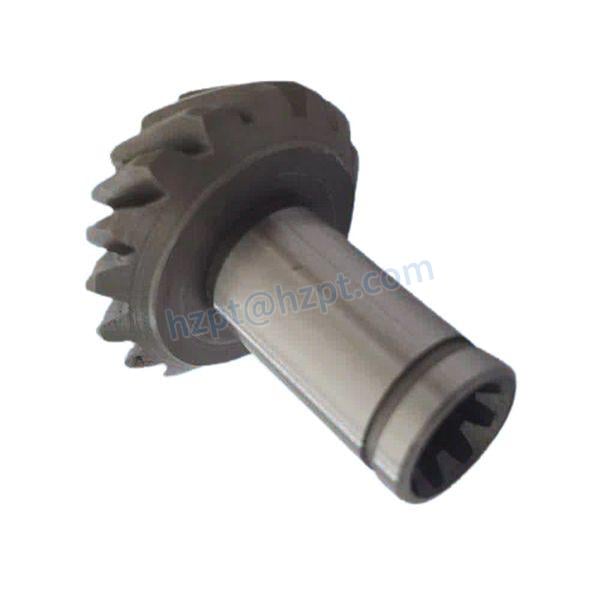
Automotive Bevel Gear——High-Precision
As one of the bevel gears manufacturers, suppliers, and exporters of mechanical products, We offer bevel gears and many other products.
Please get in touch with us for details.
Mail:[email protected]
Industry data shows that unplanned drivetrain failures account for up to 23% of total vehicle downtime in Australian automotive manufacturing and fleet operations — with gear wear ranking as the leading root cause. Automotive bevel gears are the mechanical heart of differential and right-angle drive systems, and selecting the wrong grade or material can halve component service life. Australia Ever-Power, based at 27 Harley Crescent, Condell Park NSW 2200, supplies certified automotive bevel gears to vehicle manufacturers, aftermarket suppliers, and industrial OEMs across Sydney, Melbourne, Brisbane, and beyond.
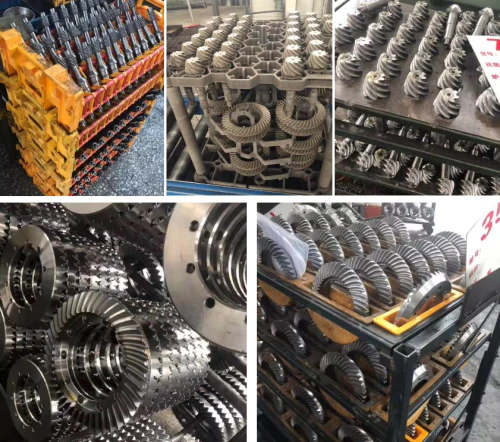
What Is an Automotive Bevel Gear?
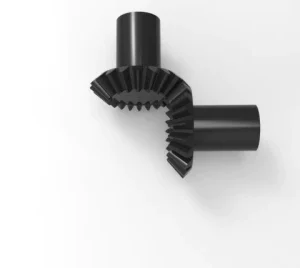
An automotive bevel gear is a precision-machined, conically shaped gear that transmits torque and rotational motion between two intersecting shafts — typically at 90 degrees — within vehicle drivetrain, differential, and axle assemblies. The tooth-bearing surfaces are formed on the surface of a cone, allowing power transfer at shaft intersection points that flat-face gears cannot accommodate.
Formal definition: An automotive bevel gear is a conical gear component, manufactured to AGMA 12–13 or DIN 5–6 precision standards from high-strength ferrous or non-ferrous alloys, designed specifically for use in vehicle differentials, transfer cases, and right-angle drive systems where shaft axes intersect at angles between 45° and 135°.
Automotive bevel gears appear wherever a vehicle needs to redirect rotational power — from the engine-driven propeller shaft into the rear axle differential, through transfer-case power splits in four-wheel-drive vehicles, and in steering column assemblies. The Gleason cutting method, used in the majority of modern production including all gears from Australia Ever-Power's supply network, produces tooth geometry that allows precision grinding and lapping — essential for the low-noise, long-life performance demanded by automotive OEMs and aftermarket customers.
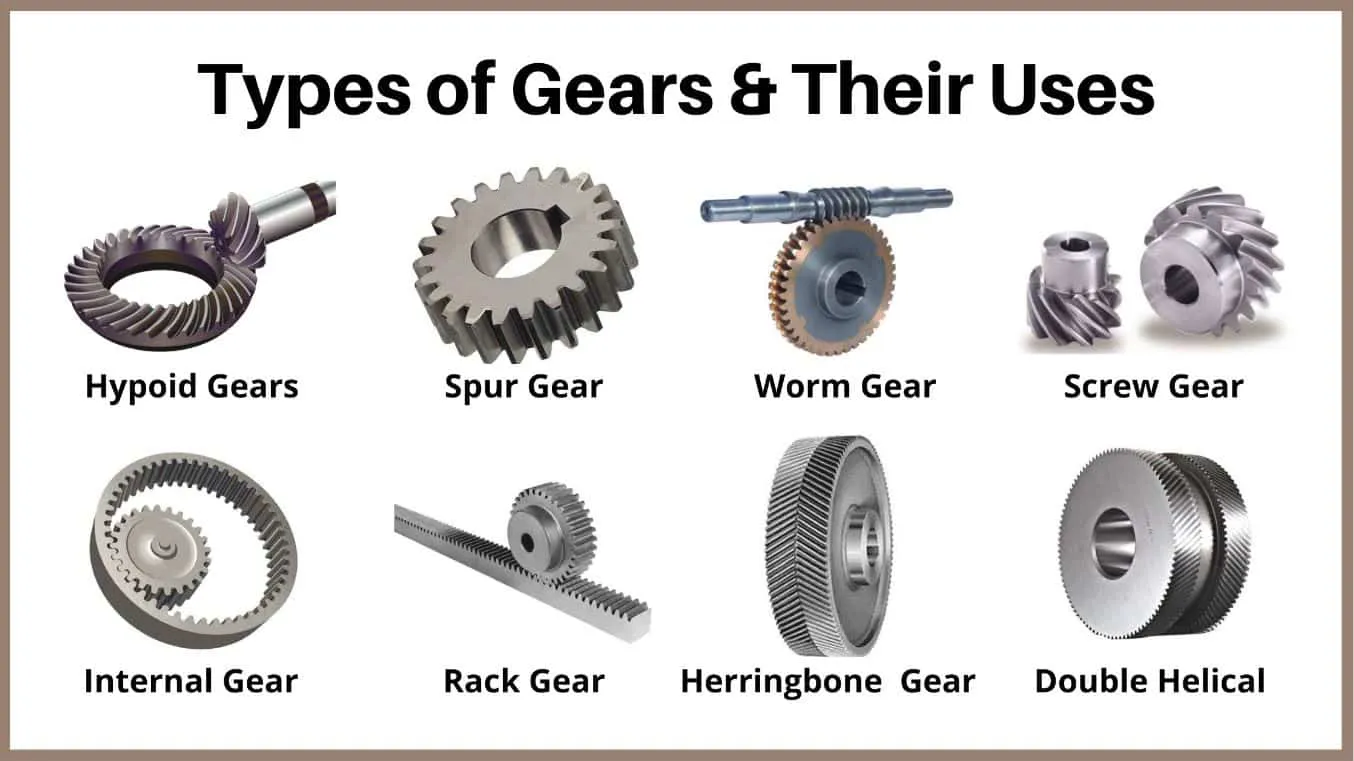
Tooth geometry choices — straight, spiral, or hypoid — each carry performance trade-offs that directly affect noise level, load capacity, and manufacturing cost. Matching the right tooth form to the specific duty cycle and operating environment is the first step in reliable gear selection.
Types of Automotive Bevel Gears — Classification & Comparison
Automotive bevel gears split into three primary families based on tooth geometry, each suited to different speed, load, and noise requirements. Misidentifying the correct type at the specification stage is one of the most frequently seen procurement errors among Australian automotive manufacturers.
Straight Bevel Gear
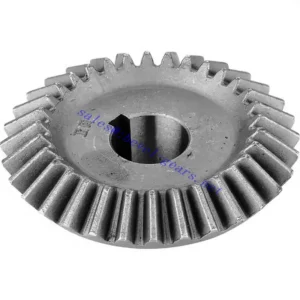
Teeth are cut straight along the cone surface with zero helix angle. Each tooth engages the corresponding gear tooth simultaneously across the full face width, creating impact loading at tooth contact. Simpler and cheaper to manufacture but generates significantly more vibration and noise at speed. Suited to low-speed, light-duty automotive auxiliaries only.
Spiral Bevel Gear
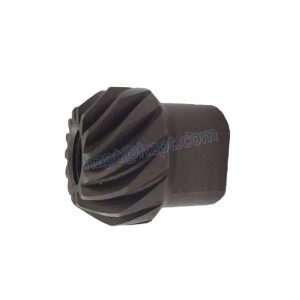
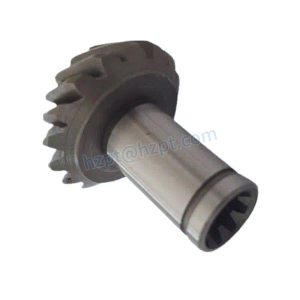
Teeth are curved at a defined helix angle, producing gradual tooth engagement rather than impact loading. Up to 35% quieter than straight bevel gears under equivalent loads. Tooth flanks can be ground and lapped to aerospace-grade surface finish. The dominant choice in automotive differentials, transfer cases, and performance drivetrain assemblies worldwide.
Hypoid Bevel Gear
The input and output shaft axes are offset rather than intersecting, enabling a lower propeller-shaft tunnel in passenger vehicles and a larger-diameter pinion for greater torque capacity. Standard in rear-wheel-drive passenger car and light truck differentials. Requires extreme-pressure (EP) gear oil due to high sliding velocity between tooth flanks.
Zerol Bevel Gear
A curved-tooth bevel gear with zero mean helix angle. Produces axial thrust characteristics similar to straight bevel gears but can be ground like spiral gears, offering a noise and durability compromise between the two. Found in certain light commercial vehicle axle applications and steering gear assemblies.
| Type | Helix Angle | Noise | Load Capacity | Primary Use | Grindable |
|---|---|---|---|---|---|
| Straight Bevel | 0° | High | Low–Medium | Auxiliary drives, low speed | No |
| Spiral Bevel | ≥ 10° | Low | High | Differential, transfer case | Yes |
| Hypoid Bevel | Variable (offset) | Very Low | Very High | Passenger car rear axle | Yes |
| Zerol Bevel | 0° (curved) | Medium | Medium | Light commercial, steering | Yes |
Key Specifications & Technical Parameters
Full technical transparency is standard practice at Australia Ever-Power. Every automotive bevel gear order is accompanied by dimensional and metallurgical documentation — particularly important for Australian manufacturers working to AS/NZS compliance frameworks or supplying Tier 1 automotive customers with strict incoming inspection requirements.
| Parameter | Specification | Notes |
|---|---|---|
| Dimension Range | Ø3 mm – Ø120 mm (Ø12 mm standard) | Custom bore and OD available |
| Module | M0.15 – M2.2 (M2.2 standard) | Per ISO 54 module series |
| Meshing Grade | AGMA 12–13 | DIN 5–6 | JGMA 1 | JIS 6 | AGMA 13 / DIN 5 for OEM-grade parts |
| Material Options | Steel, Alloy Steel, Stainless, Aluminium, Bronze, Brass, Copper, Zinc, POM, Iron | 20CrMnTi alloy steel most common for automotive |
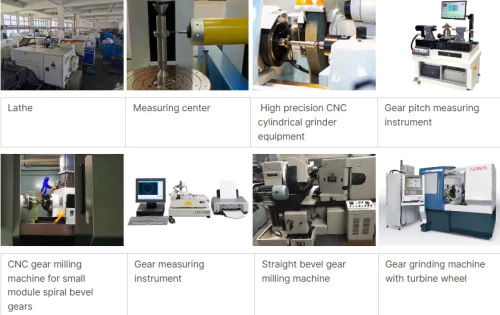
| Manufacturing Method | Gleason method (spiral & hypoid); Klingelnberg available on request | Gleason used by majority of global automotive OEMs |
| Heat Treatment | Carburising & quenching, High-frequency quenching, Nitriding, Hardening & tempering | HRC 58–62 case hardness achievable |
| Surface Finish | Ground & lapped tooth flanks (spiral/hypoid) | Ra ≤ 0.8 µm standard; Ra ≤ 0.4 µm on request |
| Customisation | ODM / OEM — drawing to certified production part | DXF / STEP / PDF drawings accepted |
| Certification | ISO 9001:2008 / TS16949 | Material certs & CMM reports with every shipment |
| Packaging | Vacuum-sealed, anti-corrosion plastic tray | Export-rated for sea or air freight |
| Delivery to Australia | DHL Express / UPS — 5–10 business days to Sydney / Melbourne | Local stock held for select part numbers |
How to Select the Right Automotive Bevel Gear — Step-by-Step Guide
Selecting an automotive bevel gear involves more variables than most procurement engineers initially expect. The process below reflects the decision framework recommended by AGMA 2005-D03 (Design Manual for Bevel Gears) and is used by drivetrain engineers at Australian vehicle manufacturers and aftermarket suppliers in Sydney, Melbourne, and Brisbane.
Applications Across Australian Automotive & Industrial Sectors
Automotive bevel gears serve a far wider application base than the name suggests, spanning traditional passenger vehicles through to heavy industrial machinery used throughout Australian manufacturing. From the vehicle assembly plants in Melbourne's western suburbs to mining equipment workshops in Queensland and agricultural machinery dealers in regional NSW, bevel gears appear in virtually every sector that involves directional power transmission.
Passenger Car Differentials
Hypoid and spiral bevel sets in rear and front-axle differentials for passenger cars, SUVs, and light vans. Australian aftermarket demand is driven by the high prevalence of RWD utes and performance vehicles.
Heavy Commercial Vehicles
Large-module spiral bevel gear sets in tandem and tri-axle truck differentials. High torque and shock-load requirements call for M2.0–M2.2 alloy steel sets with carburised case hardening.
Agricultural Machinery
Bevel gears drive PTO (power take-off) shafts, header drives, and steering axles in tractors, harvesters, and sprayers used across Australia's grain belt from WA to Queensland.
Mining Equipment
Robust bevel gear sets appear in drill rigs, conveyor drives, and haul-truck axle assemblies operating in WA Pilbara and Queensland coal operations — often requiring custom sizes outside standard catalogue ranges.
Motorsport & Performance
Racing and performance vehicles operating out of Victorian and NSW motorsport facilities demand ultra-tight-tolerance bevel sets with Ra ≤ 0.4 µm tooth finish for minimum drag and maximum power transfer efficiency.
Electric Vehicle Drivetrains
EV adoption in Australia is accelerating. Compact right-angle bevel gear drives appear in EV axle units, e-bike drivetrains, and electric bus differential assemblies — a growth segment for precision bevel supply.
Manufacturing Process & Material Options
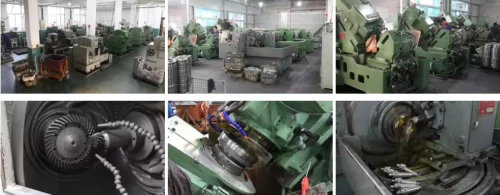
Every automotive bevel gear produced through Australia Ever-Power's certified supply network passes through a documented nine-stage manufacturing process aligned with ISO 9001:2008 and TS16949 quality management standards. Understanding this process helps Australian procurement teams evaluate supplier capability and set realistic lead-time expectations.
Automotive Material Selection Guide
| Material | Tensile Strength | Key Advantage | Best Application |
|---|---|---|---|
| 20CrMnTi Alloy Steel | ≥ 980 MPa | High fatigue life after carburising | Car/truck differentials, transfer cases |
| 8620 Alloy Steel | ≥ 860 MPa | Excellent case hardenability | Aftermarket replacement gears |
| 17-4PH Stainless | ≥ 1,100 MPa | Corrosion & humidity resistance | Marine fleet, coastal agricultural |
| Aluminium 7075 | ≥ 500 MPa | ~60% weight saving vs. steel | EV drives, lightweight performance builds |
| Brass / Bronze | 250–600 MPa | Self-lubricating, low-noise operation | Instrumentation, steering mechanisms |
Installation & Maintenance — Extending Service Life
Correct installation and lubrication account for the largest share of preventable automotive bevel gear failures. Industry maintenance data from Australian fleet operators indicates that improper backlash setting alone causes roughly 31% of premature differential gear failures in commercial vehicles. The guidance below reflects standard practice for spiral bevel and hypoid differential gear sets.
Installation Best Practice
Replace as matched pairs — Never install a new pinion against a worn ring gear or vice versa. Matched spiral bevel pairs are lapped together; mismatching reduces tooth-contact area by up to 60% and accelerates wear dramatically.
Set pinion depth precisely — Use a pinion depth gauge and shim pack to achieve the marked nominal pinion depth. Errors greater than 0.05 mm shift the contact pattern off-centre and increase noise by a measurable amount at operating temperature.
Measure backlash at pitch circle — Target backlash for M2.0–M2.2 automotive bevel sets is typically 0.12–0.25 mm. Measure with a dial indicator at four points around the ring gear circumference to confirm uniformity.
Verify tooth contact pattern — Apply Prussian Blue compound to ring gear teeth and rotate under light load. The contact patch should cover 50–70% of face width and sit centrally on the tooth flank. Adjust shim packs until correct pattern is achieved before full assembly.
Use correct lubricant — Hypoid gear sets require extreme-pressure (EP) gear oil, typically SAE 75W-90 GL-5 or equivalent to Australian Standard AS 1428 lubricant specifications. Spiral bevel sets in transfer cases may use lighter GL-4 grade depending on the manufacturer's recommendation.
Maintenance Intervals — Commercial Vehicle Reference
| Interval | Task | Action if Abnormal |
|---|---|---|
| Every 20,000 km | Check differential oil level and colour | Replace oil if metallic particles visible; inspect for pitting |
| Every 80,000 km | Full oil drain and refill; bearing preload check | Inspect tooth flanks for pitting or spalling if noise present |
| Every 200,000 km or overhaul | Full differential strip; measure backlash and tooth wear | Replace matched gear pair if tooth wear exceeds 10% of original depth |
Why Australian Manufacturers Choose Australia Ever-Power
Australia Ever-Power operates from 27 Harley Crescent, Condell Park NSW 2200, providing Australian automotive manufacturers, fleet operators, and industrial OEMs with a direct line to precision gear supply backed by over a decade of technical expertise. We serve customers across Sydney, Melbourne, Brisbane, Perth, Adelaide, and regional centres — with express freight options reaching most Australian capitals within 5–8 business days from despatch.
Gleason-Cut Precision
All spiral and hypoid gears cut using the Gleason method — the same standard used by global automotive OEMs — with tooth profiles suitable for precision grinding.
Australian-Based Service
Local technical advisors, Sydney-area warehousing for fast-moving part numbers, and DHL Express delivery to all states. No language barrier, no time-zone delays.
Full Documentation
Material mill certificates, CMM dimensional reports, and heat treatment certificates supplied with every production shipment — meeting Tier 1 automotive supplier documentation requirements.
ODM/OEM Capability
From sketch to certified production part. Our engineering team reviews drawings, recommends material and heat treatment, and manages the full production chain on your behalf.
Competitive Pricing
Volume discounts available from 50 pieces upward. Mixed-product consolidation shipping reduces per-unit freight cost for customers sourcing multiple gear types.
Fast Sample Turnaround
Standard automotive bevel gear samples delivered within 5–7 business days. Stock-equivalent items can often ship within 48 hours of order confirmation.
Market Pricing Overview — Automotive Bevel Gears in Australia
Automotive bevel gear pricing varies based on tooth type, module, material grade, precision class, and order quantity. The table below provides indicative AUD price ranges for Australian procurement budget planning. Contact Australia Ever-Power for a specific quotation against your drawings or part number.
| Category | Specification | Approx. Unit Price (AUD) | Typical MOQ |
|---|---|---|---|
| Straight Bevel — Standard | M1–M2, Steel, AGMA 12 | $15 – $55 | 50 pcs |
| Spiral Bevel — Automotive Grade | M1.5–M2.2, Alloy Steel, AGMA 13 | $75 – $280 | 20 pcs |
| Hypoid Bevel — OEM Match | M2–M2.2, 20CrMnTi, DIN 5, matched pair | $160 – $580 | 10 pairs |
| Miniature Bevel (EV / Instrument) | Ø3–12 mm, Stainless / Aluminium | $10 – $80 | 100 pcs |
| Custom ODM — Full Service | Any spec — drawing to certified delivery | POA — request quote | 1 pc (sample) |
Compliance, Sustainability & Export Markets
Australia's automotive components sector operates within a compliance landscape that spans design standards, environmental regulations, and supply-chain documentation requirements. Australia Ever-Power's gear supply chain is certified to ISO 9001:2008 and TS16949, providing the documentation traceability required by most Australian Tier 1 and Tier 2 automotive suppliers.
From a sustainability standpoint, precision bevel gears contribute to fleet efficiency — tighter gear tolerances reduce frictional losses in differential assemblies, with studies showing efficiency improvements of 1.5–3.0% in final drive units when transitioning from worn or substandard gears to precision-ground replacements. Longer-lasting, correctly specified gear sets also reduce replacement frequency and associated waste across the vehicle lifecycle.
Australia Ever-Power's automotive bevel gears are shipped to customers across the United States, United Kingdom, Germany, Japan, New Zealand, Canada, South Korea, and Southeast Asia, as well as the domestic Australian market. This global demand reflects the manufacturing quality standards that Australian and international automotive engineers require — and that our supply chain consistently delivers against.
What Australian Customers Say
Procurement engineers and workshop managers across Australia's automotive and industrial sectors consistently report three things about Australia Ever-Power: accurate parts, clean documentation, and delivery that actually meets the quoted timeframe.
"We needed a matched hypoid bevel set for a six-tonne truck differential overhaul in our Brisbane workshop — OEM supply was eight weeks out. Australia Ever-Power delivered a matched pair with full CMM reports in under three weeks. Tooth contact pattern was correct first installation, zero rework."
"Our Melbourne facility produces custom agricultural drive units. We source M2.2 spiral bevel pairs from Australia Ever-Power for the PTO assemblies — consistent DIN 6 accuracy across every batch we've ordered. The ability to mix different gear types in one consolidated DHL shipment has cut our freight spend by about 28%."
"We trialled miniature stainless bevel gears for an EV actuator assembly being developed here in Sydney. Sample batch of 30 pieces — all within drawing tolerances, material certs included. We've since moved all our bevel gear sourcing to Australia Ever-Power and the consistency has been solid across three production runs."
"Performance aftermarket is a competitive space. Our Perth customers expect OEM-spec or better from replacement differential gear sets. Australia Ever-Power's AGMA 13 spiral bevel pairs have proven quieter and longer-lasting than several established aftermarket brands we've previously stocked — at a price point our customers can accept."
Frequently Asked Questions
What is the difference between a spiral bevel gear and a hypoid gear — and does it matter for my application?
+
It matters significantly. A spiral bevel gear has intersecting shaft axes — the centrelines of the pinion and ring gear cross at a single point. A hypoid gear has offset (non-intersecting) shaft axes, which allows the pinion to be larger in diameter and the propeller shaft to sit lower in the vehicle body. The two are not interchangeable. Installing a spiral bevel set into a housing designed for hypoid geometry will result in severe tooth interference and rapid failure.
What is the minimum order quantity, and can I order a mix of different sizes?
+
Sample orders start at a single piece with no production commitment. Standard production MOQs range from 10 pairs for precision spiral bevel sets to 50+ pieces for smaller standard-range straight bevel gears. Mixed sizes or mixed product types can be combined into a single order — a common approach among Australian manufacturers looking to consolidate procurement and reduce per-shipment freight costs. Contact our Condell Park NSW team to discuss your specific mix.
Can you produce custom automotive bevel gears from a drawing or sample part?
+
Yes. Our ODM/OEM service covers the complete journey from drawing or sample to certified production part. For new drawings, submit DXF, STEP, or PDF format files and our engineering team will respond with a feasibility assessment and quotation within two business days. If you have a physical sample but no drawings, we offer reverse-engineering and full dimensional documentation as part of the ODM service.
How do discounts work for larger quantity orders?
+
Volume pricing applies in tiers — typically at 50, 200, and 500-piece thresholds. The discount percentage depends on the specific gear type, material, and precision grade, as tooling and setup costs form a higher proportion of unit cost for complex spiral bevel sets than for simpler straight bevel gears. Blanket-order arrangements with scheduled release dates allow customers to access volume pricing while maintaining manageable inventory levels. Discuss your annual forecast volume with our sales team to establish the most cost-effective purchasing structure.
What documentation comes with an automotive bevel gear order?
+
Standard documentation includes: material mill certificate (heat number, chemical analysis, mechanical properties), dimensional inspection report (CMM-generated, referenced to AGMA or DIN), heat treatment certificate with hardness test values, and ISO 9001 / TS16949 quality certificate. For matched spiral bevel and hypoid pairs, a contact pattern report is also included. First-article inspection (FAI) packages can be arranged for new part numbers requiring formal qualification.
How long does production take for a custom automotive bevel gear order?
+
First samples for straightforward geometry in standard alloy steel take 5–7 business days from drawing approval. Production batch lead times after sample sign-off are typically 3–5 weeks depending on quantity and complexity. DHL Express delivery to Sydney or Melbourne adds 5–8 business days from despatch. For urgent replacement gear requirements, discuss priority production options with our team — we maintain relationships with multiple ISO-certified production facilities to manage capacity peaks.
Can I visit the factory or inspect production in person?
+
Factory visits are welcome and encouraged for customers placing significant programme volumes. We ask that you notify us at least two weeks in advance so we can arrange the appropriate production stage for your visit and coordinate logistics support. For Australian customers who prefer a local meeting, our Condell Park NSW team can host technical discussions and review sample components in person before any factory visit is considered necessary.
Customer Case Study — Melbourne Agricultural Drive Manufacturer
A Victorian manufacturer producing PTO-driven agricultural implements needed to replace an imported spiral bevel gear set that had been discontinued by its original European supplier. The application involved a 3.5:1 gear ratio, M2.2 module, 20CrMnTi steel with carburised case hardening — running at up to 2,200 RPM under variable load from tractor PTO shafts.
Challenge
No direct replacement available from any Australian supplier. Two overseas suppliers quoted 12–16 week lead times. The customer needed matched production samples within four weeks to meet their own assembly line schedule.
Solution
Australia Ever-Power completed engineering review of the customer's reverse-engineered drawings within 24 hours, confirmed material and heat treatment specification, and delivered three matched sample pairs — with CMM reports and contact pattern documentation — within 19 calendar days from initial enquiry.
Outcome
All three sample pairs installed without rework. The customer placed a 200-pair production order and has since expanded the relationship to cover six additional bevel gear part numbers across their implement range — all sourced through Australia Ever-Power as the single supplier.
Source Automotive Bevel Gears for Your Next Australian Project
Talk to the engineering team at 27 Harley Crescent, Condell Park NSW 2200. Submit your drawings or part specifications and we'll respond with a feasibility assessment and quote within two business days.
ISO 9001 Certified · AGMA 13 / DIN 5–6 · Gleason Cut · DHL to All Australian States · ODM/OEM Available