
Precision Bevel Gears,
Engineered for
Australian Industry
ISO 9001 certified. Headquartered in Condell Park, Sydney. Two decades of precision gear engineering for mining, marine, agriculture and industrial sectors across Australia and beyond.
Request a Quote →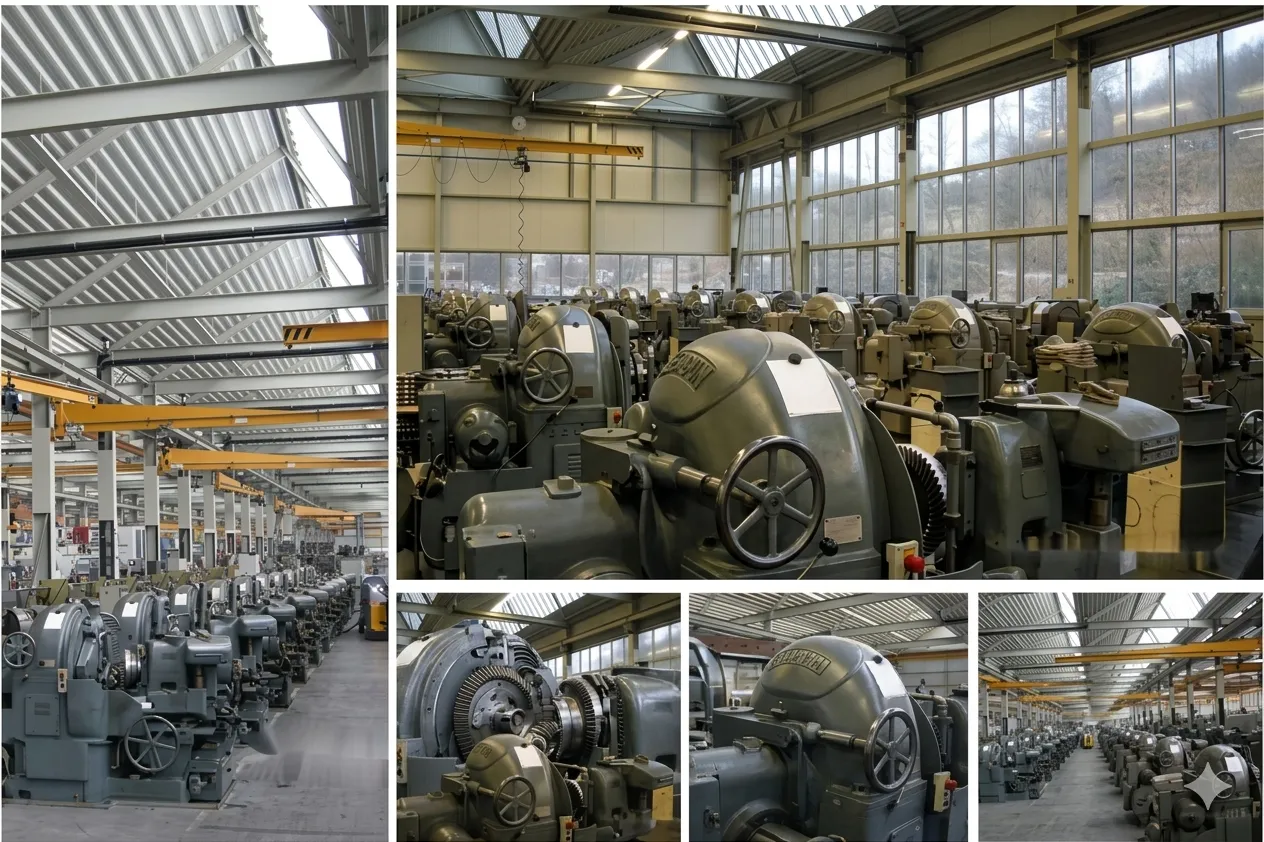
Sydney's Specialist in Precision Bevel Gear Solutions
We don't manufacture volume. We manufacture reliability — and everything in our process reflects that.
Australia Ever-Power is headquartered at Condell Park NSW 2200. We operate as both a precision gear manufacturer and a technical distributor, giving clients a single point of accountability across design, manufacture, inspection, and delivery.
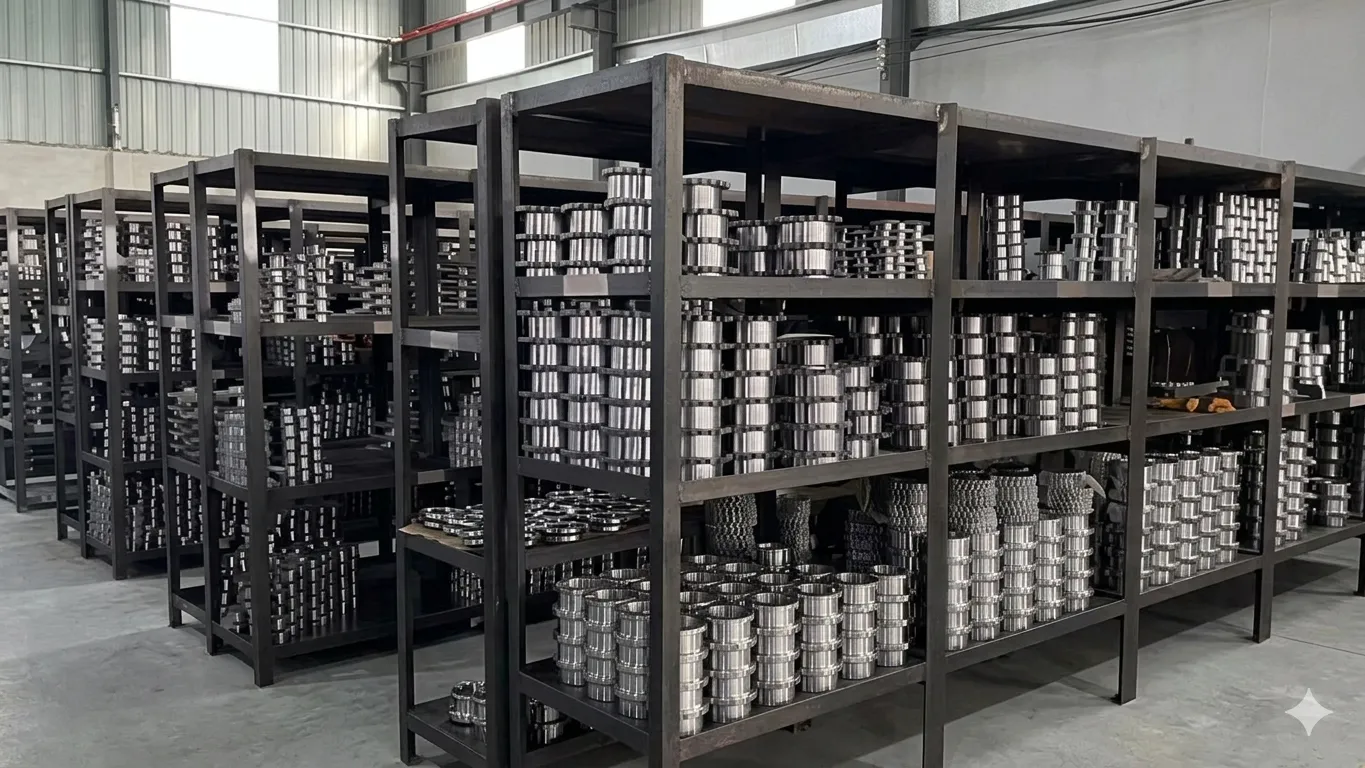
Our vertical integration — CNC gear cutting, heat treatment, precision grinding, and coordinate measurement — means complete process control from raw material selection through to final CMM-verified dispatch. Clients range from major mining groups in the Pilbara and Hunter Valley to maritime engineering firms, OEM machinery builders, and specialist maintenance contractors servicing critical infrastructure across the continent.
Every gear leaves our facility with dimensional inspection records, material certificates, and contact pattern verification. No exceptions.
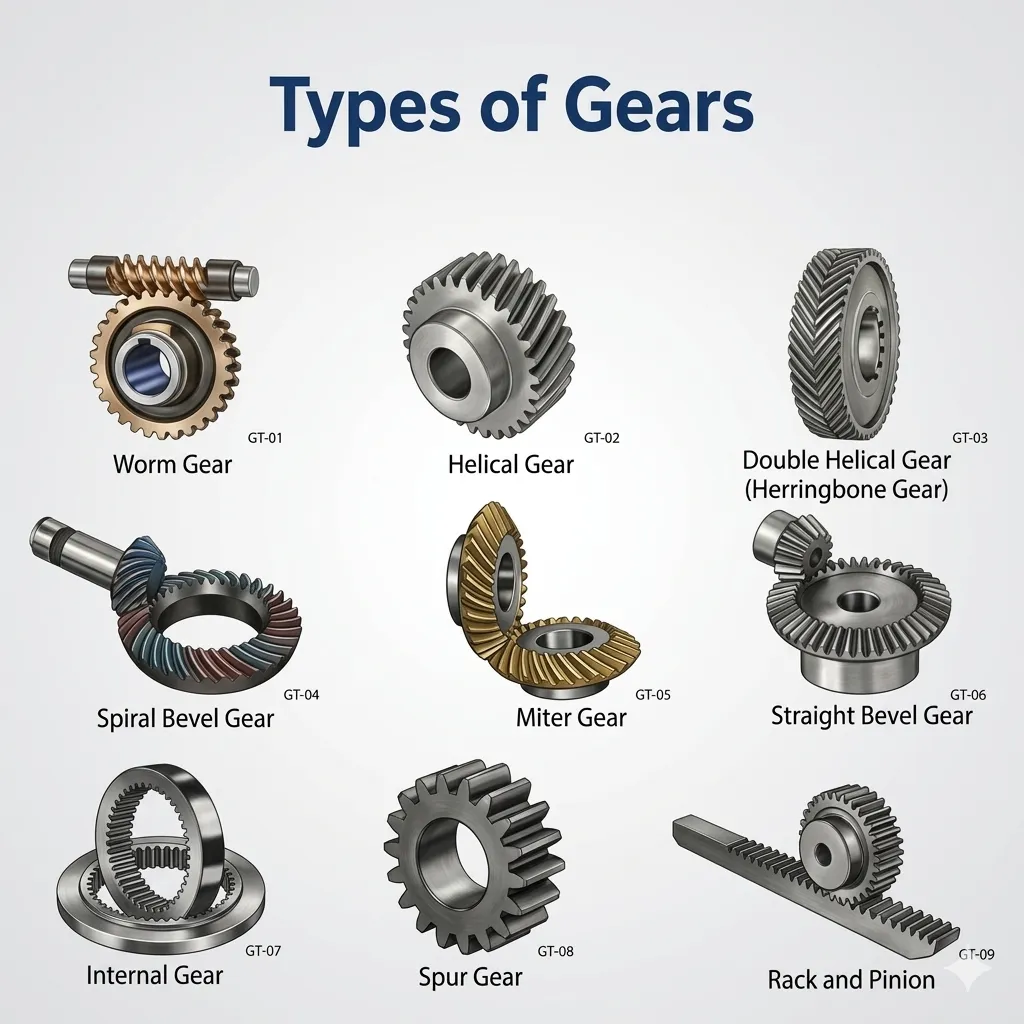
Six Bevel Gear Configurations. One Reliable Source.
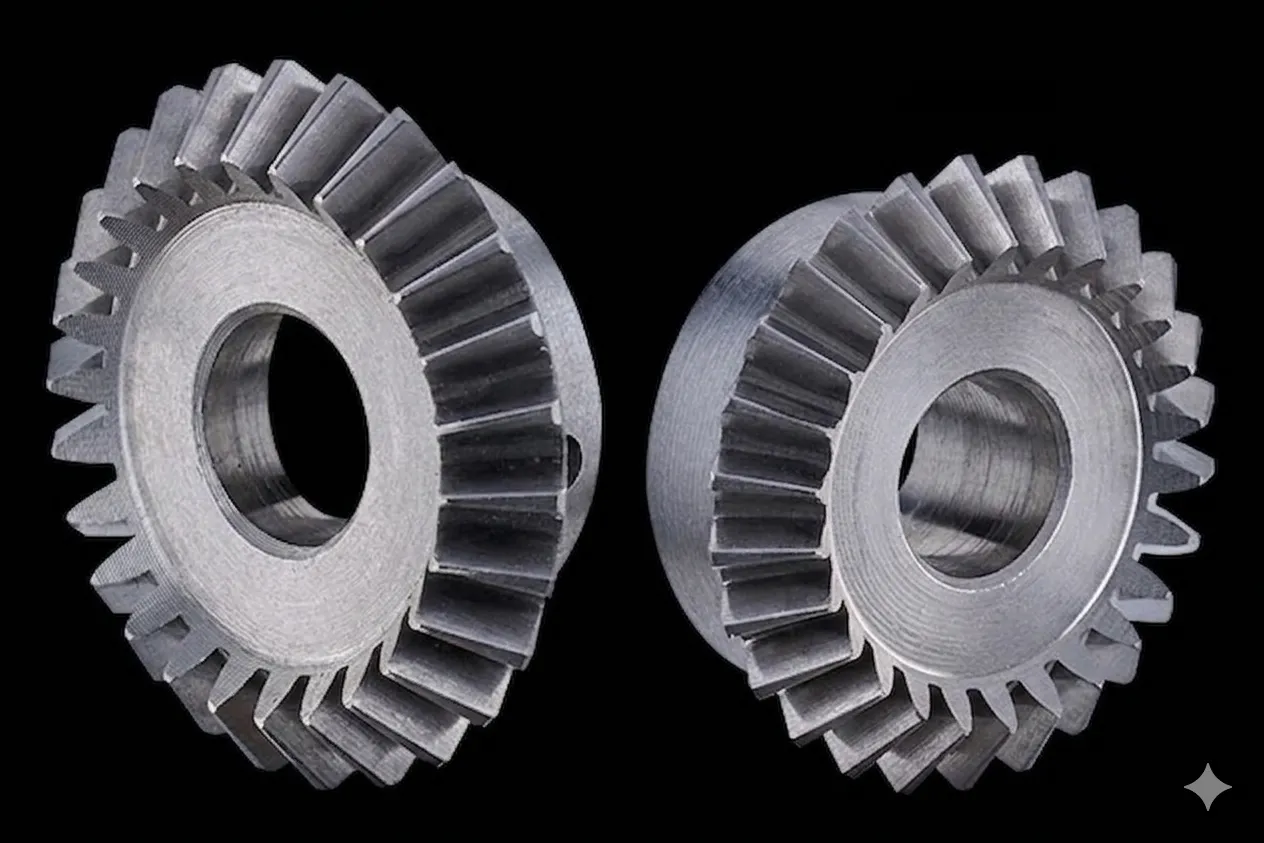
- 01Straight Bevel Gears
Radially converging straight teeth. Cost-effective for moderate-speed, lower-cycle applications where simplicity and reliability take priority over maximum smoothness.
- 02Spiral Bevel Gears
Curved oblique teeth for smoother engagement, higher load capacity, and reduced vibration. The standard choice for high-speed continuous drivetrains across mining and industrial sectors.
- 03Zerol Bevel Gears
Zero spiral angle hybrid geometry delivering quiet operation with simplified thrust bearing requirements — a precise middle ground between straight and spiral configurations.
- 04Hypoid Bevel Gears
Offset non-intersecting shafts enabling compact layouts and larger pinion diameters. Standard in automotive differentials and heavy conveyor drives.
- 05Miter Gears
Equal-ratio (1:1) gears for 90° shaft redirection without speed change. Common in packaging machinery, robotic joints, and precision instrument drives.
- 06Angular Bevel Gears
Custom shaft angles from 45° to 135° for bespoke drivetrain architectures in marine, offshore, and specialist heavy equipment applications.
| Gear Type | Module Range | Pressure Angle | Shaft Angle | Typical Application |
|---|---|---|---|---|
| Straight Bevel | 1 – 16 | 20° | 90° | Pumps, Compressors |
| Spiral Bevel | 1 – 20 | 20° / 22.5° | 90° | Mining Drives, Industrial Gearboxes |
| Zerol Bevel | 1 – 12 | 20° | 90° | Low-Noise Precision Drives |
| Hypoid | 1 – 20 | 22.5° | Offset | Automotive Differentials, Conveyors |
| Miter | 1 – 10 | 20° | 90° | Robotics, Packaging Lines |
| Angular Bevel | Custom | Custom | 45°–135° | Marine, Special-Purpose Machinery |
How Bevel Gears Redirect Power
Conical Geometry & Force Distribution
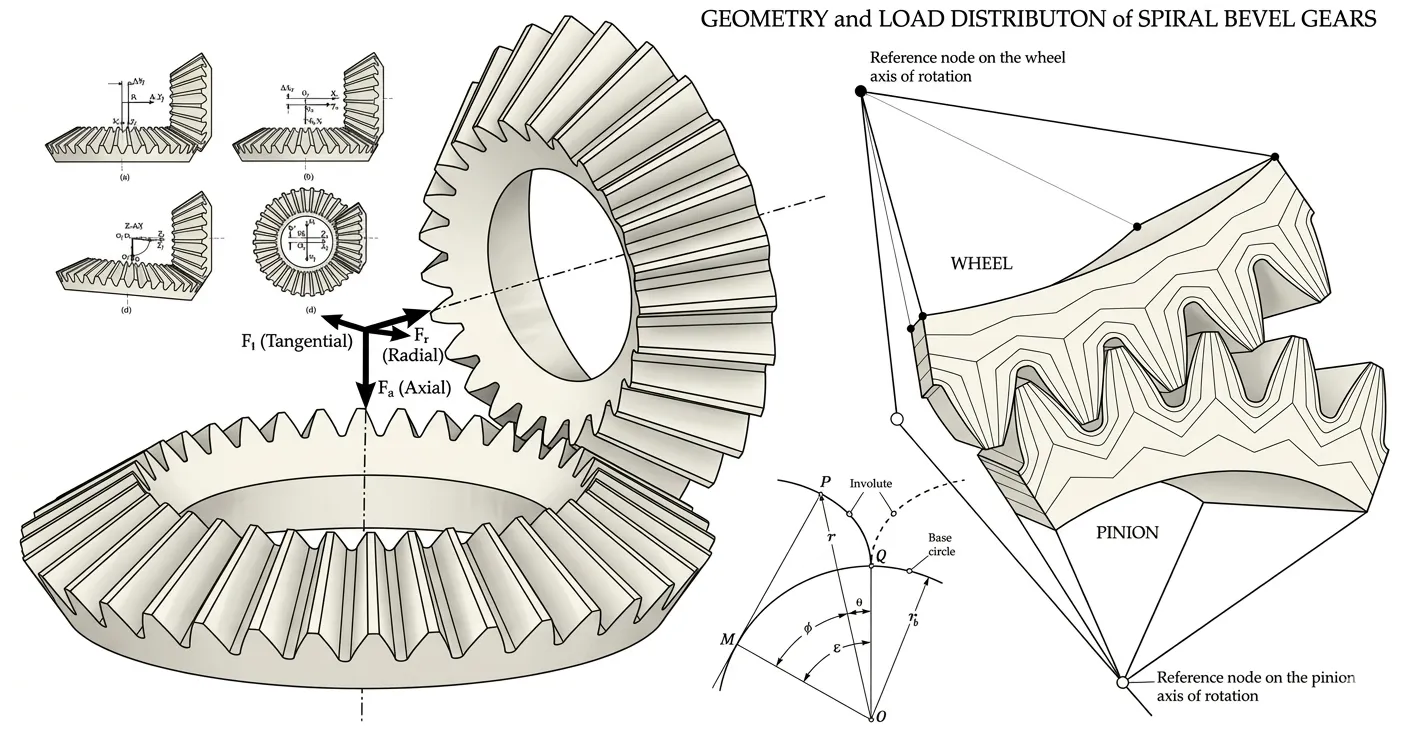
Unlike cylindrical gears transmitting torque between parallel shafts, a bevel gear's pitch cone apices converge at the virtual intersection of the shaft axes. This geometry redirects rotational force efficiently — typically at 90°, but configurable to virtually any intersecting angle depending on the drivetrain requirement.
The tooth profile follows an involute form mapped onto the back cone surface. Because tooth size diminishes toward the apex, load distribution creates both radial and axial force components — which is why bearing selection and housing rigidity are critical design factors our application engineers address at the specification stage, not after a bearing failure has occurred.
Spiral Angle, Contact Ratio & Fatigue Life
In spiral bevel gears, the spiral angle typically sits between 25° and 40°. A higher angle increases the contact ratio — more teeth share the transmitted load simultaneously. This distributes stress, reduces noise, and dramatically improves fatigue life under cyclic loading: exactly what is required in mining conveyors and marine propulsion drives operating thousands of hours between service intervals.
The hypoid offset introduces sliding contact between tooth flanks, improving torque capacity but requiring a hypoid-specific EP lubricant additive package. We supply detailed lubrication specifications with every gear set and can advise on high-temperature, food-grade, and washdown-service alternatives.
How We Build Gears That Last
-
01Material Selection & Traceability
Alloy steels — 20CrMnTi, 42CrMo4, 18CrNiMo7-6 — sourced with full mill certification. Each batch is logged against the finished gear serial number for complete supply-chain traceability, critical for AS/NZS and ISO audit requirements.
-
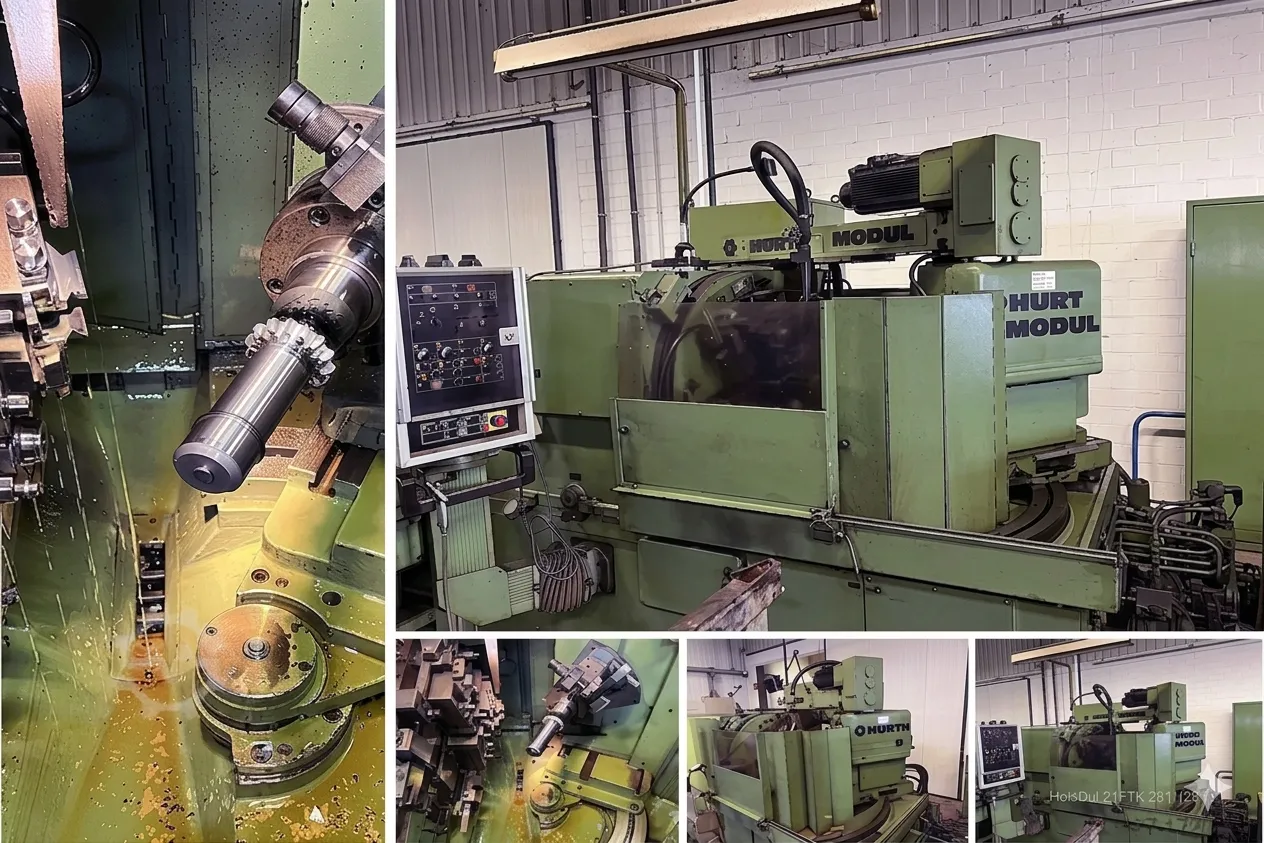
02CNC Gear Cutting — Gleason & Klingelnberg
Face-milling and face-hobbing machines achieve tooth-form tolerances for AGMA Q10–Q13 and DIN 5 accuracy grades. Cutting parameters are programmed and verified digitally, eliminating operator-induced variability between runs.
-
03Heat Treatment — Case Hardening & Carburising
Atmosphere-controlled furnaces achieve surface hardness HRC 58–62 while maintaining core toughness against shock-impact loading. Case depths are specified against torque rating and duty cycle, not standardised defaults.
-
04Lapping & Precision Grinding
Matched pairs are lapped together to refine the contact pattern specific to that mated pair. CNC gear grinding achieves tooth-form accuracy within 3–5 microns for critical applications — directly reducing noise and extending bearing life.
-
05CMM Inspection & Contact Verification
All gears measured on a CMM in a temperature-controlled room (20°C ± 1°C). Tooth spacing, lead error, profile deviation, and runout recorded against design tolerances. Contact pattern verified under simulated load before dispatch.
-
06Surface Treatment & Export Packaging
Phosphate, black oxide, or custom anti-corrosion coatings by environment. Stainless or nickel-plated finishes for marine and food-processing clients. VCI barrier packaging protects finished gears during interstate and international sea freight.
Standards That Drive Measurable Results
ISO 9001 Quality Management System
Our QMS covers the full product lifecycle — requirement review, design validation, manufacture, inspection, and post-delivery support. Every nonconformance is root-caused and correctively actioned within defined timeframes. Clients in regulated industries can request the full documentation package: FMEA records, control plans, gauge calibration certificates, and Cpk data. Records are retained for ten years minimum.
Standards Referenced
AGMA 2003-D10 (Bevel Gear Rating), ISO 1328 (Accuracy Grades), DIN 3965 (Tolerances), AS 4024 series, MIL-SPEC, and ABS / Lloyd's Register for marine-classified applications. Material conformance is verified by accredited third-party laboratory analysis — tensile strength, Charpy impact, and hardness mapping across the tooth profile.
- ISO 9001 Certified QMS
- AGMA 2003 Rating Compliance
- ISO 1328 Accuracy Verification
- DIN 3965 Tolerance Records
- CMM Inspection Reports
- Full Mill Certificates
- Hardness Profile Mapping
- Contact Pattern Verification
- 10-Year Record Retention
- Marine Class Compliance
Need a Custom Inspection Report?
FAI reports, statistical process capability (Cpk) records, and surface roughness traces are prepared on request at no additional charge for qualified production orders.
Contact our QA team →Where Our Bevel Gears Do the Critical Work
From coal seams to offshore platforms, food-processing lines to precision robotics — the operating environments differ widely, but the expectation is the same: zero tolerance for drivetrain failure.
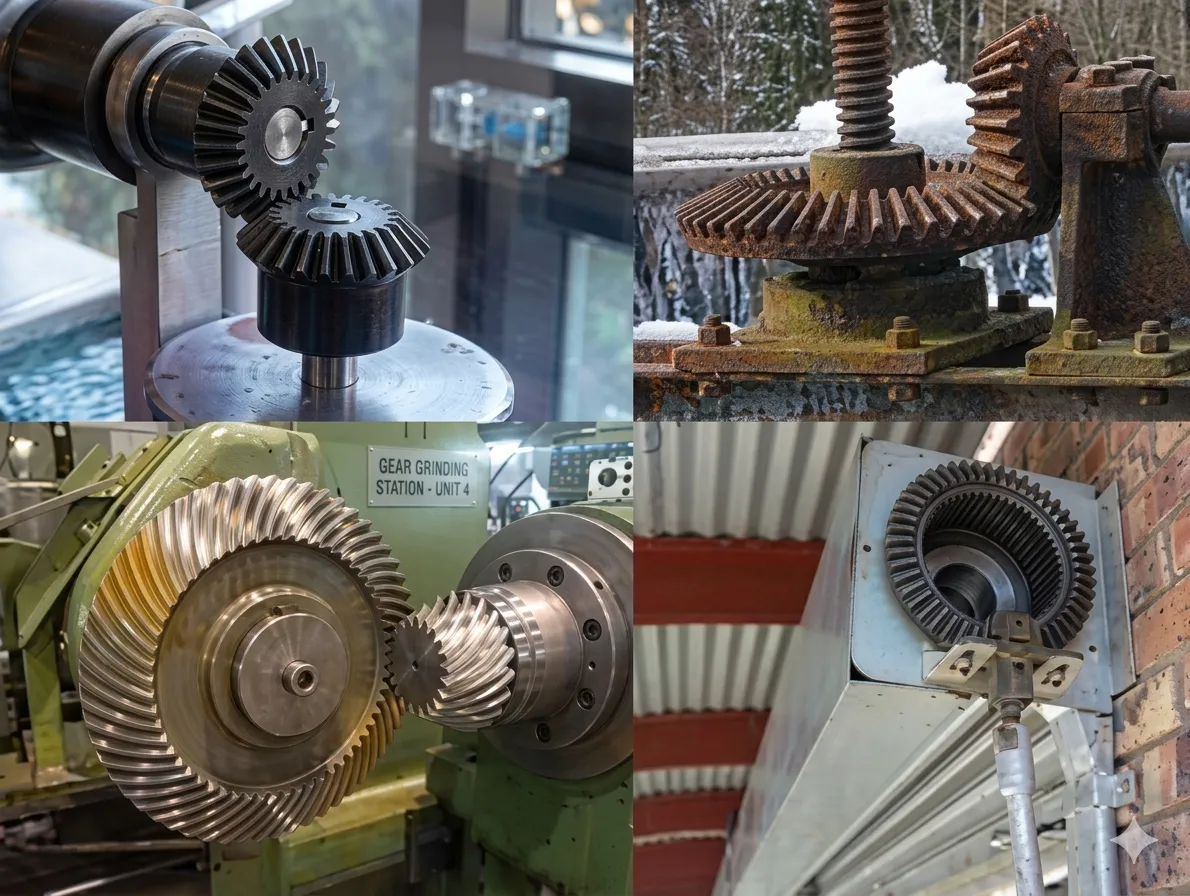
Conveyor gearboxes, shearer cutting heads, drill rig rotary drives, and crusher transmissions. Maximum alloy grade, tightest accuracy — the harshest conditions on the continent.
PTO headers, spreaders, balers, and irrigation pivot drives. Robustness for seasonal torque surges, field contamination, and outdoor year-round service with minimal intervention.
Rudder quadrant drives, windlass transmissions, deck crane slewing, and azimuth thrusters. Corrosion resistance as critical as load rating — ABS/Lloyd's documentation available.
Wind turbine pitch drives, hydroelectric gate actuators, and generator auxiliary drives. 20-year design lives demand the highest AGMA accuracy and fatigue-resistant surface treatments.
Concrete mixers, tower crane slewing, TBM gearheads, and excavator swing motors. Sealed units with extended service intervals for high-contamination environments.
Heavy vehicle differentials, transfer cases, and auxiliary drives. Hypoid gears factory-matched as lapped pairs — the correct standard for continuous-duty drivetrains.
General gearboxes, printing presses, textile machinery, and paper mills. Prototype-to-production capability in as little as four weeks for standard configurations.
Filling machines, dairy conveyors, and bottling line drives. Stainless or FDA-compliant coated gears with NSF H1 lubrication for high-pressure washdown service.
What Sets Us Apart
The Australian market has plenty of gear suppliers. What it lacks is a manufacturer combining local engineering response with genuine technical depth and end-to-end process accountability.
Same-day technical response from Condell Park during Australian business hours. No time-zone gaps, no language barriers, no offshore minimum-volume constraints.
We reverse-engineer gears from worn samples or partial drawings and develop new geometries from torque and speed requirements — backed by AGMA 2003 calculations, not estimation.
Stock gears dispatched same or next business day. Custom configurations in 4–8 weeks. Emergency expedite available — we give a direct timing commitment, not a range.
Every shipment includes inspection reports, material certificates, hardness records, and contact pattern photographs. No paperwork gaps at goods receipt.
Spiral bevel and hypoid gears lapped and supplied as factory-matched pairs. We'll explain why replacing one element of a worn set leads to predictable repeat failures.
We perform fractographic analysis, hardness profiling, and lubrication assessment on failed gears — producing written reports with corrective recommendations to prevent recurrence.
Condell Park, Sydney
Located in Sydney's south-west industrial corridor, close to Port Botany, the M5, and the Hume Highway. Same-day carrier pickup is straightforward — interstate clients in QLD, VIC, SA, and WA typically receive orders within two to four business days.
For international shipments we work with licensed freight forwarders and supply commercial invoices, Country of Origin certificates, and ISPM-15 compliant phytosanitary crating. Quotes available FOB Sydney Port or CIF destination.
Frequently Asked Questions
What is the difference between straight, spiral, and hypoid bevel gears?
Straight bevel gears have radial non-curved teeth — simple to manufacture, cost-effective for low-to-moderate speeds, but noisier and lower load capacity than the alternatives.
Spiral bevel gears have curved oblique teeth that engage progressively, producing quieter operation, higher load capacity, and significantly better fatigue life. The standard choice for most mining, industrial, and continuous-duty applications.
Hypoid gears are a form of spiral bevel where the pinion axis is offset from the ring gear axis — enabling a larger pinion diameter and more compact housing. Standard in automotive differentials and heavy conveyor drives. They require hypoid-specific EP lubricant and cannot be directly substituted into standard bevel gear housings.
Provide shaft angle, speed, torque, and duty cycle — we'll recommend the right type backed by an AGMA 2003 calculation.
Can you manufacture from a worn sample without original drawings?
Yes — reverse engineering is a core part of our service. You ship the worn gear to Condell Park (or provide high-resolution photos and key dimensions). We use optical gear measurement and 3D scanning to reconstruct the tooth profile, module, spiral angle, number of teeth, and mounting dimensions, and test the original hardness and micro-structure to confirm the heat treatment specification.
A reverse-engineered drawing is submitted for approval before any cutting begins. Typical lead time: 3–5 weeks from sample receipt and drawing sign-off.
What materials are available and how is the right alloy selected?
- 20CrMnTi (case-hardened): Most widely used — surface hardness HRC 58–62, good core toughness. Suitable for the majority of mining, industrial, and agricultural applications.
- 42CrMo4 (through-hardened): For lower-speed, high-torque drives where bending fatigue governs the rating calculation.
- 18CrNiMo7-6: Premium alloy for maximum toughness under shock loading — large mining gearboxes, agricultural PTO drives, and marine equipment.
- 440C / Duplex Stainless: For corrosion-critical environments. Allowable loads are derated against the reduced mechanical properties.
- Cast Iron (GGG40/60): Economical for large, slow-running gears where casting geometry is advantageous.
All material recommendations are backed by AGMA contact and bending stress calculations.
What accuracy grades do you manufacture to and how are they verified?
We manufacture to AGMA Q8–Q13 and DIN Grade 4–7. In practical terms: Q8–Q9 for standard industrial drives, Q10–Q11 for higher-speed applications with a noise specification, Q12–Q13 for turbomachinery and servo-driven equipment where gear-induced vibration must be minimised.
All gears are measured on a CMM in a 20°C ±1°C inspection room. Parameters recorded include single pitch deviation (fp), total cumulative pitch error (Fp), profile form and slope deviations, and total helix deviation (Fβ). Reports accompany all non-catalogue orders.
Do you supply matched pairs — what if I only need one gear replaced?
For spiral bevel and hypoid sets, matched pair supply is our standard recommendation. During lapping, each ring gear and pinion is run together to micro-refine the contact geometry specific to that pairing. Replacing one element with a new gear introduces a new surface geometry against a worn counterpart — typically producing uneven contact stress, accelerated wear, increased noise, and a shortened replacement lifespan.
If the mating gear shows measurable wear, we will recommend replacing both as a matched set. The upfront cost is higher; the total cost of ownership is lower.
What are your lead times and can you expedite for emergency shutdowns?
- Stock catalogue gears: Same or next-business-day dispatch.
- Modified standard gears (bore/keyway changes): 5–10 business days.
- Custom gears from drawings: 4–8 weeks depending on module and accuracy grade.
- Reverse-engineered gears: 3–6 weeks from sample receipt and drawing approval.
For emergency shutdowns, an expedite service prioritises your job through the cutting, heat treatment, and grinding queue. Email [email protected] with specifications for a direct timing commitment.
What lubrication do bevel gears require?
- Enclosed gearbox (splash): EP gear oil to AGMA 9005 or ISO 12925-1. Viscosity grade selected from pitch line velocity and operating temperature.
- Hypoid gears: Require a hypoid-specific EP additive package. Standard bevel EP oils should not be used without confirming the additive chemistry.
- Open/semi-exposed gears: NLGI Grade 2 or 3 lithium complex EP grease for agricultural and construction applications.
- Food-grade: NSF H1-rated lubricants only — we can recommend specific products meeting both performance and compliance requirements.
Lubrication specification review is included in our application support service at no additional charge.
Can you help identify why a gear failed prematurely?
Yes. A replacement that fails for the same reason as its predecessor is a failure of the supply relationship, not just the component. We examine: contact pattern location (reveals misalignment direction), wear morphology (abrasive, adhesive, pitting, spalling, or scuffing), tooth fracture surfaces (bending fatigue vs overload), and hardness profiling (confirms the original heat treatment specification was met).
We produce a written failure analysis report with photographs and corrective recommendations covering alignment, lubrication, gear geometry, or operating envelope changes to prevent recurrence.
Do you serve clients outside NSW and can you export internationally?
We supply clients across all Australian states and territories and export to New Zealand, Southeast Asia, and the Pacific Islands. Interstate transit to QLD, VIC, SA, and WA typically runs two to four business days via registered carriers with tracking.
For international export we provide: commercial invoice and packing list, Certificate of Origin (Australian Made), phytosanitary certificates for ISPM-15 compliant timber crating, and export control documentation where required. Quotes available FOB Sydney Port or CIF destination.
What information is needed for a custom gear quotation?
The minimum required for a preliminary assessment:
- Number of teeth on pinion and ring gear (or required gear ratio)
- Module, or face width dimensions if module is unknown
- Shaft angle — confirm if non-standard; 90° is most common
- Input speed (RPM) and transmitted power (kW) or torque (Nm)
- Duty cycle: continuous, intermittent, or shock-load factor
- Mounting dimensions: bore, keyway, hub length
- Operating environment: temperature range, contamination, lubrication method
- Required quantity
A drawing or physical sample shortens the process considerably. Send your enquiry to [email protected] — we acknowledge within two business hours during Australian working days.