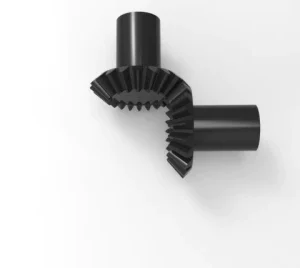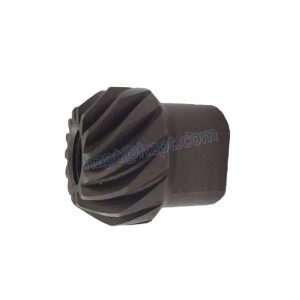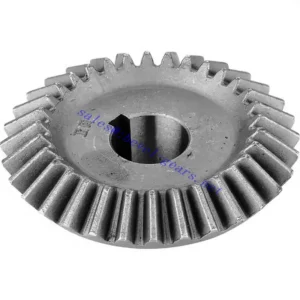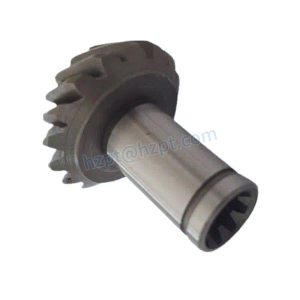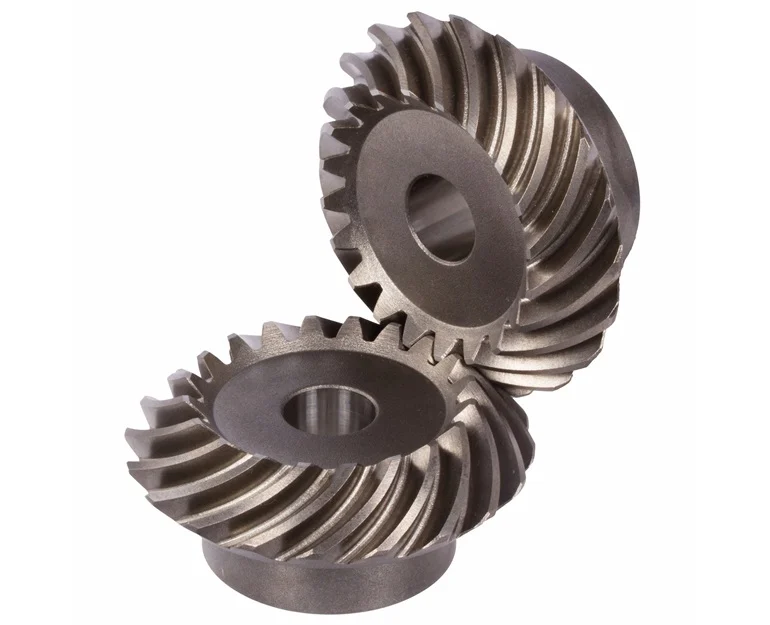
Spiral Bevel Gear
As one of the bevel gears manufacturers, suppliers, and exporters of mechanical products, We offer bevel gears and many other products.
Please get in touch with us for details.
Mail:[email protected]
Mechanical transmission studies show that spiral bevel gears can carry up to 35% more load than straight bevel gears of identical module and face width — while generating substantially less noise and vibration at operating speed. That performance gap widens further at high RPM, where simultaneous multi-tooth engagement (overlap coefficient typically ≥ 1.25) keeps contact smooth and consistent. Spiral bevel gears are the preferred choice across automotive, aviation, mining, and industrial machinery sectors worldwide — and Australia Ever-Power, operating from 27 Harley Crescent, Condell Park NSW 2200, supplies precision-certified spiral bevel gears to manufacturers across Sydney, Melbourne, Brisbane, Perth, and the broader Australian market.
What Is a Spiral Bevel Gear?
A spiral bevel gear is a conically shaped gear with curved, oblique teeth set at a defined helix angle to the pitch cone surface, designed to transmit torque and rotational motion between two intersecting shafts — typically at 90 degrees. Unlike straight bevel gears, whose teeth make full-face contact simultaneously, spiral bevel gear teeth engage progressively from one end of the tooth to the other, producing gradual load application, higher load-carrying capacity, and significantly reduced noise.
Technical definition: A spiral bevel gear is a precision-machined, conical gear with curved tooth flanks oriented at a mean spiral angle (typically 25°–35°), manufactured to AGMA, DIN, JIS, or ISO accuracy standards, where the tooth contact area is localised and controlled through a combination of tooth curvature radius and machine tool settings during the Gleason or Klingelnberg cutting process.
The working principle centres on the progressive, rolling contact between mating tooth flanks. As the driving gear rotates, contact begins at one end of the tooth face and sweeps across to the other end — with at least two pairs of teeth in mesh at any given moment. This overlap engagement distributes load across a larger tooth-surface area than a single-tooth-contact straight bevel gear can achieve, which is why spiral bevel gears are rated for higher torque, smoother running, and longer service life in demanding applications.
One defining characteristic of spiral bevel gears is localised contact area control. During gear cutting, the position and size of the contact patch under operating load can be fine-tuned by adjusting the radius of curvature of the mating tooth surfaces. This capability enables engineers to shift contact away from tooth edges — where stress concentrations are highest — significantly improving fatigue resistance and reducing sensitivity to mounting misalignment.
Types of Spiral Bevel Gears — Classification & Comparison
Spiral bevel gears divide into two main families based on shaft axis relationship, and within those families, further by cutting method. Choosing the wrong type for a given housing geometry is a common and costly specification error among Australian procurement engineers encountering bevel gear selection for the first time.
Standard Spiral Bevel Gear
The large-wheel axis and small-wheel (pinion) axis intersect at a single point. Standard 90° shaft angle is most common, though non-right-angle variants are feasible. Tooth flanks are curved at a helix angle of typically 25°–35°. Tooth surfaces can be ground and lapped to achieve Ra ≤ 0.8 µm, enabling low-noise, high-speed operation. The dominant spiral bevel type in industrial gearboxes, machine tools, and transfer cases.
Hypoid Spiral Bevel Gear
The large-wheel axis and pinion axis have a defined offset distance — the axes do not intersect. This offset enables a larger pinion pitch diameter for given ratio, increasing torque capacity and allowing lower shaft routing in vehicle bodies. Requires extreme-pressure (EP) lubricant due to high sliding velocity. Standard in passenger vehicle rear-axle differentials worldwide, including Australian automotive applications.
Gleason-Cut Spiral Bevel
Produced using the Gleason face-milling or face-hobbing method. Tooth depth is uniform (Gleason method typically produces tapering tooth depth). Used by the majority of global automotive and industrial gear manufacturers. All spiral bevel gears from Australia Ever-Power's supply network use the Gleason method unless otherwise specified.
Klingelnberg-Cut Spiral Bevel
Produced using the Klingelnberg continuous hobbing method, which generates uniform tooth depth along the full face width. Preferred in European industrial gearbox manufacturing and certain high-speed turbine drives. Available on request through Australia Ever-Power for customers with European OEM specifications requiring Klingelnberg geometry.
| Type | Axis Relationship | Noise Level | Load Capacity | Grindable | Typical Use |
|---|---|---|---|---|---|
| Standard Spiral Bevel | Intersecting | Low | High | Yes | Gearboxes, machine tools, industrial drives |
| Hypoid Spiral Bevel | Offset (non-intersecting) | Very Low | Very High | Yes | Automotive rear axle, heavy truck differential |
| Straight Bevel (comparison) | Intersecting | High | Medium | No | Low-speed auxiliaries only |
| Zerol Bevel (comparison) | Intersecting | Medium | Medium–High | Yes | Light commercial, steering actuators |
Key Specifications & Technical Parameters
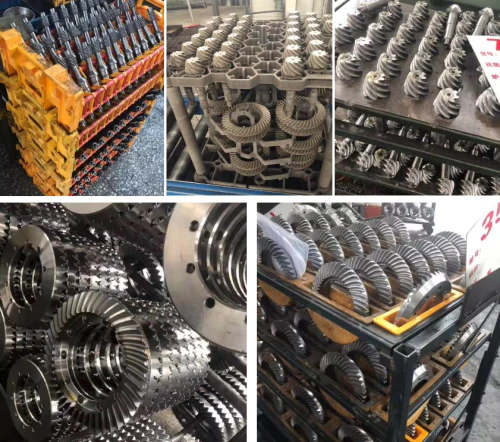
Spiral bevel gears from Australia Ever-Power are produced to internationally recognised standards — ISO, DIN, ANSI, JIS, and BS — with full dimensional and material traceability documentation supplied with every shipment. The parameters below cover the standard production range; custom specifications outside these ranges are achievable through our ODM service.
| Parameter | Specification | Notes |
|---|---|---|
| Module Range | M3, M4, M5, M8, M12 and custom | Non-standard modules available on request |
| Precision Grade | DIN 6 / DIN 7 / DIN 8 / DIN 9; AGMA equivalent available | DIN 6 = highest grade in this range |
| Tolerance | 0.001 mm – 0.01 mm – 0.1 mm (grade-dependent) | Tightest tolerance on ground tooth flanks |
| Material Options | C45 Steel, Alloy Steel, Stainless Steel, Brass, Copper, Aluminium, POM | C45 / alloy steel most common for industrial drives |
| Teeth Treatment | Hardened, Milled, or Ground | Ground tooth flanks required for DIN 6 grade |
| Surface Treatment | Zinc-plated, Nickel-plated, Black Oxide, Phosphatising, Anodising, Powder Coating, Passivation, Dacromet, Geomet | Specified per operating environment |
| Heat Treatment | Carburising & quenching, Nitriding, Annealing, Tempering, Induction hardening | Full heat treatment report provided |
| Standards Compliance | ISO, DIN, ANSI, JIS, BS — non-standard available | Metric sizes in any module confirmed |
| Minimum Tooth Number | As low as 5–6 teeth on pinion | Enables higher transmission ratios vs straight bevel |
| Overlap Coefficient | Typically ≥ 1.25 (vs < 1.0 for straight bevel) | Higher overlap = smoother running, higher load capacity |
| Customisation | ODM / OEM — drawing or sample to production part | Reverse engineering service available |
| Packaging | Plastic bag + carton or wooden export crate | Vacuum-sealed option for corrosion-sensitive grades |
| Delivery to Australia | DHL Express / UPS — 5–10 business days to Sydney | Sea freight available for large batch orders |
How to Select the Right Spiral Bevel Gear for Your Application
Spiral bevel gear selection requires a systematic approach that considers geometry, load, material, and operating environment in sequence. The framework below follows the logic of AGMA 2005-D03 (Design Manual for Bevel and Hypoid Gears) and is used by drivetrain engineers across Australian industrial and automotive sectors.
Applications of Spiral Bevel Gears in Australian Industry
Spiral bevel gears serve one of the broadest application ranges of any gear type — from miniature semiconductor handling equipment in Sydney's electronics manufacturing precinct to heavy mining drive systems in WA's Pilbara region. Their combination of high load capacity, smooth transmission, and compact geometry makes them the default choice whenever directional power transmission is required at moderate to high speed.
Automatic Control & Robotics
CNC machining centres, robotic arms, and automated assembly lines across Melbourne's advanced manufacturing corridor rely on precision spiral bevel sets for axis drive and angular power transfer with minimal backlash.
Semiconductor Equipment
Wafer handling and lithography positioning systems demand miniature spiral bevel gears with extremely low backlash (< 0.005 mm) and vibration-free operation — achievable at DIN 6 precision grade in stainless or aluminium alloy.
Medical Equipment
Surgical robots, imaging gantries, and rehabilitation devices use compact spiral bevel gear drives for precise, low-noise articulation. Stainless steel and POM variants meet cleanroom and sterilisation requirements.
Solar Tracking Systems
Australia's expanding utility-scale solar sector uses spiral bevel gear drives in single- and dual-axis tracker assemblies to maintain panel orientation. Aluminium alloy bevel gears minimise structural load on tracker frames.
Rail & Aviation
High-speed rail bogies and aviation actuation systems demand spiral bevel gears at the highest precision grades, with documented fatigue life under cyclic loads and full traceability from billet to finished component.
Automated Parking Systems
Multi-storey automated parking platforms use spiral bevel gear drives in pallet lifting and lateral transfer mechanisms. Compact packaging, high transmission efficiency, and reliable operation under frequent start-stop cycles are key requirements.
Mining & Resources
Drive gearboxes in Australian mining equipment — from drill rig head drives to conveyor right-angle reducers — frequently use large-module spiral bevel sets in M8–M12 range with alloy steel construction and carburised tooth flanks.
General Industrial Machinery
Pumps, mixers, conveyors, and packaging machinery throughout Australian food, chemical, and construction sectors use spiral bevel gear drives wherever shafts must change direction without sacrificing torque capacity or running smoothness.
Common Problems & Solutions — Spiral Bevel Gear Troubleshooting
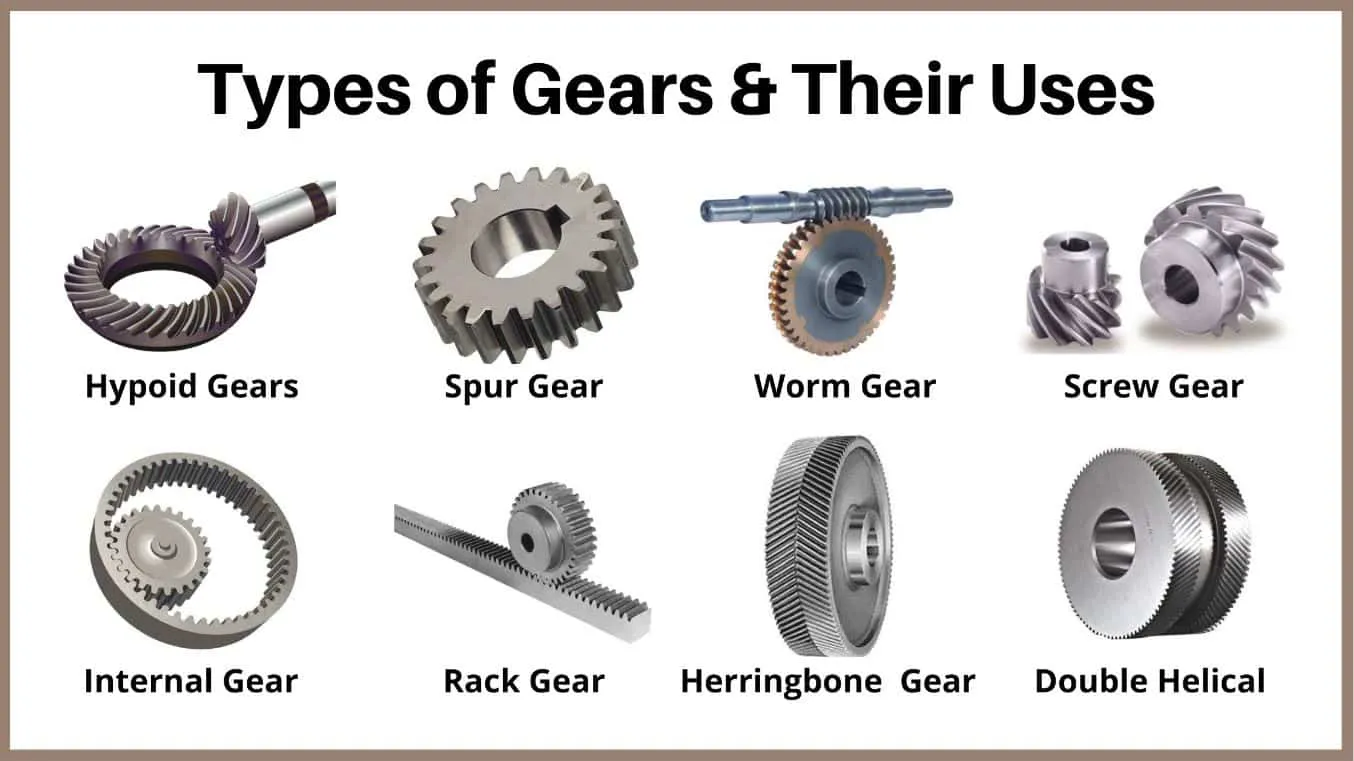
Understanding failure modes before they occur is the most cost-effective form of gear maintenance. The five problems below account for the majority of spiral bevel gear issues reported by Australian industrial operators — each with a structured root-cause and corrective action.
Quality Assurance & Testing Process
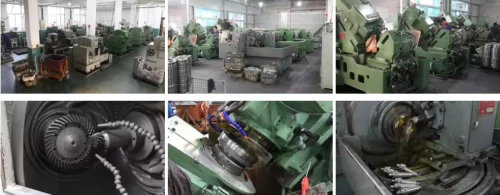
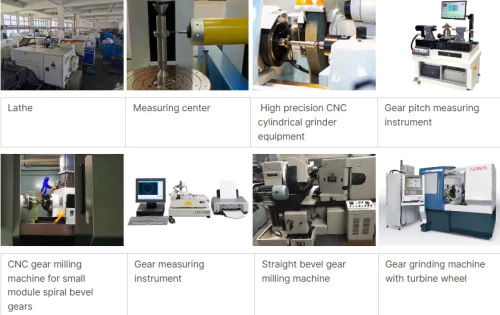
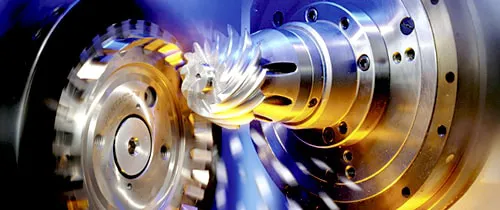
Every spiral bevel gear leaving Australia Ever-Power's certified supply chain passes through a structured, documented quality process. The testing sequence below produces the documentation package supplied with each shipment — a requirement for Australian manufacturers operating under AS/NZS quality management frameworks or supplying Tier 1 industrial customers.
Why Australian Engineers Choose Australia Ever-Power for Spiral Bevel Gears
Australia Ever-Power has been serving industrial manufacturers from 27 Harley Crescent, Condell Park NSW 2200 for over a decade — supplying precision gear components to customers across Sydney, Melbourne, Brisbane, Perth, Adelaide, and regional Australia. Our approach is straightforward: provide the technical depth of an engineering specialist with the supply-chain agility Australian procurement teams actually need.
Gleason-Method Cutting
All spiral bevel gears produced using the Gleason face-milling method — the global OEM standard — with tooth flanks suitable for precision grinding and lapping.
Reverse Engineering
No drawings? Send us the damaged or worn gear. Our engineering team conducts full dimensional reverse engineering and produces production-ready drawings at no additional charge for qualified orders.
Complete QA Documentation
Chemical composition, mechanical performance, UT report, heat treatment curve, CMM dimensional report, and contact pattern certificate — supplied as standard with every production order.
Any Metric Module
Tooling available for any metric module. Standard range M3–M12; custom modules for legacy replacement applications. No surcharge for non-catalogue sizes in qualifying quantities.
Australian Service Network
Sydney-based technical advisors available for pre-order engineering discussion. DHL Express delivery to all Australian states. Consolidated shipping with other gear types reduces per-order freight cost.
Quantity-Tiered Pricing
Pricing scales at defined volume thresholds. Blanket orders with scheduled releases allow volume pricing without the inventory commitment. The more parts per order, the lower the per-unit cost.
Market Pricing Overview — Spiral Bevel Gears in Australia
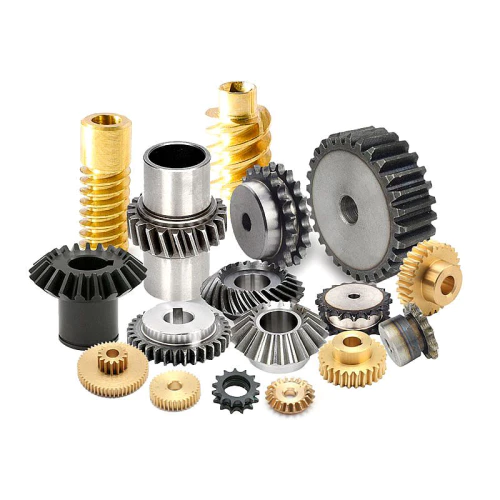
Spiral bevel gear pricing is driven primarily by module size, precision grade, heat treatment complexity, and order volume. The table below provides indicative AUD price ranges to support Australian procurement budget planning. All prices are ex-works; DHL Express freight to Australian destinations is additional and typically adds AUD $45–$180 per consignment depending on weight.
| Category | Specification | Approx. Unit Price (AUD) | Typical MOQ |
|---|---|---|---|
| Small Industrial Spiral Bevel | M3–M4, C45 Steel, DIN 8 | $22 – $75 | 20 pcs |
| Medium Industrial Spiral Bevel | M5–M8, Alloy Steel, DIN 7, Hardened | $85 – $260 | 10 pcs |
| High-Precision Ground Spiral Bevel | M3–M8, Alloy Steel, DIN 6, Carburised & Ground | $150 – $520 | 5 pcs |
| Large Module Industrial | M10–M12, Alloy Steel, DIN 7 | $280 – $980 | 5 pcs |
| Hypoid Matched Pair | M5–M8, Alloy Steel, DIN 6, Lapped Pair | $190 – $680 | 5 pairs |
| Custom ODM / OEM | Any spec — drawing or sample to production | POA — request quote | 1 pc (sample) |
Compliance, Sustainability & Global Export Markets
Australia Ever-Power's spiral bevel gear supply chain operates under ISO 9001:2008 quality management certification, providing the documentation traceability required by Australian manufacturers operating under AS/NZS ISO 9001 or supplying industries with structured quality requirements such as defence, medical devices, and energy infrastructure.
From a sustainability perspective, precision spiral bevel gears contribute meaningfully to energy efficiency. Correctly specified, ground-tooth spiral bevel drives typically exhibit transmission efficiencies of 98–99% — compared to 94–96% for worn or lower-precision straight bevel sets. In continuous-duty industrial applications, this efficiency difference translates to measurable reductions in energy consumption and heat rejection over the life of the equipment.
Spiral bevel gears from Australia Ever-Power ship regularly to customers in the United States, Germany, United Kingdom, Japan, South Korea, Canada, New Zealand, and across Southeast Asia, in addition to the domestic Australian market. The consistent demand from these technically demanding markets reflects the manufacturing precision and documentation quality that our supply chain delivers — and that Australian customers have access to through our Condell Park NSW operation.
What Australian Customers Say
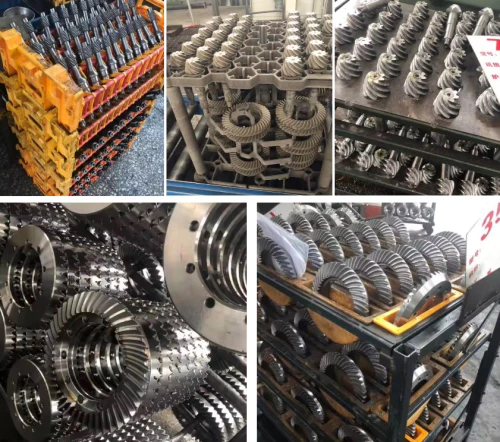
Engineers and procurement managers across Australia's manufacturing, energy, and medical sectors consistently highlight three things: dimensional accuracy, complete QA documentation, and the ability to handle non-standard specifications without excessive lead times.
"We needed M8 spiral bevel gears for a conveyor right-angle drive at our Brisbane processing plant — a non-standard ratio that no catalogue supplier could match. Australia Ever-Power reverse-engineered our worn sample, produced new DIN 7 alloy steel gears, and delivered within four weeks. Contact pattern was correct on first installation."
"Our Melbourne facility manufactures CNC machine tool spindle heads. We switched to DIN 6 ground spiral bevel gears from Australia Ever-Power two years ago — noise levels in our spindle test rigs dropped measurably, and we haven't had a single gear-related warranty return since. The CMM reports they provide satisfy our Tier 1 customer documentation requirements."
"We source M4 stainless spiral bevel gears for a medical imaging gantry built in Sydney. The cleanliness and surface finish requirements are strict — Ra ≤ 0.4 µm on the tooth flanks. Australia Ever-Power met the finish spec on the first sample batch and provided full material traceability. Delivery to our Macquarie Park facility was five business days via DHL."
"We install automated parking systems across Perth and Adelaide. The M5 spiral bevel drives in our pallet-lift units used to be our highest-frequency maintenance item. Since switching to Australia Ever-Power alloy steel gears with carburised tooth flanks, our service interval has doubled and customer complaints about noise have dropped to near zero."
Frequently Asked Questions
Can you manufacture spiral bevel gears that are not listed in your standard range?
+
All our spiral bevel gears are made to order — we carry no off-the-shelf stock in the traditional sense. This means we can produce gears to any module, tooth number, ratio, material, and precision grade you specify. Standard pre-designed configurations turn around faster than fully custom geometry, but both routes are available. Submit your drawing, sample, or even just a description of your application requirements, and our engineering team will respond within two business days with a feasibility assessment and quote.
What are the payment terms and do you require full payment upfront?
+
Standard payment terms are 30% deposit on order confirmation and 70% balance prior to shipment. Payment is accepted via T/T (bank transfer) or L/C. For ongoing supply arrangements with established Australian accounts, extended payment terms can be discussed — contact our Condell Park NSW team to discuss your purchasing programme. Full pre-payment is required before goods are despatched; we do not ship on open account to new customers.
How do I identify the correct spiral bevel gear to replace a worn or damaged unit?
+
If the original drawings or part number are unavailable, send us the worn gear (or clear photographs showing both faces, the teeth, and a ruler for scale). Our team specialises in reverse engineering spiral bevel gears — measuring tooth count, module, face angle, pitch angle, bore diameter, and keyway dimensions to reconstruct the geometry. A reverse-engineering assessment typically takes 3–5 business days, after which we confirm the specification and provide a quotation for new matched pairs.
What is the sample lead time, and how much does a sample cost?
+
Sample prices range from approximately AUD $5 to AUD $180 depending on size, material, and precision grade. DHL Express freight to Australia on sample parcels is typically AUD $45–$90 and is paid by the customer. Sample production lead time is 5–7 business days for straightforward geometries; complex or large-module gears may require 10–15 business days. Express freight is charged at cost with no markup — we do not profit from sample shipping.
Can I get a lower price by ordering more parts?
+
Yes — volume pricing is a core part of how our commercial model works. Setup and tooling costs are spread across the batch, so unit cost decreases progressively as quantity increases. Volume price breaks typically occur at 10, 50, 200, and 500-piece thresholds. For ongoing annual programmes, blanket orders with scheduled monthly or quarterly releases allow you to access volume pricing while limiting your inventory exposure at any given time.
Can spiral bevel gears be made in materials other than steel — such as aluminium or plastic?
+
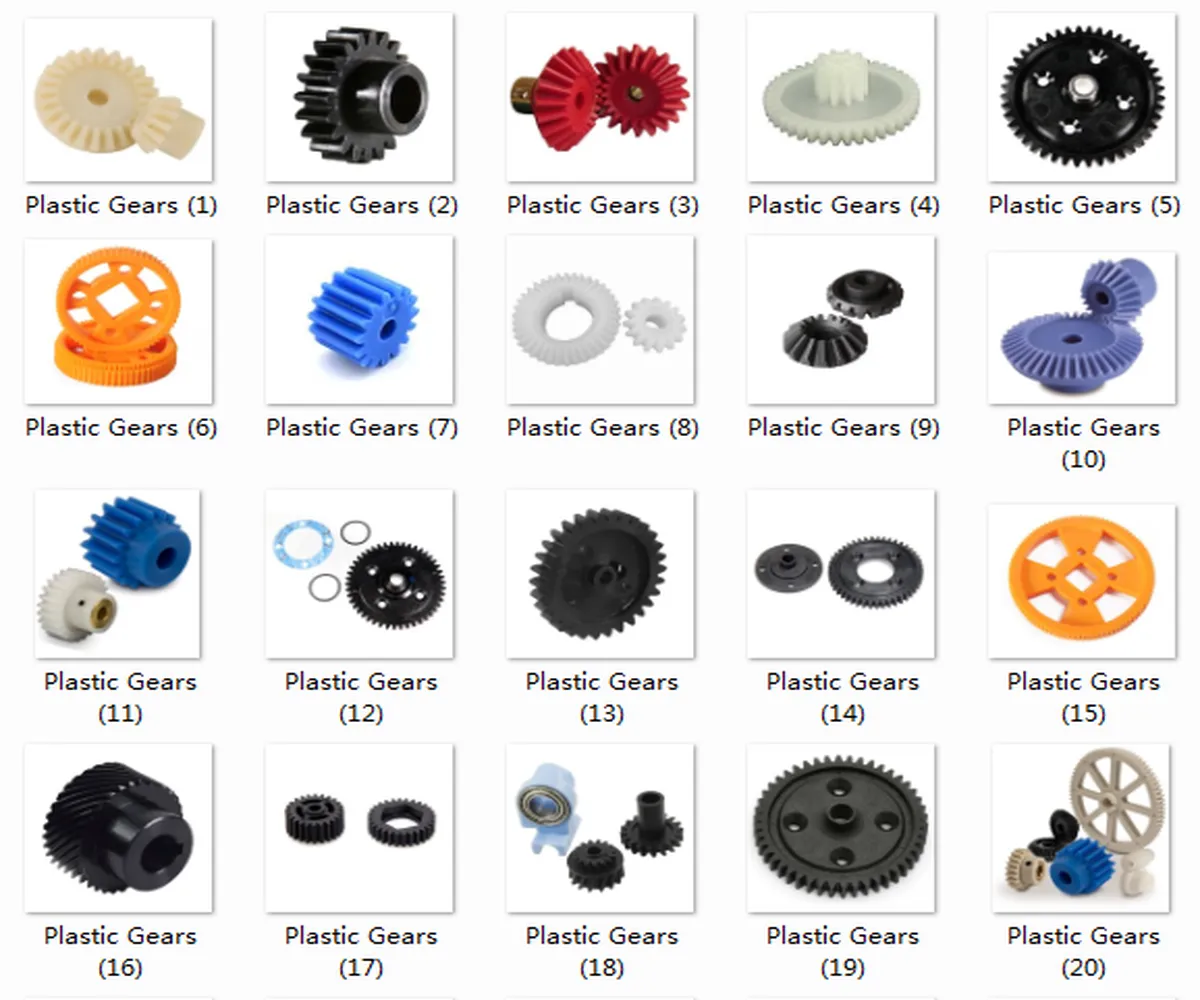
Absolutely. We produce spiral bevel gears in aluminium alloy (7075), brass, bronze, copper, stainless steel, and POM (Delrin) in addition to standard carbon and alloy steels. Material selection depends entirely on the application — torque level, operating speed, environmental conditions, and weight requirements. Aluminium spiral bevel gears are popular in solar tracking drives, UAV systems, and lightweight automation equipment where mass is a design constraint. POM and brass variants are reserved for low-torque instrument and medical device applications.
Do you offer surface treatments for spiral bevel gears used in corrosive or outdoor environments?
+
Yes. The full range of surface treatments is available: zinc plating, nickel plating, black oxide, phosphatising, Dacromet, Geomet, powder coating, and anodising (for aluminium variants). For Australian solar and outdoor equipment applications, Dacromet coating provides significantly better salt-spray resistance than standard zinc plating. Specify your operating environment and corrosivity class when enquiring and our technical team will recommend the appropriate surface treatment — or combination of base material and coating — for your conditions.
Customer Case Study — Sydney CNC Machine Tool Manufacturer
A Sydney-based manufacturer producing high-speed CNC milling centres was experiencing consistent gear noise complaints from end-users at spindle speeds above 4,000 RPM. The root cause was identified as DIN 8 spiral bevel gears in the angular head assembly — adequate for low-speed use but unable to maintain smooth, quiet contact at the operating speeds their customers required.
Challenge
Replace DIN 8 milled spiral bevel gears in an M4 alloy steel matched pair with DIN 6 ground equivalents — same geometry, upgraded precision — without modifying the existing housing or bearing arrangement.
Solution
Australia Ever-Power produced five matched pairs to DIN 6, with carburised and ground tooth flanks (Ra ≤ 0.8 µm), from the existing drawings within 12 business days. Full CMM reports and contact pattern documentation were included. DHL Express delivered to Sydney in six days from despatch.
Outcome
Spindle noise at 4,000 RPM dropped by an independently measured 7 dB(A). The manufacturer updated their production specification to DIN 6 ground gears for all angular head assemblies and established a blanket order covering 60 pairs per year — consolidated with other gear types for a single annual DHL shipment.
Source Precision Spiral Bevel Gears for Your Australian Project
Talk to our engineering team at 27 Harley Crescent, Condell Park NSW 2200. Send us your drawings, a worn gear sample, or just your application parameters — we'll respond within two business days with a specification recommendation and quote.
ISO 9001 Certified · DIN 6 Precision · Gleason-Cut · Reverse Engineering Available · DHL to All Australian States