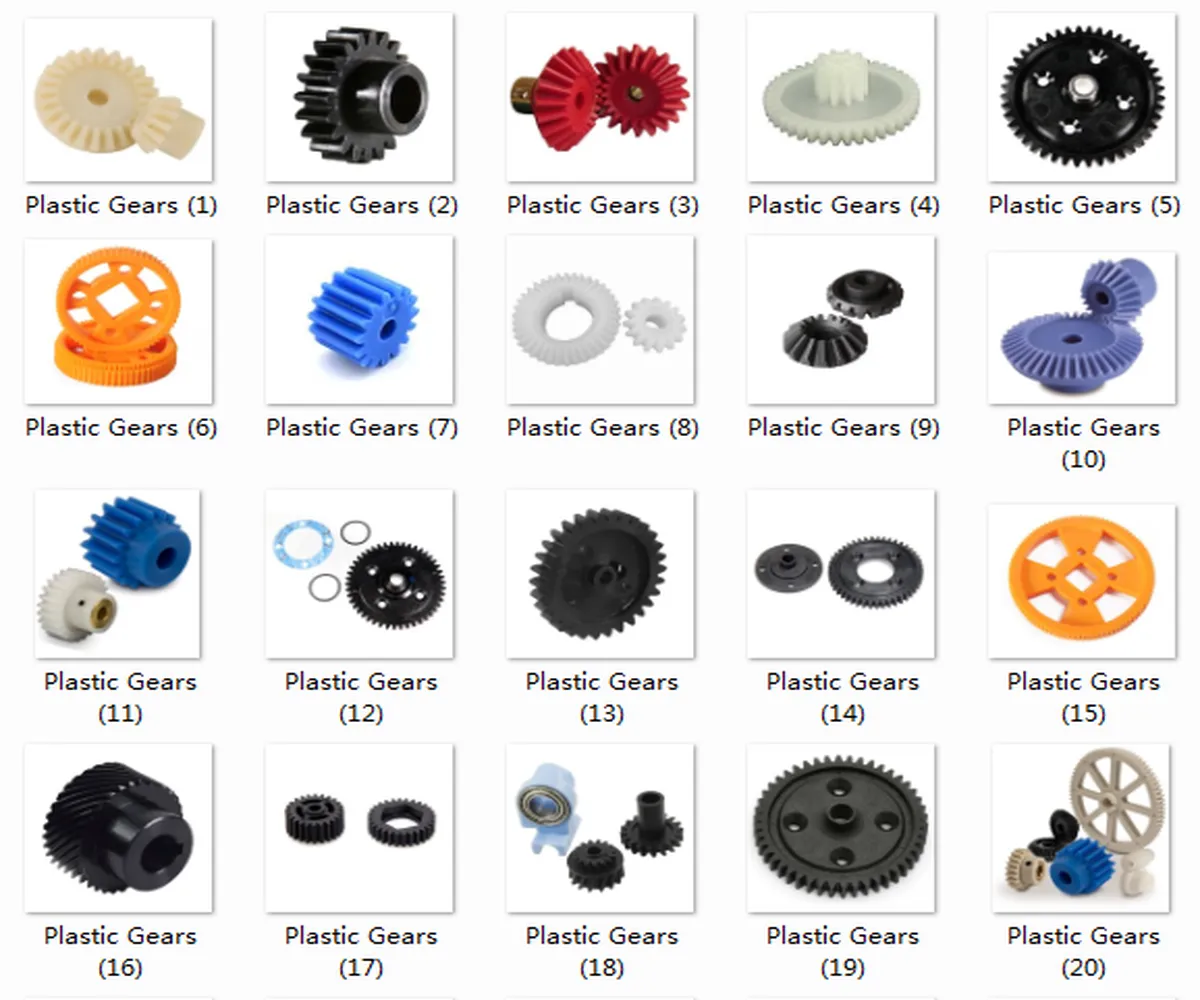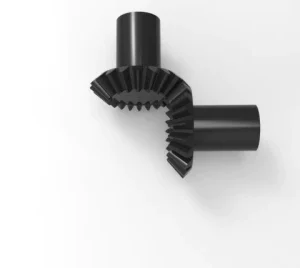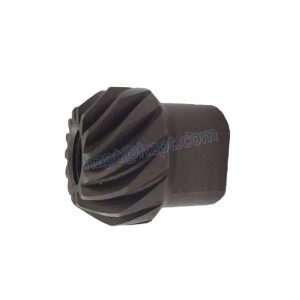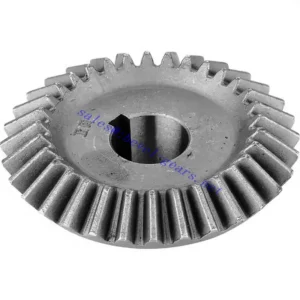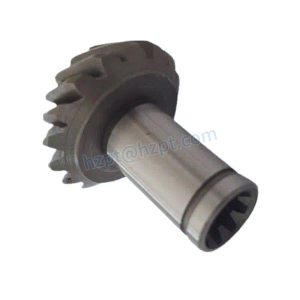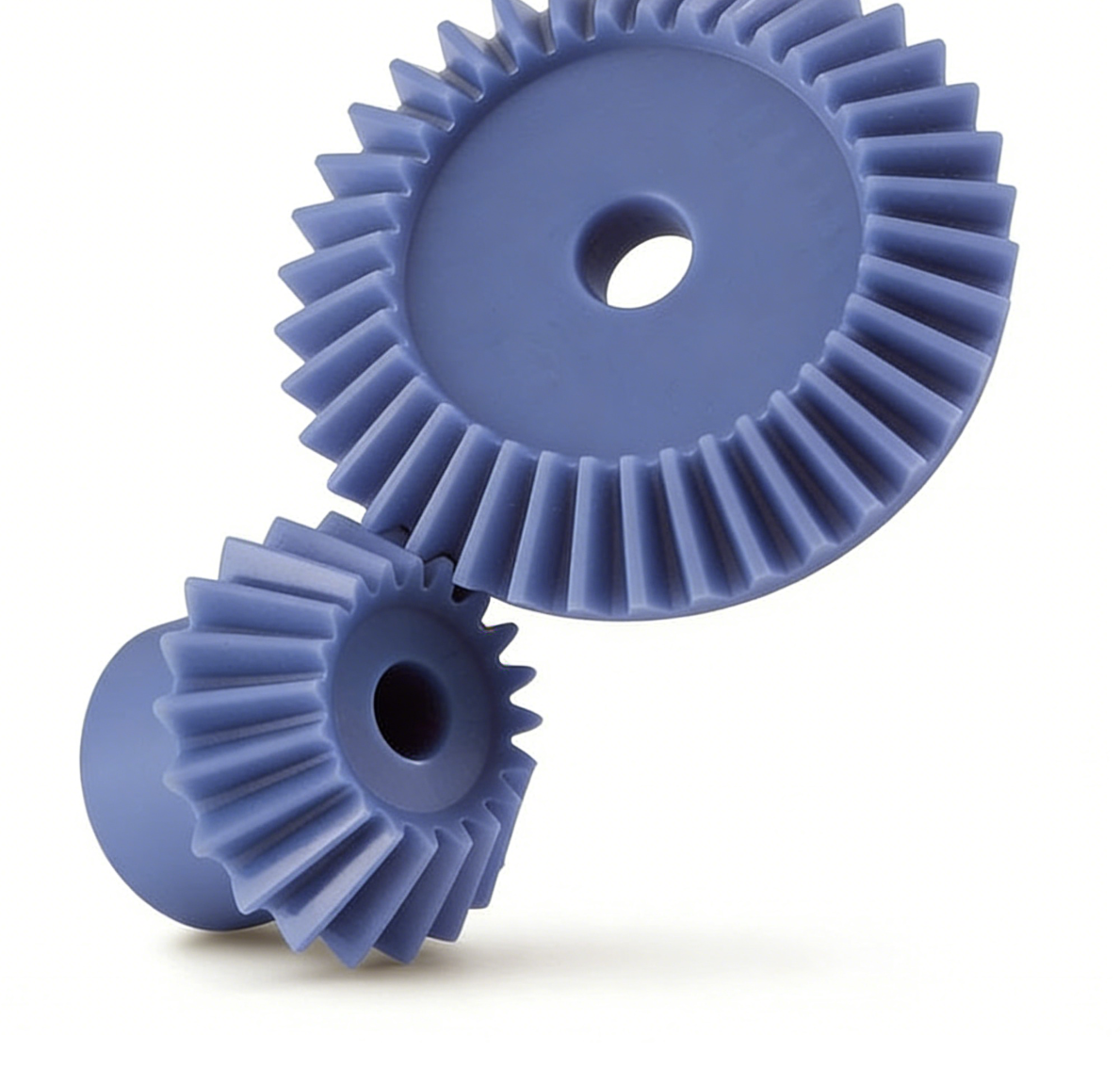
Plastic Bevel Gears
As one of the bevel gears manufacturers, suppliers, and exporters of mechanical products, We offer bevel gears and many other products.
Please get in touch with us for details.
Mail:[email protected]
Equipment noise complaints account for over 45% of maintenance call-outs in Australian food processing and office automation plants — a figure that drives growing interest in polymer drivetrain components. Plastic bevel gears redirect rotational motion between intersecting shafts while delivering measurably lower noise, up to 60% weight reduction versus steel equivalents, and genuine self-lubrication that cuts scheduled maintenance. Australia Ever-Power, based at 27 Harley Crescent, Condell Park NSW 2200, supplies precision plastic bevel gears in POM, Nylon, PEEK, and PPA to manufacturers across Sydney, Melbourne, Brisbane, and Adelaide — with modules from M0.15 to M2.0 and gear ratios of 1:1 through 5:1 available ex-stock or custom-machined to drawing.
What Is a Plastic Bevel Gear?
A plastic bevel gear is a conically shaped gear manufactured from engineering polymer — most commonly POM (Delrin/acetal), Nylon (PA6, PA66), PEEK, or PPA — whose tooth-bearing faces are arranged so that two mating gears transmit torque between shafts whose axes intersect, typically at 90°. The conical geometry allows the drive axis to change direction within a compact space, a function shared with metal bevel gears but achieved here at substantially lower mass, noise, and cost.
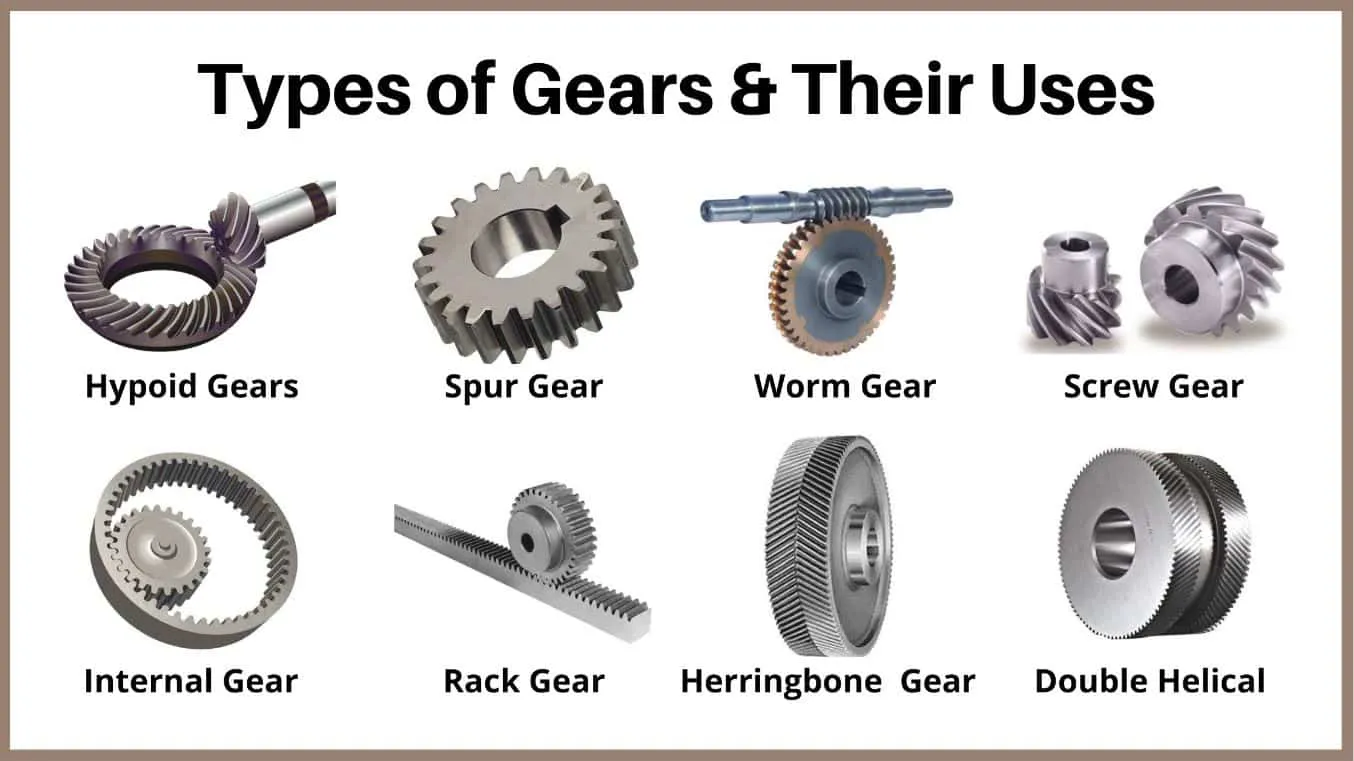
Three tooth-form variants exist within the plastic bevel gear family: straight (simplest, lowest cost), spiral (progressive tooth engagement, lower noise and vibration), and hypoid (offset shaft axes, highest torque density). The choice between them is primarily governed by speed, noise budget, and space constraints rather than material — all three forms are achievable in engineering polymers.
One defining characteristic sets plastic bevel gears apart from their metal counterparts: many engineering polymers — particularly POM and PA66 with MoS₂ additive — are inherently self-lubricating. This eliminates the grease replenishment schedules that steel gear drives require and makes plastic bevel gears a practical choice wherever lubricant contamination would be problematic, such as food processing, pharmaceutical packaging, and laboratory automation equipment used across Australian manufacturing facilities.
The operating temperature window for standard POM-based plastic bevel gears is −40°C to +80°C, while PEEK-based variants extend continuous service to +250°C, expanding the range of industrial environments where polymer gears are viable.
Types of Plastic Bevel Gears: Tooth Forms, Gear Ratios & Material Grades
Plastic bevel gears are categorised along two axes: tooth geometry and gear ratio. Understanding both dimensions up front prevents costly redesigns during the engineering validation phase.
Tooth Geometry Options
Straight Bevel
Teeth run parallel to the cone axis. Easiest to mould, lowest tooling cost. Best suited to low-speed, light-load drives where noise is not critical — toy mechanisms, simple actuators.
Spiral Bevel
Curved oblique teeth produce gradual engagement, reducing peak impact loads and noise by up to 40% versus straight. Standard choice for office automation, power tools, and food machinery.
Zerol Bevel
Zero helix angle at midpoint combines smooth engagement with axial thrust loads similar to straight bevel. Useful in precision instruments where thrust bearing capacity is limited.
Hypoid Bevel
Offset shaft axes reduce overall assembly height. Delivers higher gear ratios in smaller envelopes — increasingly specified in compact consumer electronics and robotics drives.
Available Gear Ratios & Typical Applications
Key Specifications & Parameters
The following specification table covers the full standard range supplied by Australia Ever-Power. Custom dimensions, bore sizes, and tooth counts are available on request with OEM/ODM lead times of 7–21 days.
Engineering Polymer Comparison for Bevel Gear Applications
Six Practical Advantages of Plastic Bevel Gears Over Metal
The advantages of plastic bevel gears are concrete and measurable — not marketing assertions. Here is what the engineering data shows, with relevance to Australian industrial conditions.
Cost-Effective Production
Injection moulding enables high-volume runs at unit costs 40–70% lower than CNC-machined metal equivalents. Tooling amortises rapidly in production volumes above 500 pieces, making plastic the economical default for consumer and light industrial applications.
Up to 60% Lighter
POM has a density of approximately 1.42 g/cm³ versus 7.85 g/cm³ for steel — a 5.5× density difference. In portable power tools and handheld medical devices used by Australian engineers, this weight reduction directly improves operator ergonomics and motor efficiency.
Inherent Corrosion Resistance
Engineering polymers do not oxidise or corrode. In humid coastal environments — a practical concern for manufacturers in Sydney, Brisbane, and Darwin — plastic bevel gears maintain dimensional stability without protective coatings that can flake and contaminate product streams.
Quieter Operation
The damping coefficient of POM is roughly 10× higher than steel, absorbing tooth-mesh vibration before it radiates as airborne noise. Measured noise reductions of 5–12 dB(A) versus equivalent steel gear sets are common in office machinery and consumer appliance drives.
Self-Lubricating
POM and MoS₂-filled nylon release microscopic quantities of internal lubricant during meshing, eliminating scheduled grease intervals in sealed or inaccessible gear housings. This reduces maintenance labour cost and removes the risk of lubricant contamination in food-grade and pharmaceutical applications.
Design Flexibility
Injection moulding allows integral features — flanges, snap-fit arms, colour coding — to be incorporated at no added cost. Complex housing geometries that would require expensive multi-axis machining in metal are routine in polymer moulding tooling.
How to Select the Right Plastic Bevel Gear for Your Application
Selecting a plastic bevel gear incorrectly is the most common cause of premature failure in polymer drivetrain designs. Work through these six steps before finalising a specification.
Establish Load & Speed Requirements
Determine the transmitted torque (Nm), input speed (rpm), and required service life (hours or cycles). Plastic gears have lower allowable tooth stress than steel — typically 20–40 MPa bending versus 200–500 MPa for carburised steel — so load and speed must be confirmed before module selection. If operating conditions exceed POM's capability, PEEK or a hybrid plastic-metal pair (polymer gear mating with a steel pinion) is appropriate.
Select the Gear Ratio
The standard range covers 1:1 through 5:1. A 1:1 ratio changes drive axis direction without speed reduction; ratios from 2:1 onward both redirect and reduce speed. If a higher ratio is needed in a single bevel stage, discuss custom tooth counts with Australia Ever-Power's engineering team — non-standard ratios are achievable via ODM tooling within 14–21 days.
Choose Module & Tooth Count
Module (m) sets gear size relative to tooth count: pitch diameter = m × number of teeth. For compact mechanisms under 20 mm diameter, use M0.25–M0.5. For higher torque applications in the 50–120 mm range, M1.0–M2.0 is appropriate. Avoid fewer than 12 teeth on the pinion to prevent undercutting at standard 20° pressure angle.
Select the Right Polymer Grade
Use the material comparison table above as a guide. Key decision factors: (a) operating temperature — POM is suitable to +80°C, PEEK to +250°C; (b) chemical exposure — PEEK and PPA offer superior resistance to automotive fluids; (c) moisture absorption — PA66 absorbs up to 8% moisture by weight, which causes dimensional change and backlash increase; POM absorbs < 0.25%.
Decide on Brass Insert or Plain Bore
Plain bore variants suit applications with light shaft press-fit or adhesive bonding. Brass insert variants (BS suffix in part numbers) provide a threaded set-screw seat for positive shaft retention, recommended wherever the gear must transmit meaningful torque and resist axial pull-out. The brass insert adds modest cost but substantially improves shaft-connection reliability over the product's service life.
Validate with a Sample Before Production Commitment
Polymer gear dimensional behaviour under load and temperature differs from the nominal drawing dimensions. Request a sample from existing stock — Australia Ever-Power can despatch from Condell Park NSW within 1–3 business days for standard sizes. Run the sample at target load and temperature for a representative period before locking in production quantities.
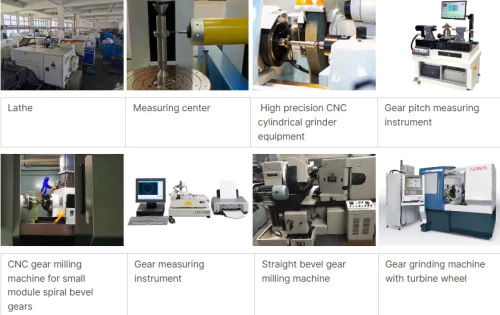
How Plastic Bevel Gears Are Manufactured: The Production Process
Quality in polymer gear production is determined as much by mould design and process control as by material selection. Australia Ever-Power's supply chain follows a defined seven-stage process for all production runs.
① Tooling Design & DFM Review
CAD tool design incorporates correct tooth involute profile, draft angles, gate location, and ejection strategy. DFM check confirms dimensional feasibility before mould steel is cut.
② Precision Mould Manufacturing
Hardened P20 or H13 steel mould cavities machined to ±0.005 mm. EDM finishing achieves tooth-surface Ra ≤ 0.8 µm for quiet mesh engagement.
③ Material Drying & Preparation
Hygroscopic polymers (PA, PBT) dried to < 0.02% moisture content before processing. POM processed dry. Material batch traceability recorded against each production run.
④ Injection Moulding
Closed-loop pressure and temperature control maintains shot-to-shot consistency. Mould temperature controlled to ±2°C. Cavity pressure monitored to detect short shots immediately.
⑤ Controlled Cooling & Annealing
Parts cooled on a controlled jig to prevent warpage. POM gears annealed at 140°C for 1–2 hours to relieve moulding stress and stabilise dimensional targets.
⑥ Dimensional Inspection
Tooth pitch, profile, runout, and bore diameter verified by gear measuring machine and CMM. AQL sampling per ISO 2859-1; 100% inspection available for critical orders.
⑦ Vacuum Packaging & Dispatch
Gears vacuum-sealed in anti-static trays to prevent moisture absorption during transit. DHL, UPS, FedEx, and TNT services to Sydney, Melbourne, Brisbane, and Perth.
Applications of Plastic Bevel Gears in Australian Industry
Plastic bevel gears occupy a well-defined performance band: where load is moderate, noise and weight matter, and metal's higher cost or mass cannot be justified. Australian manufacturers across multiple sectors rely on them for the following.
🖨️ Office Automation & Printing
A/4 and wide-format printers, photocopiers, and document scanners use POM bevel gear sets for paper-feed right-angle drives. The self-lubricating property eliminates lubricant bleed onto paper — a genuine cleanliness requirement for Australian commercial print operations.
🍞 Food Processing Machinery
Bakery equipment, beverage filling lines, and packaging machinery in Melbourne and Sydney food manufacturing plants increasingly specify polymer gears to satisfy FSANZ food-contact safety requirements. PA66 and POM are both accepted food-contact materials under AS/NZS 4020.
🔧 Power Tools
Angle grinders, cordless drills, and electric screwdrivers use spiral plastic bevel gears to redirect motor torque to the tool head. POM's combination of stiffness, low weight, and noise damping is well-suited to hand-held power tools where operator fatigue over an 8-hour shift is a practical concern.
🏠 Consumer Electronics & Appliances
Robot vacuum cleaners, automated blinds, HVAC damper actuators, and kitchen appliances use small-module plastic bevel gears (M0.25–M0.5) at high volumes. Injection moulding unit costs at 10,000+ piece runs routinely fall below $0.50 per gear for standard configurations.
🧸 Toy & Educational Robotics
Australian STEM education suppliers and toy manufacturers require bevel gears at very low cost with safe materials. POM meets REACH and RoHS requirements; its colour-ability through pigment addition also enables educational colour coding of gear ratios.
⚗️ Laboratory & Medical Instruments
Automated liquid handling, diagnostic analyser carousels, and pipetting robots use miniature POM or PEEK bevel gears where chemical resistance to reagents and low particulate generation are required — both important criteria in Queensland and Victorian pathology laboratories operating under NATA accreditation.
Maintaining Plastic Bevel Gears: What Actually Needs Attention
While plastic bevel gears require significantly less maintenance than metal gear drives, they are not maintenance-free. Ignoring the following points accounts for the majority of premature polymer gear failures in Australian field conditions.
- Temperature monitoring: POM begins to creep above +80°C. If ambient temperature in your enclosure approaches this threshold during summer operation in Queensland or Western Australian sites, switch to PPA or PEEK before failure occurs — a reactive replacement is always more expensive than a proactive material upgrade.
- Backlash check: Measure gear mesh backlash at each scheduled maintenance stop. Allowable backlash for M1.0 plastic bevel gears is typically 0.06–0.12 mm. Values above 0.2 mm indicate significant tooth wear or bore loosening and warrant gear replacement.
- Moisture management (Nylon gears): PA66 absorbs moisture and expands — up to 3% dimensional increase at full saturation. In humid coastal environments, seal PA gear housings to limit water ingress, or specify POM as the dimensionally stable alternative.
- Lubrication of metal-mating gears: When a plastic bevel gear runs against a metal pinion, the metal member still requires lubrication. Use a food-safe grease (NSF H1 rated) for food-contact applications. Do not apply lubricant to POM-against-POM meshes — it disrupts the self-lubricating mechanism and attracts particulate contamination.
- Tooth wear inspection: Inspect tooth flanks under 5× magnification every 2,000 operating hours. White powdery residue on POM gear flanks indicates excessive abrasive wear — usually caused by gear misalignment. Realign shafts to within 0.05 mm TIR before fitting replacement gears.
Plastic Bevel Gear Pricing: What Australian Buyers Should Expect
Pricing for plastic bevel gears varies substantially by volume, material, and customisation level. The table below provides a market orientation for procurement teams building initial BOMs.
Indicative pricing only. Final price depends on material, quantity, module, and custom requirements. Contact Australia Ever-Power for a firm quotation.
Why Australian Manufacturers Choose Australia Ever-Power for Plastic Bevel Gears
Australia Ever-Power is a precision gear specialist — not a catalogue distributor carrying thousands of unrelated items. Located at 27 Harley Crescent, Condell Park NSW 2200, the team focuses exclusively on bevel gear supply and brings deep product knowledge to every technical inquiry.
Technical Drawings Accepted
DXF, STEP, IGES, or PDF — DFM feedback within 48 hours. Non-standard ratios, bore sizes, and flange configurations all handled.
Samples Without High MOQ
Stock samples dispatched in 1–3 business days. Custom prototype samples in 7–14 days. No minimum quantity on initial samples — de-risks your design validation process.
Express Delivery Nationwide
DHL, UPS, FedEx, and TNT reach Sydney, Melbourne, Brisbane, Perth, Adelaide, and Darwin within 3–7 business days from dispatch.
ISO-Certified with Full Documentation
ISO 9001:2015 certified. Material certificates, inspection reports, and RoHS/REACH declarations supplied with every order — essential for regulated industries.
Australian-Based Engineering Support
Technical queries answered in Australian business hours — AEDT/AEST. No time-zone delays. Local knowledge of Australian Standards and industry requirements.
No-Hassle Quality Guarantee
Any confirmed non-conformance resolved with replacement or full refund. Vacuum packing limits transit damage to under 0.5% of shipment volume — typical of international freight standards.
What Australian Procurement Teams Say About Our Plastic Bevel Gears
"We switched our commercial printer right-angle drive from metal to POM bevel gears sourced through Australia Ever-Power. Noise dropped noticeably and we haven't had a single maintenance call-out related to the drive in 14 months. The dimensional consistency across three separate shipments has been excellent — no incoming inspection failures at all."
"Our Melbourne food packaging line had recurring issues with lubricant contamination from the metal bevel gear sets in our filling heads. Australia Ever-Power recommended POM grades compliant with food-contact standards and had prototypes to us in four days. Six months into production, zero contamination incidents — a genuine improvement."
"We source M1.0 POM bevel gears in 3:1 ratio for our laboratory automation products. Price is very competitive versus European suppliers — roughly 55% less per unit at our volume. Quality has held up over 18 months. The only area I'd flag is that lead times for non-stock custom configurations can stretch to three weeks during peak periods."
"We make STEM robotics kits sold across Australian schools and needed POM bevel gears in four different ratios at very high volume with RoHS certification. Australia Ever-Power handled all four configurations under one order with a single inspection certificate covering the whole shipment. Simplified our supplier compliance paperwork considerably."
Frequently Asked Questions — Plastic Bevel Gears
Sustainability & Regulatory Compliance for Australian Buyers
Plastic gear components are increasingly scrutinised under Australian corporate sustainability frameworks and global chemical regulations. Australia Ever-Power's supply chain addresses the following compliance areas relevant to domestic manufacturers.
All polymer gear materials comply with RoHS restriction on lead, mercury, cadmium, and hexavalent chromium. Certificates available per order.
Substances of Very High Concern declaration available for all material grades — required for product registration in European and several Asian markets served by Australian OEMs.
Quality management certification covering design, production, inspection, and delivery — the baseline requirement for most Australian industrial and government supply chains.
POM, PA, and PBT are thermoplastic and recyclable at end-of-life. Recycled material codes can be moulded into gear hubs on request to support Australian circular economy reporting requirements.
Selected POM and PA grades comply with FDA 21 CFR and EU 10/2011 food-contact regulations, supporting FSANZ compliance for Australian food processing equipment manufacturers.
Need Plastic Bevel Gears Delivered Across Australia?
Contact Australia Ever-Power at 27 Harley Crescent, Condell Park NSW 2200. We supply ISO-certified plastic bevel gears in POM, Nylon, PEEK, and PPA to manufacturers in Sydney, Melbourne, Brisbane, Perth, and Adelaide — with OEM/ODM capability, full documentation, and express delivery nationwide.