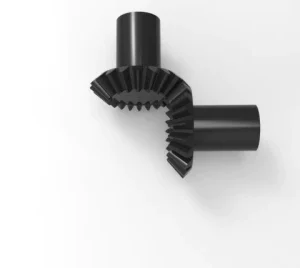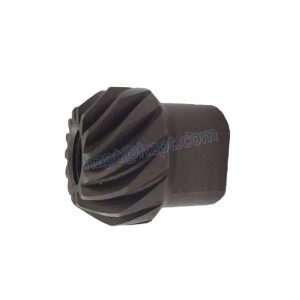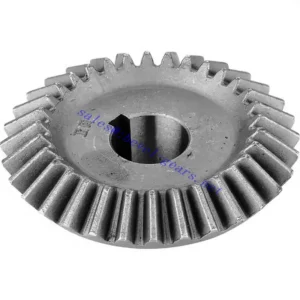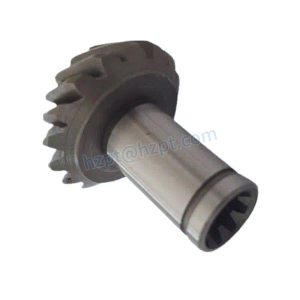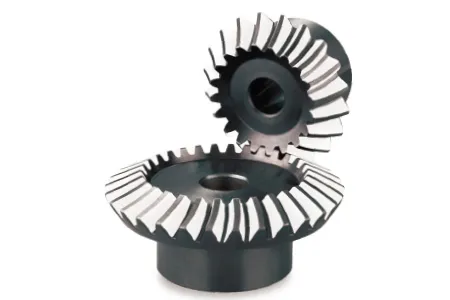
Sintered Metal bevel gears
As one of the bevel gears manufacturers, suppliers, and exporters of mechanical products, We offer bevel gears and many other products.
Please get in touch with us for details.
Mail:[email protected]
Research indicates that over 35% of premature gear failures in Australian industrial facilities are directly linked to incorrect material selection or under-specification at the procurement stage.
A sintered metal bevel gear — manufactured through powder metallurgy sintering to produce a dense, self-lubricating conical gear pair — offers a compelling solution: lower unit cost, complex geometry capability, and built-in lubrication that reduces maintenance burden by up to 60% compared with conventionally machined alternatives.
From food-processing lines in Melbourne to power-tool assembly in Sydney and mining ancillary equipment in Queensland, sintered bevel gears are gaining traction among Australian manufacturers who demand reliable, cost-effective right-angle power transmission.
Australia Ever-Power, located at 27 Harley Crescent, Condell Park NSW 2200, supplies ISO-certified sintered metal bevel gears with same-week dispatch across all Australian states and territories.
What Is a Sintered Metal Bevel Gear?
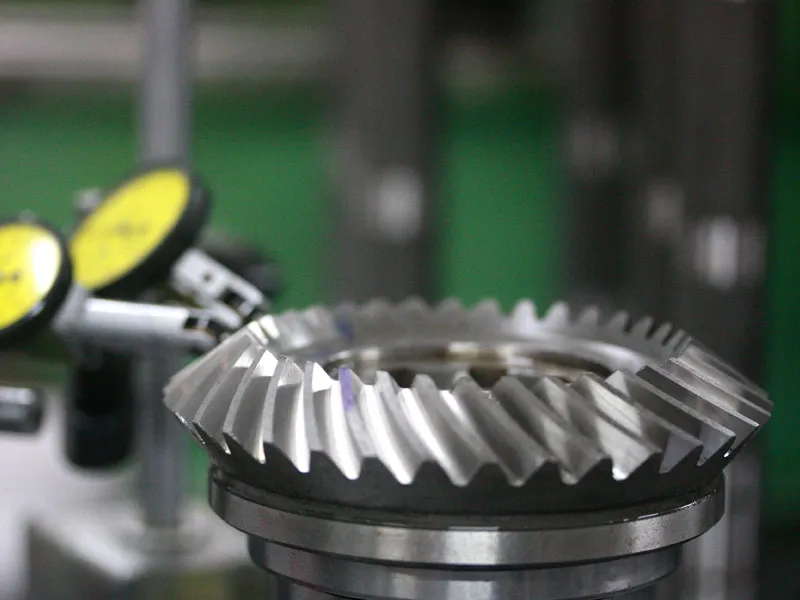
A sintered metal bevel gear is a conical gear component manufactured via powder metallurgy — a process in which metal powder is compacted under high pressure into a gear-shaped die and then heated (sintered) below its melting point to metallurgically bond the particles into a solid, near-net-shape structure.
The result is a gear with controlled porosity, precise dimensional accuracy, and the ability to incorporate self-lubricating properties unavailable in conventionally machined gears.
Like all bevel gears, the sintered variant consists of two conical gear wheels whose intersecting axes meet at a defined angle — most commonly 90° for right-angle drive applications.
The teeth mesh to transmit torque and rotational motion from the driving shaft (pinion) to the driven shaft, enabling direction changes in mechanical drivetrains with efficiency levels of 95–98% for well-designed sintered gear pairs.
The distinguishing characteristic of sintered metal gears is their interconnected pore network, which can be impregnated with lubricants during manufacturing.
As the gear operates and surface temperatures rise, the lubricant migrates to the tooth contact zone, providing sustained lubrication without external oil supply — a feature particularly valued in sealed gearboxes, power tools, and appliances used across Australian manufacturing and consumer markets.
According to MPIF Standard 35 (Metal Powder Industries Federation — Materials Standards for PM Structural Parts) and ISO 5755:2012 (Sintered Metal Materials — Specifications), sintered gear materials are classified by density, tensile strength, and hardness, with structural steel grades achieving densities of 6.6–7.4 g/cm³ and tensile strengths of 300–800 MPa depending on alloy and post-sintering treatment.
Australia Ever-Power sources sintered bevel gears manufactured to DIN 3962/3963 tooth accuracy standards and AGMA 2000-A88 quality grades.
In summary: sintered metal bevel gears occupy a well-defined performance niche — they outperform plastic gears in strength and temperature resistance, match or exceed machined gears in dimensional consistency for medium-load applications, and significantly undercut machined gears in unit cost for medium-to-high production volumes.
For Australian procurement managers balancing performance, lifecycle cost, and supply reliability, they represent a strategically important component category.
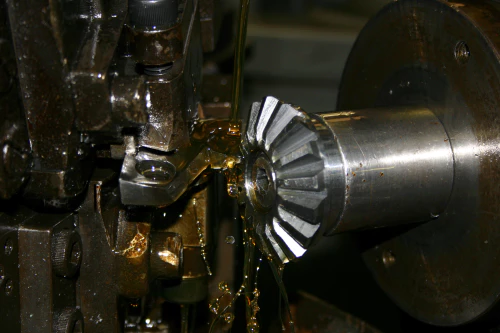
Types of Sintered Metal Bevel Gears: Materials and Configurations
Sintered metal bevel gears are classified by both their base material system and their tooth geometry, and the correct combination of the two determines suitability for a given application.
The table below summarises the principal types stocked and available through Australia Ever-Power for immediate supply or custom manufacture.
| Material Type | Density (g/cm³) | Tensile Strength | Self-Lubricating | Best For |
|---|---|---|---|---|
| Iron-Based (Fe) | 6.6 – 7.2 | 300 – 600 MPa | Yes (oil-impregnated) | General industrial drives, conveyors |
| Iron-Copper (Fe-Cu) | 6.8 – 7.3 | 400 – 700 MPa | Yes | Power tools, automotive ancillaries |
| Iron-Nickel-Moly (Fe-Ni-Mo) | 7.0 – 7.4 | 600 – 800 MPa | Yes (post-HT) | High-load robotics, automotive diff. |
| Stainless Steel (SS316L) | 6.5 – 6.9 | 250 – 480 MPa | Optional | Food processing, marine, corrosive environments |
| Brass / Bronze (Cu-Zn/Cu-Sn) | 7.8 – 8.6 | 150 – 300 MPa | Excellent | Light-load instruments, low-noise appliances |
| Tooth Form | Speed Capability | Sinter-Formability | Typical Application |
|---|---|---|---|
| Straight Bevel | < 1,500 rpm | Excellent (standard die) | Power tools, appliances, slow drives |
| Spiral Bevel | Up to 5,000 rpm | Good (complex tooling) | Automotive, robotics, moderate-load drives |
| Miter (1:1) | < 2,000 rpm | Excellent | Direction change only, instruments |
Iron-based sintered bevel gears are the most widely used category in Australian general industry, combining adequate strength (up to 600 MPa tensile), self-lubrication, and the lowest cost per unit of any metal gear type.
They are the default choice for power tool drivetrains assembled in New South Wales and Victoria, where production volumes of 10,000 to 500,000 units per year make sintering economics compelling versus machining.
Stainless steel sintered bevel gears are increasingly specified by food and beverage manufacturers in Melbourne, Sydney, and Brisbane who require corrosion resistance, compliance with FSANZ food safety regulations, and compatibility with chemical cleaning agents.
While their mechanical strength is lower than iron-based grades, the elimination of corrosion-related failure modes extends service life in wet environments by an average of 3–5× compared with uncoated iron gears.
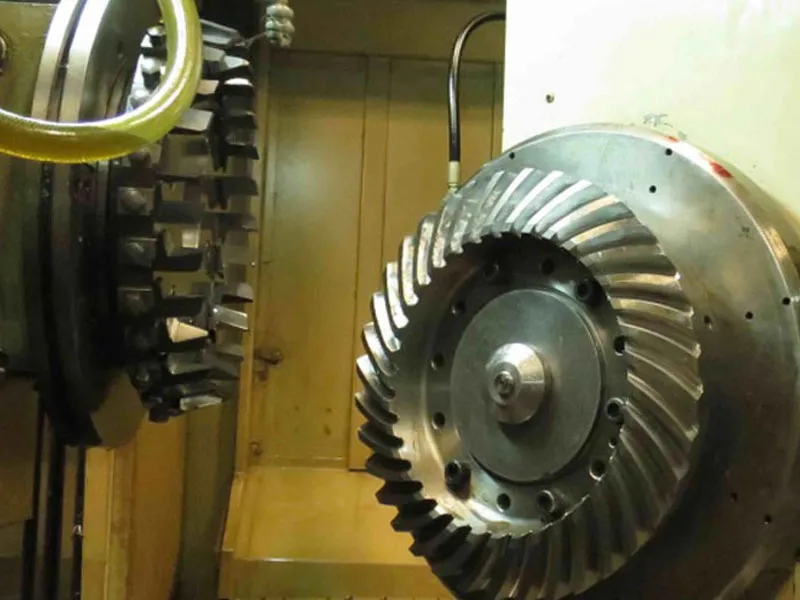
Key Specifications & Parameters for Sintered Metal Bevel Gears
A thorough understanding of sintered bevel gear parameters enables Australian procurement managers to specify correctly on first order, avoiding costly redesigns or early failures.
The table below reflects the catalogue range stocked and custom-manufactured by Australia Ever-Power from its Condell Park, NSW facility.
| Parameter | Standard Range | Reference Standard |
|---|---|---|
| Module (m) | M0.5 – M8 | ISO 54 preferred series |
| Model Numbers | M3, M4, M5, M8, M12 (standard) | Custom on request |
| Tooth Accuracy Grade | DIN 6 – DIN 9 | DIN 3962 / DIN 3963 |
| Sintered Density | 6.5 – 7.4 g/cm³ | ISO 5755:2012 / MPIF Standard 35 |
| Tensile Strength | 250 – 800 MPa (material-dependent) | ISO 2740 |
| Dimensional Tolerance | ±0.001 – ±0.1 mm | ISO 286 / DIN 7168 |
| Pressure Angle | 20° standard / 14.5° legacy | AGMA 2000-A88 |
| Surface Treatments | Zinc-plate, Nickel, Black Oxide, Passivation, Powder Coat | ISO 1456 / AS 3715 |
| Teeth Treatment | Hardened / Milled / Ground | Post-sintering secondary ops |
| Operating Temperature | −20°C to +150°C (standard) | Material & lubricant dependent |
| Standard Compliance | ISO, DIN, ANSI, JIS, BS, Non-standard | Per customer requirement |
| Sample Lead Time | 20 business days | Bulk: 25 business days |
The surface treatment selection is particularly important for Australian operating environments.
Black oxide is the most common choice for indoor industrial applications in Sydney and Melbourne, providing mild corrosion protection and anti-galling properties at minimal cost premium.
Nickel plating (minimum 10 µm per AS 3715) is specified for applications in coastal Queensland or Darwin where salt-laden atmospheres accelerate corrosion.
Passivation is mandatory for 316 SS sintered gears used in food-contact applications to ensure compliance with AS 4674 food premises construction requirements.
How to Select the Right Sintered Metal Bevel Gear: A Step-by-Step Guide
Selecting a sintered metal bevel gear correctly requires evaluating eight interdependent factors; shortcutting this process is the primary cause of premature failure and costly unplanned downtime reported by Australian maintenance teams.
The following structured process reflects the selection methodology used by Australia Ever-Power's engineering support team when assisting customers across Sydney, Melbourne, Brisbane, Adelaide, and Perth.
Step 1 — Define Application Requirements
Establish the required gear ratio, maximum transmitted torque (Nm), input/output shaft speeds (rpm), and operating duty cycle (continuous vs. intermittent).
Apply an AGMA service factor (KA): 1.0 for smooth loads; 1.25–1.50 for moderate shock; 1.75+ for heavy shock.
Design torque = Nominal torque × KA. Select a sintered gear rated at or above this design torque with a minimum safety margin of 1.5× for critical drives.
Step 2 — Choose the Correct Material Grade
For general industrial drives below 600 MPa tensile requirement: specify iron-based (Fe) sintered grade, oil-impregnated, DIN Grade 7–8.
For high-load automotive or robotics applications: specify Fe-Ni-Mo sintered grade with post-sintering heat treatment to 35–45 HRC case hardness.
For food processing in Melbourne or Sydney: 316L stainless sintered with passivation surface treatment.
For marine or coastal Queensland environments: bronze or nickel-plated iron sintered grade.
Step 3 — Select Module and Tooth Count
Use ISO 54 preferred modules (M0.5, 0.8, 1, 1.25, 1.5, 2, 2.5, 3, 4, 5, 6, 8).
Larger modules handle higher loads but increase gear OD.
Standard sintered bevel gear production is most cost-effective between M1 and M5.
Above M8, sintering tooling costs rise sharply and machined gears often become more economical.
Calculate tooth count from the required ratio: for 2:1, use a 40T gear / 20T pinion (or equivalent same-ratio pairs).
Step 4 — Evaluate Load Capacity Against Rated Values
Confirm the gear's published dynamic load capacity (Ft) and bending fatigue strength from the manufacturer's datasheet (referenced to AGMA 2000-A88 or ISO 6336).
For sintered gears, published values assume the standard density grade; re-evaluate if post-sintering HIP densification or infiltration is used, as these can increase load capacity by 15–30%.
Verify that axial thrust loads at the pitch cone are within the rated limit — axial loads exceeding 40% of radial load require dedicated thrust bearing arrangements.
Step 5 — Consider Lubrication Requirements
Self-lubricating sintered gears (oil-impregnated) are suitable for sealed-for-life applications, power tools, and appliances where maintenance access is limited.
Lubricant volume retained in pores is typically 18–25% by volume and provides adequate lubrication for up to 2,000–5,000 operating hours depending on load and speed.
For continuous high-duty drives, supplement with splash lubrication using ISO VG 100 or VG 150 gear oil.
NSF H1-registered oils must be used for food-contact applications per FSANZ guidelines applicable to Australian food manufacturers.
Step 6 — Assess Noise and Vibration Requirements
Sintered straight bevel gears operating above 1,200 rpm typically generate 62–72 dB(A) at 1 metre.
Where the Safe Work Australia action level of 85 dB(A) must be maintained, specify sintered spiral bevel gears with DIN Grade 6 tooth accuracy and lapped finish, which reduce noise by 6–10 dB(A) versus standard sintered straight bevel gears of the same module.
Tooth profile optimisation and contact pattern centering during assembly further reduce noise by 3–5 dB(A).
Step 7 — Specify Surface Treatment and Finish
Match the surface treatment to the deployment environment: zinc plating for indoor general use; nickel plating for coastal or humid environments; black oxide for moderate corrosion resistance with minimal dimensional change; passivation for stainless grades; anodisation for aluminium housings where galvanic compatibility matters.
Shot blasting as a pre-treatment improves coating adhesion by 20–35%.
Always specify finish requirements on the purchase order — default sintered surface (as-sintered) has Ra 1.6–3.2 µm, which is acceptable for low-speed applications but should be ground or lapped for precision drives.
Step 8 — Verify Supplier Quality Documentation
For critical applications, request the full QA documentation package: chemical composition report, mechanical performance test report (tensile, hardness), dimensional inspection report, and heat treatment record.
For ultrasonic test requirements, reference EN 10228-3 or SA388 as applicable.
Australia Ever-Power provides complete QA documentation with every order, supporting customers' own compliance obligations under AS 4024 machinery safety and ISO 9001 quality management frameworks.
Applications of Sintered Metal Bevel Gears in Australian Industry
Australian manufacturers across seven major industry sectors have adopted sintered metal bevel gears as a cost-effective, low-maintenance alternative to machined gears in medium-duty right-angle drive applications.
The following overview reflects the primary end-use sectors served by Australia Ever-Power from its Sydney warehouse, with products dispatched to customers in every state and territory.
| Industry | Application | Sintered Grade | Key Advantage |
|---|---|---|---|
| Power Tools & Appliances | Drills, saws, mixers, washing machines (NSW, VIC) | Fe-Cu, M1–M3 | Low cost, sealed-for-life lubrication |
| Automotive | Differentials, PTO units, seat adjusters | Fe-Ni-Mo HT | High strength, net-shape consistency |
| Food & Beverage | Mixer drives, filling lines (Melbourne, Sydney) | 316L SS sintered | Corrosion resistance, FSANZ compliance |
| Industrial Machinery | Conveyors, machine tools, printing presses | Fe standard / Fe-Cu | Cost savings at volume, low maintenance |
| Robotics & Automation | CNC arm joints, pick-and-place (QLD, NSW) | Fe-Ni-Mo, DIN Grade 6 | Precision, compact, repeatable |
| Renewable Energy | Solar trackers, small wind turbine yaw drives | Fe-Cu, nickel-plated | Long service life, self-lubricating |
| Agricultural Equipment | Seeders, sprayer pump drives (SA, WA) | Fe standard / brass | Field-replaceable, low cost |
Power tools and domestic appliances represent the highest-volume sintered bevel gear application category in Australia, with the eastern-seaboard manufacturing clusters in Sydney, Melbourne, and Brisbane consuming hundreds of thousands of units annually.
The economics are decisive: at volumes above 10,000 units per batch, sintered gear unit costs run 40–65% below equivalent machined gears, and the sealed-for-life lubrication eliminates the maintenance cost entirely over the appliance lifecycle.
Robotics and automation integrators in Queensland's advanced manufacturing precinct and New South Wales' technology parks increasingly specify sintered spiral bevel gears for articulated robot arm joints.
Key drivers are repeatability (DIN Grade 6 accuracy delivers ±5 arc-minutes positional error under load), compact envelope, and the ability to source matched replacement pairs from Australian local stock — eliminating the 8–16 week overseas lead times that previously complicated robot maintenance scheduling.
Renewable energy applications — particularly solar tracking systems deployed across South Australia, Queensland, and Western Australia — use sintered bevel gears in azimuth and elevation actuator drivetrains.
The combination of self-lubrication, corrosion-resistant coatings, and low operating speeds (typically 0.5–5 rpm) aligns well with sintered gear performance parameters and avoids the need for sealed gearbox maintenance in remote solar farm locations.
Why Choose Australia Ever-Power for Sintered Metal Bevel Gears?
Australia Ever-Power positions itself as a technical partner for Australian manufacturers, not simply a gear catalogue supplier — and the sintered metal bevel gear category illustrates this distinction clearly.
Our team understands the specific engineering trade-offs between sintered and machined gears, and provides the application-level guidance needed to make the right specification decision from the outset.
🏭 Sydney Local Stock
Standard sintered bevel gear models M3–M12 in Fe, Fe-Cu, and 316 SS grades held in stock at 27 Harley Crescent, Condell Park NSW 2200. Same-week dispatch to Sydney metro; 2–3 business days to Melbourne, Brisbane, and Adelaide.
📋 Full QA Documentation
Every order ships with chemical composition report, mechanical performance report, dimensional inspection report, and heat treatment records. UT testing to EN 10228-3 or SA388 available on request — essential for AS 4024 compliance audits.
🔬 Engineering Selection Support
Free pre-purchase application review covering material grade selection, torque and service factor calculation, lubrication regime, and surface treatment specification. We flag under-specification before it reaches your production line.
⚙️ Custom Manufacturing
Non-standard modules, special ratios, unique bore configurations, and custom surface treatments available. Sample lead time: 20 business days. Bulk production: 25 business days. PPAP documentation available for OEM customers.
📦 Nationwide Delivery
We deliver to all Australian states and territories, including remote WA, NT, and Tasmania. Export documentation and international shipping available for multinational OEM customers with Australian manufacturing operations.
📍 Our Address
Australia Ever-Power
27 Harley Crescent
Condell Park NSW 2200
Monday–Friday, business hours AEST.
Australian manufacturers who work with Australia Ever-Power consistently highlight three outcomes: reduced specification errors through pre-purchase engineering review; faster maintenance recovery through local stock availability compared with 8–16 week international lead times; and streamlined compliance through comprehensive QA documentation that satisfies ISO 9001, AS 4024, and customer-specific audit requirements without chasing multiple overseas suppliers.
Frequently Asked Questions About Sintered Metal Bevel Gears
Ready to Source Sintered Metal Bevel Gears for Your Application?
Talk to the engineering team at Australia Ever-Power — 27 Harley Crescent, Condell Park NSW 2200.
We'll review your application, confirm grade and surface treatment, and return a quote within 24 hours.
Same-week dispatch for stocked items to Sydney, Melbourne, Brisbane, Adelaide, and Perth.
📍 27 Harley Crescent, Condell Park NSW 2200 | Australian Owned & Operated | ISO-Compliant Stock