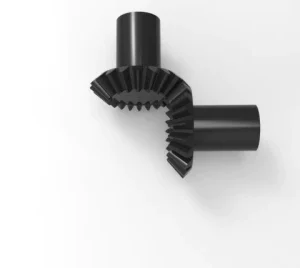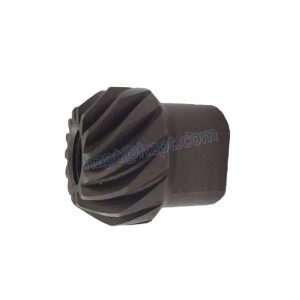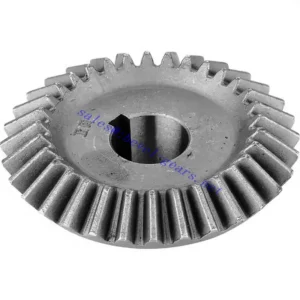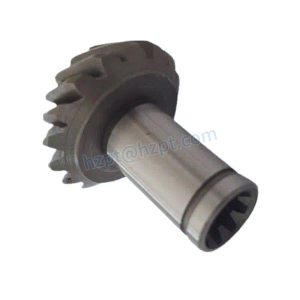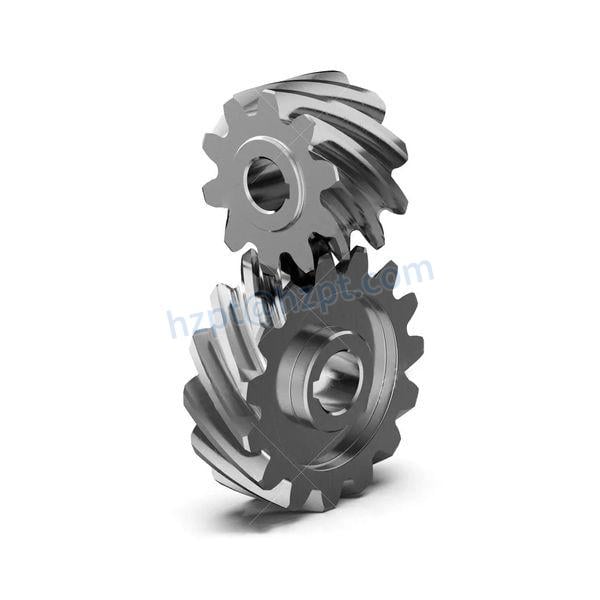
Helical Bevel Gear
As one of the bevel gears manufacturers, suppliers, and exporters of mechanical products, We offer bevel gears and many other products.
Please get in touch with us for details.
Mail:[email protected]
Drivetrain failures account for up to 38% of unplanned equipment downtime across Australian manufacturing — and poorly specified bevel gears are among the most common culprits. Helical bevel gears reduce operating noise by 15–25 dB and cut vibration by up to 40% compared to straight bevel designs, which is why they dominate high-speed, high-torque applications in mining, food processing, and heavy industry. Australia Ever-Power, operating from 27 Harley Crescent, Condell Park NSW 2200, supplies precision-machined helical bevel gears to manufacturers across Sydney, Melbourne, Brisbane, Perth, and Adelaide — with full engineering support, rapid local delivery, and compliance with ISO, AGMA, and DIN standards.
What Is a Helical Bevel Gear?
Definition
A helical bevel gear is a conical power-transmission gear in which the teeth are cut at a helix angle relative to the pitch cone axis, producing progressive tooth engagement rather than the abrupt, full-length contact of straight bevel gears. This geometry increases the contact ratio to 1.6–2.2 (versus 1.0–1.3 for straight bevel gears), reduces shock loading, and enables quieter, more stable operation at speeds exceeding 3,000 RPM.
The paired gears in a helical bevel set carry equal but opposite helix angles — right-hand on the bull gear, left-hand on the pinion. This arrangement means the axial thrust forces generated by each gear partially offset one another, lowering bearing loads and extending service life. Compared to spiral bevel gears (manufactured by the Gleason or Klingelnberg method), helical bevel gears follow the tangential bevel principle: the pitch cone tooth line is tangent to a circle concentric with the pitch cone axis. This gives engineers a reliable, cost-effective alternative for moderate-to-high speed drives where spiral bevel tooling costs are not justified.
The coincidence degree (contact ratio) of a helical bevel pair is consistently higher than that of an equivalent straight bevel pair, which translates directly into smoother load sharing across multiple teeth at any given moment. For Australian manufacturers running continuous shifts in environments where noise regulations apply — such as food processing plants in Sydney's western suburbs or packaging facilities in Melbourne's industrial zones — this characteristic is a practical necessity rather than a premium feature.
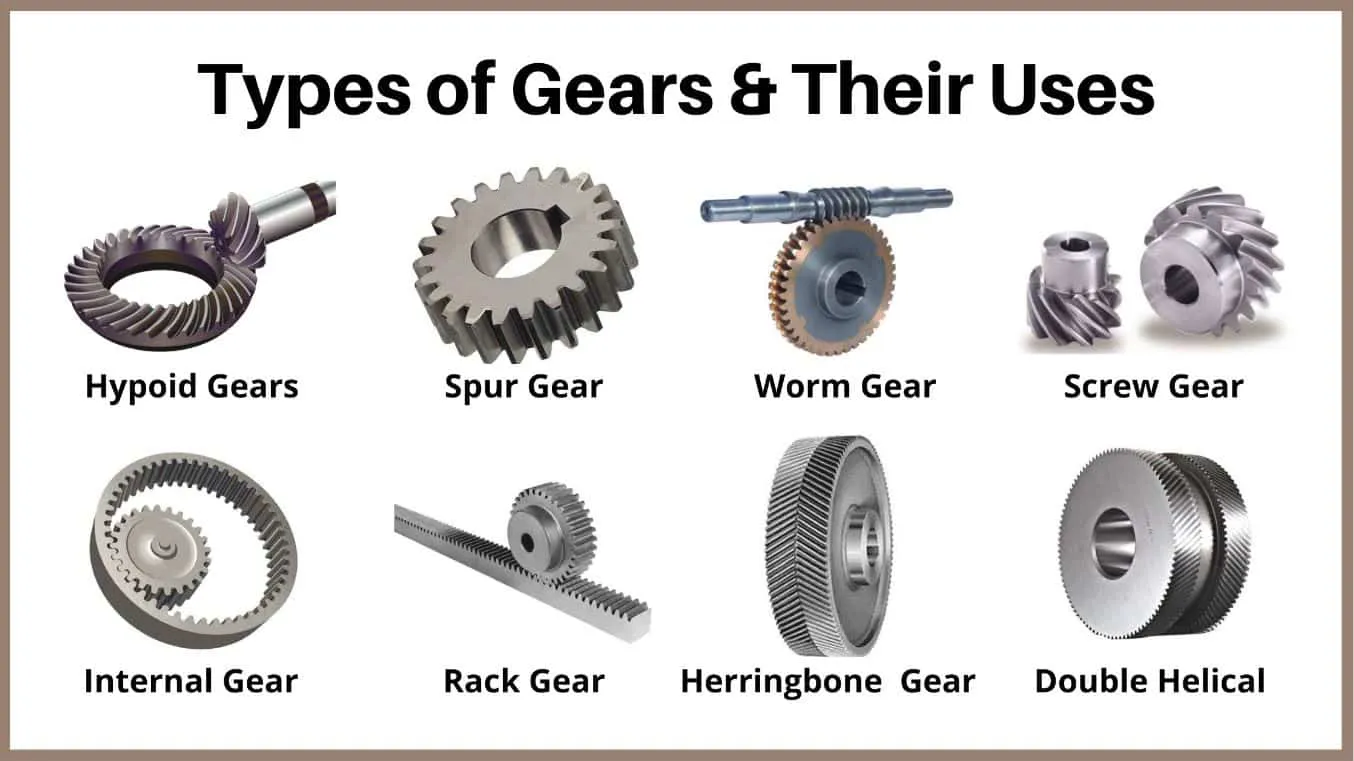
Types of Bevel Gears: Where Helical Bevel Fits
Bevel gears transmit motion between intersecting axes — most commonly at 90° — and exist in several configurations. Understanding the differences helps procurement engineers specify the right type from the outset, avoiding costly mid-project changes.
| Type | Tooth Profile | Contact Ratio | Noise Level | Best Application | Relative Cost |
|---|---|---|---|---|---|
| Straight Bevel | Straight radial teeth | 1.0 – 1.3 | High | Low-speed, light load | $ |
| Helical Bevel (Tangential) | Teeth tangent to concentric circle | 1.6 – 2.2 | Low–Medium | Medium-high speed drives | $$ |
| Zerol Bevel | Curved, zero mean spiral angle | 1.4 – 1.8 | Medium | Aircraft, precision drives | $$$ |
| Spiral Bevel | Curved oblique teeth (Gleason/Klingelnberg) | 1.8 – 2.5 | Very Low | High-speed, heavy load | $$$$ |
| Hypoid Gear | Offset axes, spiral teeth | 2.0 – 3.0 | Very Low | Automotive differentials | $$$$ |
For most industrial drives operating between 500 and 3,000 RPM with moderate torque requirements, helical bevel gears deliver the best balance of performance, noise control, and total cost of ownership. This is the configuration most commonly specified by Australian manufacturers for conveyor drives, agitator gearboxes, and auxiliary machine drives.
Key Specifications & Parameters
Every helical bevel gear order from Australia Ever-Power is supported by a full material certificate, dimensional inspection report, and heat treatment record. The table below covers the standard parameter range; custom specifications are quoted on request.
| Parameter | Specification / Range | Notes |
|---|---|---|
| Module | M1 – M20 (M3, M4, M5, M8, M12 stocked) | Metric standard; DP available on request |
| Pressure Angle | 20° (standard); 14.5° available | Per ISO 17485 / AGMA 2005 |
| Helix Angle | 15° – 35° | Equal magnitude, opposite hand on paired gears |
| Number of Teeth | Z = 10 – 120 | Custom ratios 1:1 to 1:8 in single stage |
| Precision Grade | DIN 6 – DIN 9; AGMA Q8 – Q12 | Ground finish achieves DIN 6 |
| Material Options | C45 steel, 20CrMnTi, 42CrMo4, SS304/316, brass, aluminium, POM | Food-grade and corrosion-resistant options available |
| Teeth Hardness | HRC 45–62 (case-hardened); HB 180–280 (through-hardened) | Induction or carburising hardening |
| Surface Treatment | Zinc-plated, nickel-plated, black oxide, phosphatising, powder coating | Salt spray 200–500 hrs depending on coating |
| Dimensional Tolerance | ±0.001 mm – ±0.1 mm | CMM verified on every batch |
| Contact Ratio | 1.6 – 2.2 | 40–70% higher than straight bevel equivalent |
| Applicable Standards | ISO 17485, AGMA 2005-B88, DIN 3971, DIN 3978 | Certificates issued with each order |
How to Select the Right Helical Bevel Gear
Specifying a helical bevel gear incorrectly costs more than the gear itself — replacement labour, downtime, and secondary bearing damage add up fast. Work through these six steps in sequence before placing an order.
Define Torque, Speed & Power Requirements
Calculate the design torque (input × service factor — typically 1.25–2.0 for shock loading). Note input RPM and required output RPM. This determines module size and face width. For drives over 15 kW, consult an engineer before specifying module below M5.
Confirm Shaft Angle & Axis Configuration
Most bevel gear drives operate at 90°, but angles from 45° to 135° are achievable. Confirm whether the axes intersect (standard bevel) or are offset (hypoid). Non-intersecting axes require a hypoid configuration, not a helical bevel.
Calculate the Required Transmission Ratio
Single-stage helical bevel gears support ratios of 1:1 to 1:8. Higher ratios require two-stage configurations. Specify the number of teeth on both the bull gear (Z₁) and pinion (Z₂). A minimum of 12 teeth on the pinion is recommended to avoid undercutting.
Select the Appropriate Material
C45 steel suits general-purpose drives up to 500 N·m. 20CrMnTi or 42CrMo4 is preferred for heavy loads and case-hardening. Stainless steel (SS316) covers wet or corrosive environments, including food processing and marine applications. For low-noise, low-load drives, engineering polymers (POM/nylon) reduce weight and eliminate lubrication requirements.
Choose the Precision Grade
For drives below 1,000 RPM with moderate noise requirements, DIN 8–9 (hobbed/milled) is cost-effective. Above 1,500 RPM or where noise is a compliance issue, DIN 6–7 (ground finish) is recommended. Medical, semiconductor, and solar tracking equipment typically specify AGMA Q10–Q12 or DIN 5–6 for highest accuracy.
Specify Surface Treatment & Packaging
Match the coating to the operating environment. Zinc-plating (200-hr salt spray) covers standard industrial use. Nickel-plating or powder coating suits outdoor or humid conditions. For export compliance, specify Dacromet or Geomet coatings. All gears are packed in anti-rust film bags plus carton or wooden crate for freight to regional Australia.
Applications in Australian Industry
Helical bevel gears are a core drivetrain component across virtually every sector of Australian manufacturing. Their noise advantages are particularly valued in urban industrial zones where WorkSafe noise exposure limits (LAeq 85 dB over 8 hours) are actively monitored.
Mining & Resources
Conveyor drives, rock crusher gearboxes, and underground haulage systems across Queensland and Western Australian mine sites. Case-hardened 42CrMo4 gears handle continuous shock loads exceeding 2,000 N·m.
Food & Beverage Processing
Mixing, conveying, and filling lines in Sydney and Melbourne facilities. SS316 helical bevel gears with food-grade USDA/H1 lubricants meet FSANZ and Australian Standard AS 4674 requirements for hygienic design.
Agriculture & Irrigation
Harvester gearboxes, PTO drives, and centre-pivot irrigation pump drives across the Murray-Darling Basin. Helical bevel gears tolerate the vibration and contamination typical of field conditions.
Construction Equipment
Tower crane slew drives, excavator swing gearboxes, and concrete mixer drive units on Brisbane and Sydney construction sites. High torque density in compact envelope reduces nacelle size and weight.
Renewable Energy
Solar panel tracking systems and small-scale wind turbine yaw drives. Precision DIN 6 helical bevel gears maintain positional accuracy within ±0.05° over 20+ year service life in Australian UV and temperature extremes.
Packaging & Automation
High-speed rotary indexers, carton erectors, and filling machine drives. Low-noise helical bevel gears at DIN 7 or finer meet workplace noise guidelines without acoustic enclosures, saving capital cost.
Why Australian Manufacturers Choose Australia Ever-Power
There is no shortage of offshore gear suppliers with a website and a catalogue. What sets Australia Ever-Power apart is the combination of local stock, engineering depth, and the accountability that comes with a business physically located in New South Wales.
Local Stock & Same-Week Dispatch
Standard module gears (M3–M12) are held in stock at our Condell Park facility. Sydney metro deliveries typically arrive next business day; Melbourne, Brisbane, and Adelaide within 3–5 days via our freight network.
Certified Quality — ISO, DIN, AGMA
Every batch is supplied with a chemical composition report, mechanical performance certificate, dimensional inspection report, and heat treatment records. We maintain full traceability from raw material to finished gear.
Custom Gear Manufacturing
Send us a drawing, a damaged gear, or just your parameters — our engineering team will reverse-engineer, design, and manufacture to specification. Custom samples typically within 20 business days; production batches within 25–35 days.
Engineering Support Included
Our technical team assists with gear ratio calculation, material selection, and installation guidance — at no extra charge. This is particularly useful for procurement managers who are replacing an OEM gear without access to the original design file.
Our Location
📍 27 Harley Crescent, Condell Park NSW 2200, Australia
Serving industrial manufacturers across Sydney, Melbourne, Brisbane, Perth, Adelaide, and regional Australia. Enquiries welcome from all states and territories.
What Australian Customers Say
"We replaced the original OEM gears on our conveyor drive with M8 helical bevel gears from Australia Ever-Power. The noise drop was immediate and measurable — our site readings went from 91 dB to 76 dB at the drive housing. Lead time was 22 business days, which beat our shutdown window. Would not hesitate to order again."
James Whitfield
Plant Engineering Manager · Bulk Materials, Hunter Valley NSW
"Our Melbourne production facility runs three shifts, and the SS316 helical bevel gears we sourced for our filling line have been running 14 months without any maintenance intervention. The food-grade compliance documentation was provided upfront, which made our quality audit straightforward. Delivery to Melbourne took 4 days."
Linda Pham
Production Manager · Food & Beverage Manufacturing, Melbourne VIC
"Sent a damaged gear from a crane slew drive to the Condell Park team. They reverse-engineered the profile, confirmed the module and helix angle, and came back with a custom replacement in 24 days. The fit was exact — no machining adjustments needed on site. Good technical communication throughout."
Brett Callahan
Maintenance Supervisor · Heavy Construction, Brisbane QLD
"We've been running DIN 7 helical bevel gears in our solar tracking system for two years across a 50 MW installation in Western Australia. Zero failures, no positional drift issues. The anti-corrosion coating has held up well given the UV and temperature swings in the Pilbara. Australia Ever-Power's engineering team actually knew what they were talking about."
Amanda Osei
Engineering Director · Renewable Energy Projects, Perth WA
Frequently Asked Questions
Manufacturing & Quality Process
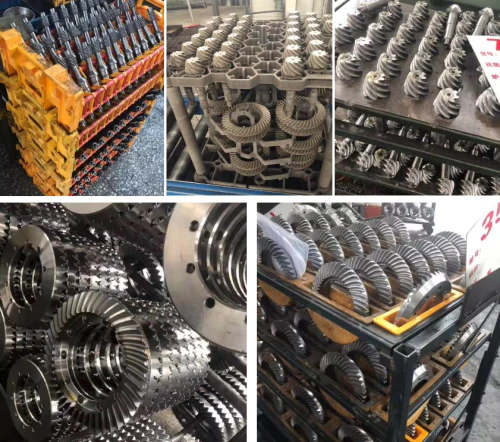
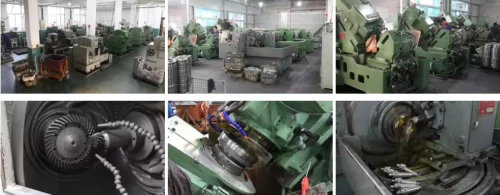
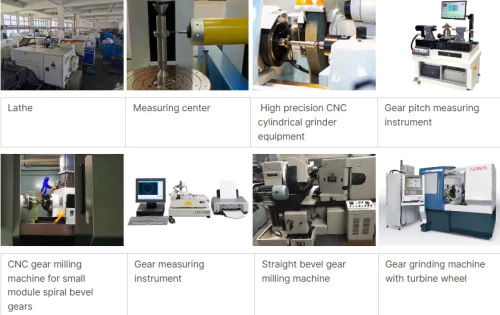
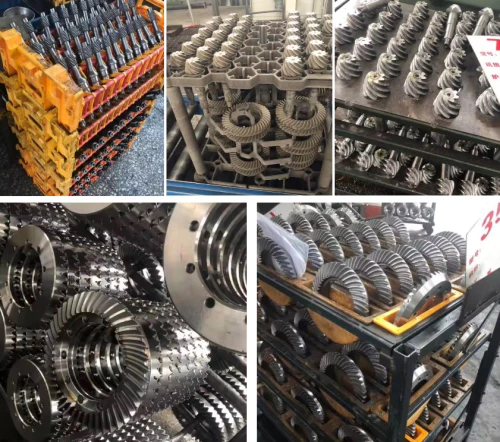
Every helical bevel gear we supply passes through a controlled eight-stage production sequence. No step is skipped for cost or schedule reasons — this is what underpins our ability to issue full material and dimensional certificates with each order.
Material Inspection
Chemical composition and mechanical property testing on incoming raw material. Certificate issued before machining begins.
CNC Blank Turning
Gear blank turned to precision bore and outer diameter tolerances on CNC lathes. Random inspection at ±0.01 mm.
Gear Hobbing / Cutting
Tooth profiles cut with calibrated hobbing machines. Helix angle, module, and tooth form verified against drawing at first article.
Heat Treatment
Carburising, quenching, and tempering to target case depth and core hardness. Time/temperature curves retained on file.
Grinding & Finishing
Profile and lead grinding for DIN 6–7 grades. Surface finish Ra ≤ 0.8 µm on tooth flanks. Shot or sandblast for non-ground grades.
CMM & Gear Testing
100% CMM dimensional check on critical dimensions. Gear tester verifies tooth profile, lead, pitch, and runout against DIN/AGMA grade.
Surface Treatment
Zinc-plate, nickel, black oxide, or powder coat applied. Salt spray test results documented. Anti-rust oil applied for storage and transit.
Final QC & Dispatch
Pre-shipment inspection report issued. Packed in anti-rust film + carton or wooden crate. Full documentation pack included.
Materials, Compatibility & Lubrication
The material choice for a helical bevel gear has a direct bearing on load capacity, wear rate, corrosion resistance, and total lifecycle cost. The table below summarises the most common options and their typical applications in the Australian market.
| Material | Tensile Strength | Hardness Range | Best For | Limitation |
|---|---|---|---|---|
| C45 Steel | 600–800 MPa | HB 170–230 | General industrial drives | Not suitable for wet/corrosive environments without coating |
| 20CrMnTi (case-hardened) | 900–1,100 MPa | HRC 58–62 (surface) | High-load mining/construction drives | Requires accurate grinding after heat treatment |
| 42CrMo4 | 1,000–1,200 MPa | HRC 45–55 | Heavy shock loads, crane drives | Higher cost; longer lead time |
| SS 316 Stainless | 515–690 MPa | HB 140–200 | Food, pharma, marine, coastal | Lower hardness than alloy steel; higher unit cost |
| Brass (CuZn39Pb2) | 350–450 MPa | HB 80–120 | Low-load, low-speed, decorative mechanisms | Not suitable above 200 N·m |
| POM (Delrin) | 65–70 MPa | HRR 80 | Light load, chemical resistance, no lubrication | Temperature limit ≤ 90°C; not for shock loading |
Lubrication Guidelines
Helical bevel gears in enclosed gearboxes should run on ISO VG 220 or VG 320 mineral gear oil for most industrial applications at ambient temperatures of 10°C–50°C. For food-processing applications, switch to NSF H1-registered synthetic gear oil (e.g., ISO VG 220 polyalphaolefin). Open drives or slow-moving mechanisms can use NLGI Grade 2 lithium complex grease. Oil change intervals of 4,000–6,000 operating hours apply for mineral oil; 8,000–12,000 hours for synthetic. Always consult the gearbox manufacturer's manual for specific recommendations.
Maintenance & Service Life Guide
A well-maintained helical bevel gear set in a correctly aligned, properly lubricated drive should last 20,000–40,000 operating hours or more. The main causes of premature failure are misalignment at installation, contaminated lubricant, overloading, and incorrect backlash setting. The following schedule covers the key maintenance actions.
🔍 Initial Inspection — First 100 Hours
Check for abnormal noise or heat (bearing housing should not exceed ambient + 40°C). Verify backlash is within specification using feeler gauges. Change running-in oil if used; contamination from initial bedding is normal. Re-check all fastener torques.
📅 Routine — Every 1,000 Operating Hours
Check oil level; top up with the same oil grade if below minimum. Listen for any new tonal noise, which can indicate early pitting. Inspect shaft seals for weeping. Record noise and temperature baseline data for trending purposes.
🔧 Intermediate — Every 4,000–6,000 Hours
Drain and flush gearbox; refill with fresh oil. Inspect gear tooth flanks through inspection cover for pitting, scoring, or wear step. Check and adjust bearing preload where applicable. Replace seals as a precaution during this service.
📦 Major Overhaul — Every 20,000 Hours or at Failure Signs
Full disassembly; replace bearings as a set; inspect and measure gear tooth profile for wear against original DIN/AGMA tolerances. If flank wear exceeds 20% of original tooth thickness, plan gear replacement. Contact Australia Ever-Power with gear measurements for a replacement quote.
Market Price Comparison (AUD)
Gear pricing varies significantly by module, material, precision grade, and quantity. The table below provides indicative price ranges to help procurement managers budget accurately. All prices are ex-works Condell Park NSW and exclude GST and freight.
| Gear Type | Module | Material | Grade | Unit Price (AUD) | Lead Time |
|---|---|---|---|---|---|
| Straight Bevel (standard) | M3–M5 | C45 | DIN 8–9 | $45 – $180 | Stock / 15 days |
| Helical Bevel (stocked) | M3–M5 | C45 / 20CrMnTi | DIN 8 | $95 – $350 | Stock / 20 days |
| Helical Bevel (precision) | M8–M12 | 42CrMo4 | DIN 6–7 | $280 – $1,200 | 25–35 days |
| Helical Bevel SS316 | M3–M8 | SS 316 | DIN 7–8 | $180 – $680 | 20–28 days |
| Spiral Bevel (custom) | M5–M16 | 20CrMnTi | DIN 6 | $400 – $2,500 | 30–45 days |
* Prices are indicative for single-unit orders. Volume discounts of 15–35% apply at 50+ pieces. Custom configurations quoted individually. Contact us for a project-specific price.
Sustainability, Compliance & Export Markets
Helical bevel gears are a globally traded industrial component. The largest purchasing markets outside Australia are the United States, Germany, the United Kingdom, Japan, South Korea, and Southeast Asian nations including Singapore, Vietnam, and Thailand — all regions with active advanced manufacturing sectors that demand certified, documented gear components.
🌏 Regulatory Compliance
- RoHS 2 (EU Directive 2011/65/EU) — no restricted substances in surface treatments
- REACH compliant — no SVHC above 0.1% w/w
- ISO 14001 environmental management at manufacturing facility
- Australian import duty classification: HS Code 8483.40 (gears and gearing)
- Compatible with AS/NZS machinery safety standards
♻️ Sustainability Factors
- 20,000–40,000 hr service life reduces replacement frequency and waste
- All steel and stainless grades are 100% recyclable at end of life
- Higher contact ratio = lower energy loss per tooth engagement cycle (~2–4% efficiency gain vs straight bevel)
- Longer oil change intervals with synthetic lubricants reduce lubricant consumption by up to 40%
- Precision-ground DIN 6 gears run cooler, reducing gearbox cooling energy demand
Customer Success: Case Studies
Mining
Conveyor Drive Noise Reduction — Hunter Valley Coal Operation
Challenge: A bulk materials handler was facing WorkSafe noise compliance issues on a conveyor drive running M8 straight bevel gears at 1,200 RPM. Drive housing noise measured 94 dB(A) at 1 metre.
Solution: Replaced with M8 helical bevel gears (DIN 7, 42CrMo4, 25° helix angle). No housing modifications required — same centre distance and mounting.
Result: Drive housing noise dropped to 78 dB(A) — a 16 dB reduction, bringing the installation within compliance. Gear set has operated without intervention for 18 months at the time of reporting.
Food Processing
Food-Grade Gear Replacement — Melbourne Dairy Processor
Challenge: The OEM supplier for a mixing line gearbox had discontinued the original gear model. The facility needed food-grade replacement gears within 30 days to avoid a shutdown extension.
Solution: Australia Ever-Power received the damaged gear sample, reverse-engineered the profile, and manufactured SS316 replacement pairs to DIN 7 within 24 days. Full material and hygiene documentation provided for the facility's HACCP records.
Result: Line returned to production within planned shutdown window. Ongoing annual supply agreement established for scheduled preventive replacement.
Australia Ever-Power · Condell Park NSW 2200
Ready to Source Helical Bevel Gears for Your Operation?
Send us your gear parameters or a sample — our engineering team will review your requirements and respond with specifications and pricing within one business day.
📍 27 Harley Crescent, Condell Park NSW 2200 | Serving all of Australia