
The Question That Puzzles Many Engineers
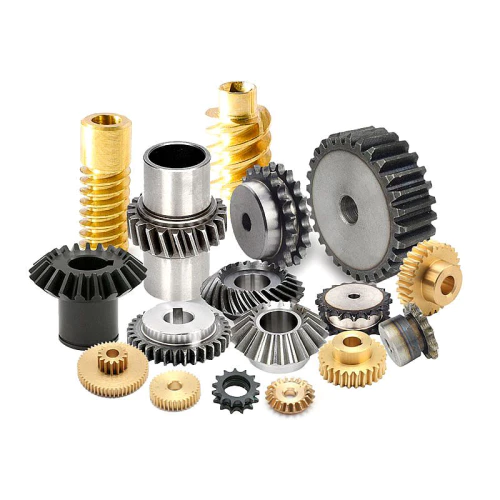
Spiral bevel gears and hypoid gears look nearly identical. Both have curved, helical teeth on conical blanks. Both transmit power at approximately 90° between shafts. Both are manufactured on the same Gleason or Klingelnberg equipment using very similar processes. Yet virtually every rear-wheel-drive passenger car, SUV, ute, truck, and four-wheel-drive vehicle ever built uses hypoid gears in the rear axle differential — not spiral bevel gears. Why? What specific advantage of the hypoid configuration is so decisive that it has completely displaced spiral bevel gears from the highest-volume mechanical engineering application in the world?
The answer is not a single property — it is a combination of five distinct engineering advantages that happen to align perfectly with the specific constraints of automotive rear axle design. Individually, none of these advantages would necessarily be decisive. Together, they make the hypoid configuration so superior for automotive drive axle applications that engineers have not seriously proposed reverting to spiral bevel gears since the hypoid differential was first mass-produced in the late 1920s.
Australia Ever-Power, Condell Park NSW 2200, manufactures and supplies hypoid ring-and-pinion gear sets for automotive replacement and custom applications. Contact [email protected] for specifications and quotations.
Advantage 1 — The Driveshaft Height Reduction
The defining geometric feature of a hypoid gear set is the offset between the pinion shaft centreline and the ring gear’s rotational axis. In automotive applications, this offset is deliberately below the ring gear centreline — the pinion shaft is positioned lower than the ring gear centre. For a typical passenger car with a 250 mm ring gear and a 30 mm hypoid offset, the pinion shaft centre sits 30 mm below the ring gear centreline rather than intersecting it.
This seemingly minor geometric detail has profound consequences for vehicle architecture. The pinion shaft connects directly to the propeller shaft (driveshaft) that runs from the transmission to the rear axle. By lowering the pinion shaft below the ring gear centreline, the hypoid configuration lowers the entire driveshaft line through the vehicle. This lower driveshaft position allows the vehicle floor tunnel (the raised section of the floor that accommodates the driveshaft) to be lower and narrower. For a passenger car, a 30 mm reduction in driveshaft height means a 30 mm lower floor tunnel — which directly translates to more passenger headroom, lower vehicle centre of gravity, lower vehicle silhouette, or some combination of all three.
A 30 mm reduction in centre of gravity height on a vehicle with a 500 mm centre of gravity produces a measurable improvement in lateral stability — relevant for both handling performance and rollover resistance. Vehicle manufacturers optimising for low rooflines, sporting handling characteristics, or improved rollover safety ratings all benefit directly from the hypoid offset. This single advantage alone would justify the additional manufacturing complexity of hypoid geometry over spiral bevel for any rear-wheel-drive vehicle application.
Advantage 2 — The Larger Pinion Diameter at the Same Ratio
The hypoid offset geometry fundamentally changes the relationship between gear ratio and pinion size. In a spiral bevel gear set, the pinion diameter at a given ratio is fixed by the tooth count and module: a 4:1 ratio set with a 250 mm ring gear has a pinion outer pitch diameter of approximately 62 mm. The hypoid offset allows the pinion to be designed with a larger pitch diameter for the same ratio and ring gear size — the offset shifts the contact geometry in a way that allows the pinion to have more teeth and larger diameter while maintaining the specified gear ratio. A typical automotive hypoid pinion at 4:1 ratio achieves a pitch diameter of 75–90 mm — 20–45% larger than the equivalent spiral bevel pinion.
The mechanical significance of this larger pinion diameter is substantial. Tooth bending strength scales approximately with tooth root width squared, which scales with module squared, which scales with pitch diameter divided by tooth count. A larger pinion at the same tooth count has larger individual tooth geometry — more material at the tooth root, more contact area per tooth pair, and lower contact stress per unit of transmitted torque. The hypoid pinion, being physically larger than its spiral bevel equivalent, carries its load with lower stress across every failure mode: bending fatigue, contact fatigue, and scuffing resistance all improve with the larger pinion geometry.
For automotive differential designers, the larger hypoid pinion represents either a capacity premium — the ability to transmit more torque through the same axle housing — or a durability premium — the ability to transmit the same torque with longer fatigue life. Both outcomes are commercially valuable: higher torque capacity allows the same differential to be used across a wider vehicle weight and engine power range (reducing the number of different differential variants needed), while longer fatigue life reduces warranty costs and improves customer satisfaction.
Advantage 3 — Higher Contact Ratio and Lower Noise
The larger hypoid pinion has more teeth than the equivalent spiral bevel pinion for the same ring gear tooth count and gear ratio. More pinion teeth means a higher total contact ratio — the average number of tooth pairs simultaneously in contact during mesh. Where a spiral bevel set at 4:1 might have a pinion with 12–14 teeth, a hypoid set at the same nominal ratio might achieve 14–16 pinion teeth. The additional contact ratio from even 2 extra pinion teeth measurably reduces transmission error — the variation in angular velocity as tooth pairs enter and exit mesh.
Transmission error is the primary acoustic excitation mechanism in gear drives: its frequency corresponds to tooth mesh frequency (RPM × tooth count / 60), and its amplitude determines the sound pressure level of the resulting gear whine. Reducing transmission error by increasing contact ratio is one of the most effective noise reduction strategies available at the gear design stage — and the hypoid configuration achieves this automatically through its larger pinion geometry, without requiring additional design effort or manufacturing steps beyond the standard hypoid production process.
For automotive applications, where passenger perception of drivetrain refinement directly influences purchase decisions and brand reputation, this inherent noise advantage of hypoid gears over spiral bevel gears represents a genuine and measurable commercial differentiator. Car manufacturers invest significant engineering effort in minimising differential whine — the hypoid configuration provides a geometric noise reduction advantage before any acoustic optimisation has even begun.
Advantage 4 — Compact Packaging within the Axle Housing
Automotive rear axle housings are tightly dimensioned components that must fit within the vehicle’s structural envelope while providing the correct track width, ground clearance, and wheel offset. Every cubic millimetre of the differential housing is valuable. The hypoid configuration, by allowing a larger pinion at the same ratio within the same ring gear diameter envelope, concentrates more torque capacity into the same package size compared to an equivalent spiral bevel arrangement. This packaging efficiency allows vehicle manufacturers to use a single differential housing design across a range of engine outputs — simply by specifying different hypoid ring-and-pinion sets with the same ring gear diameter but different tooth geometry to vary the torque rating.
The offset also provides a packaging benefit by allowing the pinion nose bearing to be positioned further from the ring gear centreline without increasing the overall housing length. This extra bearing span improves pinion shaft stiffness, which is important for maintaining the contact pattern under the high torque and dynamic loads of vehicle operation. Better pinion stiffness means more consistent contact pattern under load, contributing directly to the noise and durability advantages described in the previous sections.
Advantage 5 — Accumulated Manufacturing Knowledge and Infrastructure
Hypoid automotive differential gears have been continuously manufactured in enormous volumes since the late 1920s. Gleason Works introduced the first production-capable hypoid gear generation method in 1925, and hypoid differentials entered mass production in Packard vehicles in 1926. In the following century, billions of individual hypoid gear sets have been manufactured, tested, failed, analysed, and redesigned. The accumulated knowledge base for automotive hypoid gear design, material specification, heat treatment, lapping, inspection, and lubricant formulation is without peer in the mechanical engineering field.
This knowledge and infrastructure advantage is not trivial. The machine tool fleet for hypoid gear cutting exists globally at every automotive supply tier. The steel specifications for hypoid ring gear and pinion manufacture (8620, 9310, 4320 alloy steels with controlled hardenability) are mature and widely available. The hypoid-specific gear oil formulations (API GL-5 and later GL-5/MT-1 grades) are standardised and available from every major lubricant supplier. The Gleason CAGE software for generating optimised hypoid gear geometry is fully developed and widely used. No competing gear configuration approaches this level of maturity and support infrastructure for the automotive application — even if an alternative offered marginal technical advantages, switching costs would be prohibitive.
Hypoid vs Spiral Bevel in Automotive Drive Axles: Comparison
Direct parameter comparison for equivalent ring gear diameter (250 mm) and nominal 4:1 gear ratio, typical passenger car application.
| Parameter | Hypoid (Automotive Standard) | Spiral Bevel (Equivalent) | Advantage |
|---|---|---|---|
| Pinion offset below ring centreline | 25–35 mm | Zero | Lower driveshaft/floor |
| Pinion pitch diameter | 75–90 mm | 60–65 mm | Higher torque capacity |
| Typical pinion tooth count | 14–16 | 11–13 | Higher contact ratio |
| Gear noise (transmission error) | Lower | Higher | Quieter passenger cabin |
| Efficiency | 95–97% | 97–99% | Spiral bevel wins on efficiency |
| Required lubricant | GL-5 hypoid only | GL-4 or GL-5 | Spiral bevel less demanding |
| Overall automotive suitability | ★★★★★ | ★★★☆☆ | Hypoid wins overall |
Replacement Hypoid Differential Gear Costs (AUD Reference)
Indicative pricing for replacement hypoid ring-and-pinion sets, Australia Ever-Power supply vs OEM pricing. Contact [email protected] for specific application quotations.
| Vehicle / Axle Type | OEM/Dealer Price | Ever-Power Price | Savings |
|---|---|---|---|
| Passenger car rear axle | $600–$1,400 | $380–$900 | 20–40% |
| 4WD ute / SUV rear axle | $900–$2,200 | $600–$1,400 | 25–35% |
| Light commercial / van axle | $1,200–$2,800 | $800–$1,800 | 25–40% |
| Heavy truck tandem axle | $3,000–$8,000 | $1,800–$5,200 | 25–40% |
Hypoid Differential System Components
Hypoid Ring Gear
Large conical gear bolted to the differential case. 8620 steel, case carburised, lapped to pinion. Replace as matched pair only. Tooth count typically 37–45 for passenger vehicles.
Hypoid Drive Pinion
Offset-axis pinion on splined shaft. Offset position distinguishes it from spiral bevel pinion. Always verify offset dimension when ordering replacements — wrong offset means the pinion shaft will not align in the housing.
GL-5 Hypoid Gear Oil
Non-negotiable. The high lengthwise sliding at hypoid tooth contacts requires GL-5 extreme pressure additive protection. Standard GL-4 causes rapid scuffing failure. Change per schedule or after any water ingress event.
Pinion Crush Sleeve / Spacer
Sets pinion bearing preload. Crush sleeve deforms during assembly to provide the correct preload — cannot be reused. Always fit a new crush sleeve when the pinion nut is removed during differential work.
Differential Carrier Shims
Control ring gear axial position and therefore backlash and contact pattern. Precision shims in 0.05–0.25 mm increments allow correct adjustment of the offset ring gear position.
Axle Shaft Lip Seals
Primary barrier against gear oil loss and water ingress. Replace at every major service. Failed axle seals allow water contamination — a leading cause of hypoid differential failure in Australian coastal and 4WD applications.
Customer Reviews: Hypoid Differential Gear Sets
“We run a fleet of 22 utes in the Pilbara — hard country, heavy towing, high ambient temperatures. Switched to Ever-Power hypoid sets after repeated OEM failures. Twelve months later, no differential failures. The material documentation they supply shows better steel than the OEM equivalent.”
“Our truck fleet was burning through rear differentials every 60,000 km of towing work. Ever-Power upgraded us to a higher-rated hypoid ring-and-pinion in the same axle housing. Now at 95,000 km on the first set with excellent oil analysis results. The engineering explanation of why the larger hypoid pinion handles the load better was very clear.”
“We wanted to understand why our Landcruiser fleet needed GL-5 specifically — our previous mechanic had been using engine oil in the differentials. Ever-Power explained the hypoid sliding contact mechanism very clearly. We switched to correct GL-5 and the howling noise on acceleration disappeared entirely.”
“Performance modification — needed a numerically lower rear axle ratio to compensate for larger-diameter tyres on our competition ute. Ever-Power supplied the correct hypoid set with matching offset and the same ring gear diameter as the original housing. First-time correct fit, quiet operation from day one.”
Frequently Asked Questions: Automotive Hypoid Gears
Replacement Hypoid Gear Sets — Australia Ever-Power
Australia Ever-Power · Condell Park NSW 2200 · Custom-manufactured and replacement hypoid ring-and-pinion sets for passenger, commercial, 4WD, and heavy transport applications across Australia.