
The perception that bevel gears produce less noise than spur gears is not universally accurate; it depends heavily on the specific type of bevel gear. Straight bevel gears are often comparable in noise to spur gears, while spiral bevel gears, zerol bevel gears, and hypoid gears consistently demonstrate significantly lower noise levels. This advantage arises from fundamental differences in tooth geometry, contact mechanics, and load transition characteristics. Understanding these mechanisms helps engineers select the optimal gear type for noise-sensitive applications such as robotics, medical equipment, automotive differentials, and precision industrial drives. This article provides a thorough technical analysis of the underlying reasons, supported by practical insights from real-world Australian engineering projects.
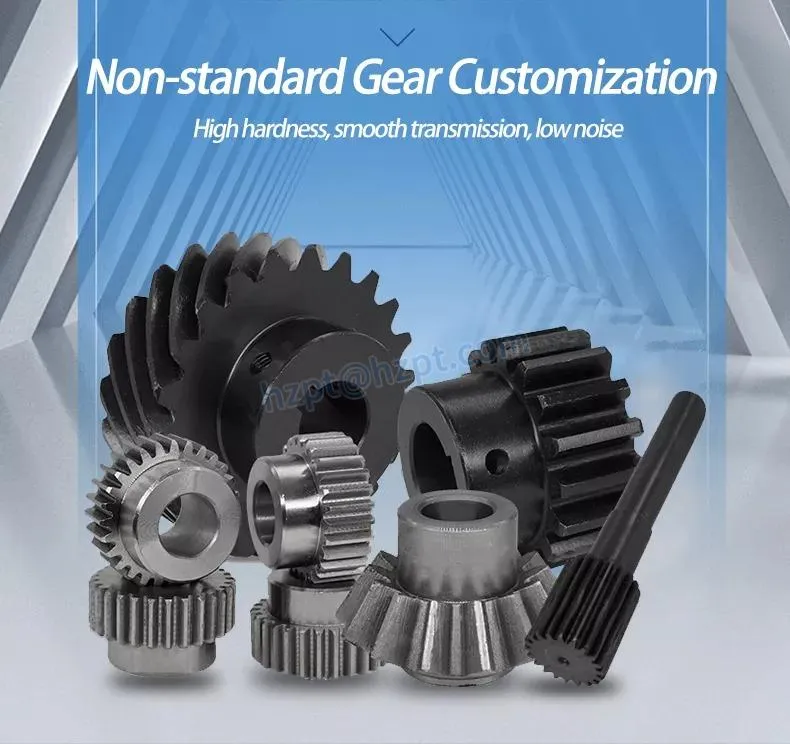
Spiral bevel gears versus straight spur gears – geometry comparison
Fundamental Difference in Tooth Engagement
Spur gears feature straight teeth parallel to the axis of rotation. Tooth contact occurs instantaneously along the entire face width, resulting in a sudden impact as each tooth pair engages. This abrupt load transfer generates high-frequency vibration and audible noise, particularly at higher speeds. The meshing stiffness also changes sharply, exciting structural resonances in the gearbox housing.
In contrast, spiral bevel gears possess teeth cut along a curved spiral path. Contact begins gradually at one end of the tooth and progresses smoothly across the face width. This overlapping, progressive engagement increases the transverse contact ratio, often exceeding 2.0, meaning multiple tooth pairs share the load at any instant. The result is a much smoother transmission of force with significantly reduced vibration excitation.
Zerol bevel gears, while having a zero spiral angle, still benefit from a curved tooth profile that provides gradual engagement superior to straight teeth, delivering intermediate noise performance between straight and full spiral designs.
Axial vs Radial Force Components and Vibration Transmission
Spur gears generate primarily tangential and radial forces. These forces act in the plane perpendicular to the shaft, directly transmitting vibration into the housing through the bearings. Bevel gears, particularly spiral and hypoid types, produce a substantial axial thrust component due to the cone angle and spiral curvature. While axial forces require robust thrust bearings, they tend to be absorbed more effectively by the shaft and housing structure, resulting in lower radiated noise compared with the radial excitation typical of spur gears.
Additionally, the sliding component in spiral bevel meshing helps dampen high-frequency vibrations. The continuous change in the direction of the normal force vector further reduces the excitation of specific natural frequencies that dominate spur gear noise spectra.
In practical testing conducted by Australia Ever-Power, spiral bevel gear sets operating at 1500 rpm consistently measured 8–15 dB(A) quieter than equivalent spur gear pairs under identical load and speed conditions.
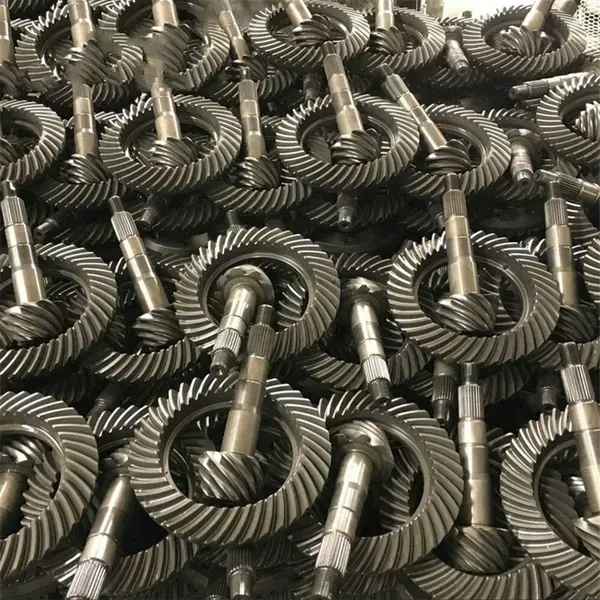
Straight bevel gears showing instantaneous line contact
Contact Ratio and Load Sharing
The total contact ratio (transverse plus axial) is a primary determinant of noise generation. Spur gears typically achieve a transverse contact ratio of 1.4–1.8. Spiral bevel gears routinely exceed 2.0–2.5 due to the diagonal contact line and the additional overlap provided by the spiral angle. Higher contact ratio means the load is distributed over more teeth simultaneously, reducing the variation in mesh stiffness and minimising the transmission error that is the root cause of gear whine.
Hypoid gears take this advantage further with their offset axis, introducing a larger sliding component that further smooths the force transition. This makes hypoid sets particularly suitable for automotive rear axles where noise, vibration, and harshness (NVH) targets are stringent.
Engineers at Australia Ever-Power routinely optimise spiral angle and pressure angle during design to maximise contact ratio while maintaining acceptable axial thrust levels for the specific application.
Manufacturing Precision and Surface Finish Effects
Modern CNC generation and grinding of spiral bevel gears achieve extremely accurate tooth profiles and low transmission error. The lapping process commonly applied to spiral and hypoid sets further improves surface finish and compensates for minor mounting deflections, resulting in quieter operation even after prolonged service.
Straight spur gears, while simpler to manufacture, are more sensitive to centre distance variation and misalignment, both of which increase noise. Bevel gear housings are typically designed with higher stiffness to control deflection, indirectly contributing to lower operating noise.
Australia Ever-Power applies post-heat-treatment grinding and lapping to all precision spiral bevel gears, consistently achieving noise levels below 75 dB(A) in well-designed gearboxes at full load.
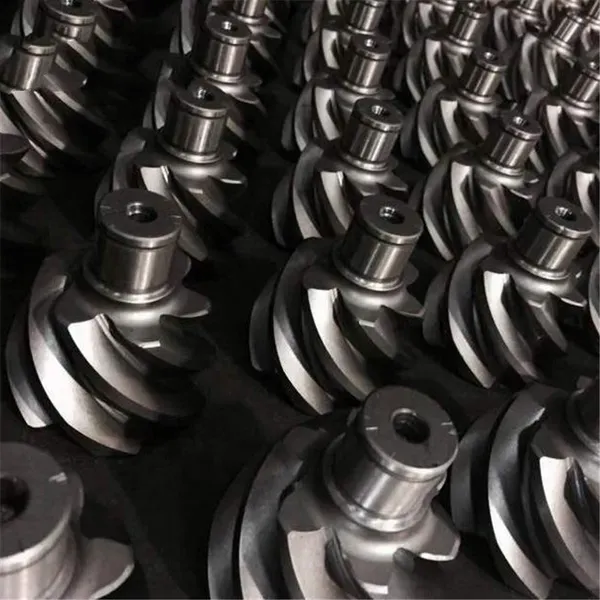
Spiral bevel gear set during noise and vibration testing
Practical Noise Reduction Strategies When Using Bevel Gears
- Optimise Spiral Angle: A spiral angle between 30° and 45° typically provides the best balance between noise reduction and axial thrust management.
- Apply Tooth Crowning and Profile Modifications: Controlled crowning and tip relief minimise edge loading and transmission error under load.
- Ensure Precise Mounting: Accurate shaft alignment and housing stiffness are critical; even small misalignments can negate the noise advantage of spiral teeth.
- Select Appropriate Lubrication: High-viscosity synthetic oils with appropriate additives maintain a stable elastohydrodynamic film that further dampens vibration.
These strategies, refined through extensive testing at Australia Ever-Power, enable spiral bevel gear drives to meet stringent noise specifications in robotics, medical devices, and high-speed packaging machinery across Australia.
When Straight Bevel Gears May Not Be Quieter
It is important to note that straight bevel gears, due to their instantaneous line contact similar to spur gears, often exhibit comparable or even higher noise levels at elevated speeds. Their use is generally recommended for low-to-medium speed, heavy-duty applications where cost and simplicity outweigh noise considerations. In such cases, proper housing design and isolation mounts become the primary methods for noise control.
For applications where noise is a critical design criterion, spiral or zerol bevel gears provide a clear performance advantage over both straight bevel and spur configurations.
Related Product: Low-Noise Spiral Bevel Gears
Australia Ever-Power specialises in precision spiral bevel gears engineered for minimal noise and vibration. Available in modules from 1 to 20, with custom shaft angles and optimised tooth geometry, these gears are ideal for noise-sensitive industrial and mobile applications throughout Australia and the Asia-Pacific region.
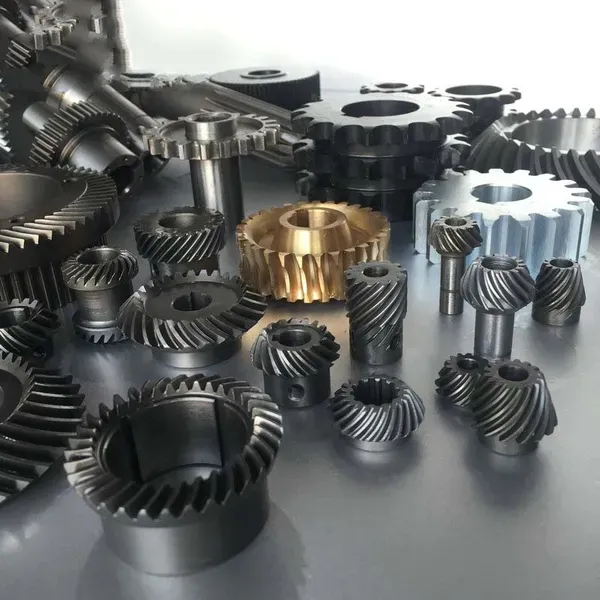
Precision-ground spiral bevel gears ready for low-noise applications
Customer Feedback
“Replacing spur gears with Australia Ever-Power spiral bevel sets in our packaging machine reduced noise by 12 dB. The difference in the production environment is remarkable.”
“The spiral bevel gears supplied for our robotic joint drive are exceptionally quiet. We achieved our target of under 65 dB(A) on the first prototype.”
Australia Ever-Power vs Conventional Spur Gear Solutions
Frequently Asked Questions
Need Quieter Power Transmission Solutions?
Australia Ever-Power | 27 Harley Crescent, Condell Park NSW 2200 | [email protected]