By Australia Ever-Power Engineering Team | bevel-gears.net | Condell Park NSW 2200
Precision grinding is the manufacturing step that defines the final accuracy of bevel gear tooth geometry — and the decision of whether to grind, how finely to grind, and whether to grind at all is one of the most significant cost and performance decisions in a bevel gear specification. This guide explains the technical rationale for bevel gear grinding, the conditions under which it is required versus optional, the standards that govern grinding quality specifications, and the practical indicators that tell an Australian engineer whether a grinding upgrade is worth the additional investment in their specific application.
What Precision Grinding Achieves — and What It Cannot
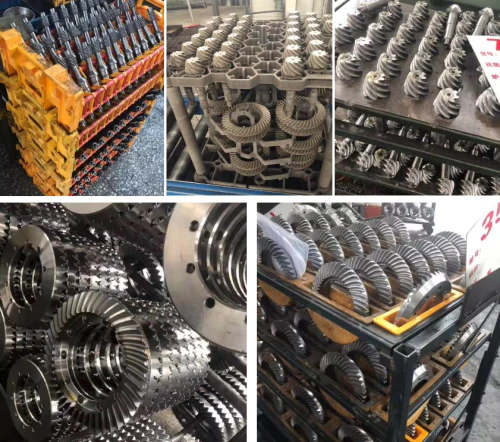
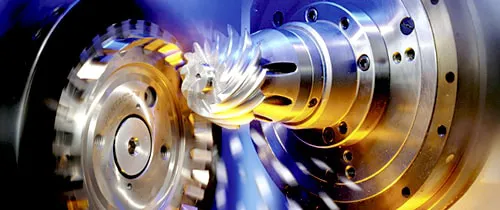
Precision grinding of bevel gear teeth serves three purposes: it removes material from hardened tooth flanks to restore the specified tooth profile after distortion from heat treatment, it achieves a finer surface finish than gear cutting alone can produce, and it brings the gear to a tighter dimensional accuracy grade than the pre-heat-treatment accuracy. Understanding what grinding can and cannot deliver prevents over-specification (adding cost without performance benefit) and under-specification (accepting dimensional quality inadequate for the application).
What grinding achieves: tooth profile accuracy to DIN Grade 5–6; surface roughness Ra ≤ 0.8 µm on tooth flanks; removal of heat treatment distortion; improved contact pattern consistency; reduced transmission error (and hence reduced noise and vibration). What grinding cannot achieve: correction of case depth deficiency from carburising; correction of core mechanical properties (if the steel grade was wrong, grinding does not fix it); significant change to gear geometry (only removes material, cannot add it); or compensation for housing bore wear or misalignment.
Precision grinding is a finishing operation that refines what the prior manufacturing steps produced. If the prior steps were fundamentally wrong — incorrect module, wrong material, insufficient case depth — grinding does not rescue the situation. It must be preceded by correct gear cutting, correct heat treatment, and adequate grinding stock left on the tooth flanks by the gear cutter.
The Manufacturing Process Flow: Where Grinding Fits
Understanding where grinding sits in the manufacturing sequence clarifies why it is required in some cases and unnecessary in others.
1️⃣
Gear Blank Machining — CNC turning produces gear blank to specified cone geometry and bore dimensions. Accuracy at this stage: ±0.005–0.01 mm.
2️⃣
Gear Tooth Cutting — Gleason or Klingelnberg generator cuts tooth profile to pre-heat-treatment accuracy. Typically DIN Grade 7–8 at this stage, with grinding stock of 0.05–0.15 mm left on tooth flanks.
3️⃣
Heat Treatment (Carburising + Quenching / Nitriding) — Achieves required surface hardness. Distortion from quenching typically degrades tooth accuracy to DIN Grade 9–11, making post-heat-treatment grinding necessary for high-accuracy applications.
4️⃣
← PRECISION GRINDING STEP → — Applied after heat treatment. Restores tooth profile to DIN Grade 5–6. Removes distortion from quenching. Achieves Ra ≤ 0.8 µm on tooth flanks.
5️⃣
Lapping (Matched-Pair Process) — Pinion and gear run together with lapping compound to optimise tooth contact pattern. Typically follows grinding. Required for spiral bevel pairs used in noise-sensitive or high-load applications.
6️⃣
Final Inspection — CMM dimensional verification, gear measuring machine tooth profile trace, contact pattern check, hardness verification. DIN Grade 5–6 inspection report issued.
When Grinding Is Required: Definitive Criteria
Precision grinding is not always necessary. The following conditions define when grinding is genuinely required versus when lapping or as-cut accuracy is sufficient.
| Application Condition |
Grinding Required? |
Rationale |
| Pitch line velocity above 10 m/s |
✔ Required |
At high speeds, transmission error from tooth profile deviation causes noise and dynamic load amplification exceeding design limits. DIN Grade 7+ requires grinding post-heat-treatment. |
| DIN Grade 6 or better specified |
✔ Required |
DIN Grade 6 is not achievable post-heat-treatment without grinding. Carburising + quenching degrades accuracy to DIN Grade 9–11; only grinding restores to Grade 6. |
| Noise-critical application (medical, printing, office automation) |
✔ Required |
Noise reduction of 6–10 dB(A) between DIN Grade 8 and Grade 6 is only achievable through grinding. Lapping alone cannot reach the profile accuracy needed for low-noise operation above 5 m/s. |
| Carburised + quenched alloy steel |
✔ Required (for Grade ≤7) |
Quenching distortion is inherent in the carburising process. Without grinding, carburised gears are limited to DIN Grade 8–9 — insufficient for precision or high-speed applications. |
| Nitrided steel, low distortion |
◑ Sometimes |
Nitriding produces minimal distortion compared to carburising. High-quality pre-nitriding gear cutting can achieve DIN Grade 7 without grinding. Grinding still needed for Grade 5–6. |
| Low-speed industrial drives (below 5 m/s), DIN Grade 8–9 acceptable |
✘ Not required |
For slow-speed, moderate-load industrial drives where DIN Grade 8–9 is acceptable, lapping after heat treatment provides adequate contact pattern without the cost of grinding. |
| Polymer bevel gears |
✘ Not applicable |
Polymer gears are not heat treated and do not require grinding. Accuracy is determined by the injection mould tooling quality and process control. |
Grinding vs Lapping: Understanding the Distinction
Grinding and lapping are both post-heat-treatment finishing operations, but they serve different purposes and produce different results. Conflating the two leads to incorrect specifications and unmet expectations.
| Aspect |
Precision Grinding |
Lapping |
| Process |
Abrasive wheel removes material to specified profile |
Gear pair runs together with abrasive compound to conform surfaces |
| Achievable Accuracy |
DIN Grade 5–6 |
DIN Grade 7–8 (improves contact pattern, not profile) |
| Effect on Tooth Profile |
Corrects profile to drawing dimensions |
Conforms pair to each other — does NOT correct individual profile errors |
| Gears Produced |
Each gear individually ground — interchangeable to grade |
Gears lapped as a matched pair — NOT interchangeable |
| Cost Premium (vs cut only) |
+30–50% |
+10–20% |
| When to Use |
High-speed, precision, noise-critical, high-load, DIN 5–6 required |
Industrial drives where contact pattern optimisation is needed but DIN 6 precision is not required |
An important practical point: a lapped gear pair is a matched pair. The two gears are machined to conform to each other — not to an independent profile standard. This means lapped gears must be replaced together (which is why spiral bevel gear replacement rules require matched pair replacement), while ground gears produced to DIN Grade 6 are in principle individually replaceable against any other DIN Grade 6 gear of the same specification. In practice, most manufacturers still recommend replacing spiral bevel pairs together even for ground gears, because the slight differences in tooth form between any two Grade 6 gears still affect the contact pattern to some degree.
The Cost-Benefit Analysis: Is Grinding Worth the Premium for Your Application?
The cost premium for precision-ground bevel gears is real — typically 30–50% above lapped non-ground gears of the same geometry and material. Whether that premium is justified depends entirely on the application. The following framework helps Australian procurement engineers make the decision systematically.
✔ Grinding is worth it when…
- Pitch line velocity exceeds 10 m/s
- Noise level is a regulatory or quality requirement
- Service life requirement exceeds 10,000 hours
- Application is safety-critical (aerospace, medical, defence)
- Full QA documentation including profile trace is required
- High-accuracy (DIN Grade 5–6) specification is mandated
✘ Lapping (no grinding) is adequate when…
- Pitch line velocity below 5 m/s
- Noise is not a design criterion
- DIN Grade 7–8 acceptable (most industrial drives)
- Budget is the primary constraint
- Replacement frequency is high and longevity less critical
- Heavy industrial drives where surface integrity matters more than profile accuracy
How to Specify Bevel Gear Grinding Correctly
A grinding specification must communicate four things to the gear manufacturer: the target accuracy grade, the allowable grinding stock per flank (affects how much distortion the grinding can correct), the surface finish requirement, and the profile inspection method. Missing any of these creates ambiguity that leads to rejected parts or under-spec components.
Essential Elements of a Grinding Specification
- Accuracy grade: State the standard and grade explicitly — e.g., “DIN 3965 Grade 6” or “AGMA 2009 Class 12”. Do not leave this unspecified — default grade assumptions vary between manufacturers and countries.
- Pre-grind accuracy: Specify the DIN grade required after gear cutting and before heat treatment, to ensure adequate grinding stock is left for the post-heat-treatment grinding operation. Typically DIN Grade 8 pre-grind to achieve DIN Grade 6 post-grind.
- Grinding stock per flank: Specify 0.05–0.10 mm for light distortion (nitrided gears), 0.10–0.15 mm for moderate distortion (carburised 20CrMnTi), and 0.15–0.20 mm for heavy distortion or large gears.
- Surface finish: State Ra ≤ 0.8 µm for standard ground gears; Ra ≤ 0.4 µm for ultra-precision applications (high-speed robotics, medical instrumentation).
- Profile inspection report: Require a full tooth profile trace (not just pitch measurement) using a gear measuring machine. This verifies that the profile matches the theoretical involute/circular arc within the tolerance band for the specified accuracy grade.
- Material inspection: After grinding, verify that case depth at the tooth root is still within specification — aggressive grinding can reduce effective case depth at the tip to below the minimum required. Specify case depth measurement after grinding.
Signs That a Used Bevel Gear May Benefit from Precision Re-Grinding
In some maintenance scenarios — particularly for large bevel gears that are expensive to replace outright — precision re-grinding of worn or damaged gears is technically feasible and economically attractive. This section defines the conditions under which re-grinding is viable versus when replacement is the only sensible option.
✅
Viable for re-grinding: Micro-pitting (frosting) limited to pitch line area, less than 5% of tooth flank area; profile error from distortion that post-grinding can correct; surface roughness degradation without subsurface damage; case depth still adequate after proposed material removal amount. The gear must retain sufficient case depth after re-grinding to meet the minimum case depth specification.
❌
Replace — do not attempt re-grind: Active pitting deeper than 0.3 mm; spalling (large surface flakes); scuffing damage that would require removing more material than the case depth allows; tooth breakage or plastic deformation; core cracking. Once subsurface fatigue damage is present, grinding the surface does not remove the subsurface stress field that will cause re-initiation of the same failure mode.
Industry Standards Governing Bevel Gear Grinding Accuracy
Multiple standards govern bevel gear accuracy grades, and understanding which standard your application references prevents specification confusion between Australian buyers and international gear manufacturers.
| Standard |
Origin |
Grade Range (High to Low Accuracy) |
Notes |
| DIN 3965 |
Germany (global standard) |
Grade 3 (finest) → Grade 12 |
Most widely referenced standard for bevel gears in Australia and internationally. Grade 6 is the practical precision limit for industrial applications. |
| ISO 1328 |
International |
Grade 1 (finest) → Grade 12 |
ISO grades approximately equivalent to DIN grades at same number. ISO 1328 Grade 6 ≈ DIN 3965 Grade 6. |
| AGMA 2009 |
USA (AGMA standard) |
Class 13 (finest) → Class 7 |
AGMA class numbers run opposite to DIN — higher AGMA class = finer accuracy. AGMA Class 12 ≈ DIN Grade 6. |
| JIS B 1704 |
Japan |
Grade 0 (finest) → Grade 9 |
JIS Grade 1 ≈ DIN Grade 6. Used for bevel gears in Japanese-origin equipment common in Australian automotive and industrial applications. |
Related Product: Zero Degree Spiral Bevel Gears (Zerol)
Zerol (zero degree spiral) bevel gears benefit particularly from precision grinding because their Gleason-cut curved tooth profiles are especially sensitive to post-heat-treatment distortion. Australia Ever-Power’s zerol bevel gears are available in post-grind DIN Grade 6 accuracy with full profile inspection reports — the optimal specification for applications requiring both the low axial thrust characteristics of straight bevel geometry and the improved contact stress performance of curved teeth.
Customer Feedback
★★★★★
“We specified DIN Grade 6 ground spiral bevel gears for our high-speed offset printing press. The tooth profile trace provided with the delivery report confirmed full compliance. Register accuracy on the print improved by 40% compared to the Grade 8 lapped gears we had previously used.”
Paul E. — Mechanical Engineer, Commercial Printing, Sydney NSW
★★★★★
“The full profile inspection report provided with our ground bevel gear order was accepted by our aerospace customer’s first article inspection team without any comments. Previously we had delays because other suppliers only provided pitch measurements — not the full profile trace our customer required.”
Lena T. — Procurement Lead, Defence Contractor, Adelaide SA
★★★★☆
“Good overall experience upgrading to ground gears for our food packaging line. Noise reduction was significant. The four-star rating is because the first order had a slightly tight backlash — corrected on subsequent batches after we provided feedback. The team was responsive and adjusted the shim settings accordingly.”
Cathy M. — Maintenance Manager, Food Packaging OEM, Melbourne VIC
★★★★★
“We had a large mining crusher bevel gear set that our metallurgist assessed as viable for re-grinding — micro-pitting at pitch line, case depth still adequate. Australia Ever-Power coordinated the re-grinding specification and documentation. The refurbished pair has now run 18 months without issue — at roughly 30% of new gear cost.”
Bruce H. — Asset Engineer, Minerals Processing, Kalgoorlie WA
Australia Ever-Power vs Other Suppliers: Grinding Quality Comparison
| Criterion |
Australia Ever-Power |
Generic Supplier |
European OEM |
| Ground to DIN Grade 6 |
✔ Available |
Claimed, rarely verified |
✔ Available |
| Full Profile Trace Report |
✔ Included |
Not available |
On request (+cost) |
| Case Depth After Grinding |
✔ Verified & reported |
Not measured |
✔ Available |
| Delivery to Australia |
3–7 days (DHL/UPS) |
4–8 weeks |
10–16 weeks |
| Price (vs European OEM) |
35–55% less |
40–60% less |
Baseline |
Frequently Asked Questions — Bevel Gear Grinding
Does grinding bevel gears remove the hardened case? +
Grinding removes only the outermost layer (typically 0.05–0.15 mm) of material from the tooth flank. The carburised case depth is 0.8–1.6 mm for standard automotive and industrial gears. Correctly specified grinding removes no more than 10–15% of case depth, leaving well within the minimum case depth requirement. The gear manufacturer must verify and document case depth after grinding — this should be explicitly required in the inspection specification.
What is grinding burn and how do I specify against it? +
Grinding burn occurs when excessive heat from the grinding process causes re-austenisation and re-martensite formation at the tooth surface, producing a thin, brittle surface layer that cracks under load. It appears as dark spots or discolouration on the ground tooth flank and can be detected by nital acid etch inspection. Specify grinding burn inspection per ISO 14104 or ANSI/AGMA 2007 on the engineering drawing — this obligates the manufacturer to acid-etch inspect and provides proof of compliance in the inspection report.
Can nitrided bevel gears be ground after nitriding? +
Yes, but the nitrided compound layer (approximately 0.005–0.025 mm thick) is extremely hard and brittle — it must be removed by grinding before the underlying diffusion zone is exposed. If the compound layer is retained and directly loaded, it can spall. Standard practice for nitrided gears that require post-nitriding grinding is to remove the compound layer completely and then apply the profile grinding as normal. The remaining diffusion zone (0.3–0.6 mm) still provides the required surface hardness.
What DIN accuracy grade is achieved by Gleason cut and lapped (no grinding)? +
Gleason cut and lapped (no grinding) spiral bevel gears typically achieve DIN Grade 7–8. This is adequate for most industrial bevel gear applications (conveyors, gearboxes, agricultural drives) at pitch line velocities below 8–10 m/s. For comparison, the automotive OEM standard for vehicle differential bevel gears is DIN Grade 7 in most production passenger cars.
How does precision grinding affect bevel gear service life? +
Precision grinding improves service life through two mechanisms. First, a smoother tooth surface (Ra 0.8 µm vs 1.6 µm after lapping) maintains thicker elasto-hydrodynamic lubricant films — reducing surface fatigue initiation rate. Second, better profile accuracy reduces dynamic load amplification, lowering the peak stress at each tooth pass compared to a rougher, less accurate gear of identical nominal geometry. Combined, ground gears typically achieve 1.5–2.5× longer service life in pitting fatigue compared to equivalent lapped-only gears of the same material and heat treatment.
What is the minimum pitch line velocity that justifies grinding? +
The general guidance is: grinding becomes necessary (not just beneficial) at pitch line velocities above 10 m/s, where DIN Grade 7 or better is required to limit dynamic load amplification. Below 5 m/s, lapped DIN Grade 8 gears are adequate for most applications. Between 5 and 10 m/s is the grey zone where the decision depends on the specific noise, life, and accuracy requirements of the application. Contact Australia Ever-Power with your speed and load parameters for a specific recommendation.
Do spiral bevel gears need to be re-lapped after grinding? +
For spiral bevel gear pairs, lapping after grinding is standard practice to optimise the contact pattern between the specific pinion and gear. Individual grinding produces gears accurate to the theoretical profile — but small residual deviations between any two gears mean their contact pattern may not be perfectly centred without lapping. Lapping after grinding brings the contact to the optimal position and produces the smooth, running-in surface that maximises initial service life. The result of the lapping operation is verified with engineer’s blue before shipment.
How do I request a full tooth profile inspection report? +
Specify “tooth profile inspection per DIN 3965 Grade 6 — full profile trace report required” on your engineering drawing or purchase order notes. The report should include: profile deviation chart (fα), lead deviation chart (fβ), pitch deviation (fp, fpt), runout (Fr), and contact pattern photograph. Email
[email protected] with your drawing and confirm the documentation package required — Australia Ever-Power provides this as standard for precision-grade orders.
Is DIN Grade 5 ever necessary for industrial bevel gears? +
DIN Grade 5 is specified in a small number of industrial applications where transmission error must be minimised to the absolute practical limit: ultra-high-speed turbine-driven bevel gears (above 25 m/s pitch line velocity), precision measurement instruments, and certain aerospace and medical applications where gear mesh vibration would directly affect measurement accuracy or safety. For the vast majority of industrial bevel gear applications in Australia, DIN Grade 6 provides adequate precision at a substantially lower cost than Grade 5.
What is the cost premium for DIN Grade 6 ground bevel gears versus Grade 8 lapped gears? +
Precision grinding to DIN Grade 6 adds approximately 30–50% to the cost of lapped Grade 8 gears of the same geometry and material. For a typical industrial spiral bevel pair at M6 in 20CrMnTi, the cost difference might be AUD $150–$400 per pair depending on size. When considered against the noise reduction, extended service life (1.5–2.5×), and documentation value, the premium pays back over the first service interval for most high-duty applications. For low-speed, low-noise-requirement drives, the premium is not justified — specify Grade 8 lapped and save the budget.