
The Cost of Skipping Installation Checks
Bevel gear installation failures are disproportionately expensive relative to the cost of the checks that would have prevented them. A gear set that fails at 3,000 hours due to an incorrect mounting distance set during installation — a condition that engineer’s blue and a dial indicator would have identified in 20 minutes — has cost the operator the replacement gear set, the maintenance labour for two disassembly/assembly cycles, and the production lost during unplanned downtime. That cost is orders of magnitude greater than the cost of the commissioning checks.
The seven checkpoints in this guide are not a theoretical wish list — they are the minimum set of verifications that experienced bevel gear engineers perform on every significant installation. Each one detects a specific failure mode that cannot be detected by any other means within the assembly: shaft alignment cannot substitute for contact pattern verification; backlash measurement cannot substitute for bearing preload confirmation. They are complementary checks, each addressing a different potential failure path, and all seven must be performed in sequence before the installation can be considered complete.
Australia Ever-Power at Condell Park NSW 2200 provides installation support documentation with all gear sets, including the factory-verified contact pattern, backlash value, and shim configuration. Our engineers are available at [email protected] for remote commissioning support.
The 7 Checkpoints in Order
Before fitting any gears or bearings, verify that the pinion bore and ring gear bore centrelines are at the correct relative positions. The nominal mounting distances (pinion mounting distance and ring gear offset) must be within ±0.05 mm of the drawing dimensions. Measure bore-to-bore centreline distance using bore gauges and precision transfer measurements. Check bore diameter and roundness — an oval or undersize bore will preload the outer bearing race non-uniformly, potentially distorting the shaft position under operating load. Any bore measurement outside tolerance requires housing correction before proceeding.
Install the pinion and ring gear bearings — typically tapered roller bearings — with the correct interference fits on both shaft and housing sides. Verify that the bearings seat fully and squarely without any rocking or uneven contact. With the bearings installed and the preload shim pack set to its nominal value, measure rolling torque at the pinion shaft using a torque wrench before gear contact is established. Pinion bearing preload rolling torque should be within the manufacturer’s specified range — typically 0.8–3.5 Nm depending on bearing size and application. Values outside this range indicate either insufficient preload (risk of bearing axial play that shifts the contact pattern) or excessive preload (risk of bearing overheating and rapid fatigue).
With the pinion set at its mounting distance and the ring gear at its initial position, apply engineer’s blue to 6–10 ring gear teeth and rotate the gear set under light hand resistance for 2–3 revolutions. Examine the pattern transferred to the pinion teeth. The accepted pattern for initial assembly (no-load condition) should be an oval or ellipse centred at the tooth midface, between 40% and 65% of the total tooth face area. Heel contact, toe contact, tip contact, or root contact each indicate a specific mounting distance error and require the correction detailed in the contact pattern interpretation guide. Do not proceed to the next checkpoint until the contact pattern is accepted. Photograph and document the accepted pattern.
With the contact pattern accepted and the pinion shim fixed, measure circumferential backlash at the ring gear midface using a tangentially positioned dial indicator with the pinion locked stationary. Take measurements on 3–4 different teeth around the gear circumference and record all values. The mean backlash must fall within the specification range for the module (see table in the backlash guide). If the mean backlash is outside the range, adjust the ring gear shim pack — move ring gear toward pinion to reduce backlash, away to increase — and re-verify the contact pattern to confirm the tip/root contact position has not been adversely affected. Document the accepted backlash value and the shim configuration that achieved it.
Before sealing the housing, verify that all shaft lip seals are correctly installed — seating squarely in their housing bores, with the correct interference fit, and with the seal lip in the correct orientation (lip toward the oil side). A misaligned or reversed shaft seal will fail within weeks of operation, allowing oil loss and contamination ingress. Apply light grease to the seal lip before final shaft insertion to prevent dry running during initial start-up. Check that no damage occurred during installation — any nicked lip or deformed spring on a rotary shaft seal makes it unsuitable for service and it must be replaced before assembly is completed.
Fill the gearbox with the specified gear oil to the correct level — confirmed by the sight glass or level plug with the gearbox in its installed operating orientation. Confirm the oil type: GL-5 rated hypoid gear oil for hypoid differentials; GL-4 or GL-5 for spiral and straight bevel gears depending on the manufacturer’s specification. Verify the breather vent is installed, clean, and unobstructed — a blocked breather causes internal pressure build-up that forces oil past shaft seals. In dusty environments, confirm the breather is rated to exclude the particle size present. Record the oil grade, quantity, and fill date for the maintenance file.
Run the gearbox under no-load or light load for 30–60 minutes, monitoring temperature, noise, and vibration. During this run-in period, the tooth surfaces and bearing races bed in — minor surface irregularities polish away, and the bearing preload may settle slightly. After the initial run-in, check the gearbox temperature — it should stabilise well below 80°C for standard units. Listen for any abnormal noise (whining that changes with speed indicates contact pattern issues; rumbling suggests bearing problems; clicking or knocking points to inadequate backlash or loose components). After 24 hours of normal operation, check the oil level and inspect for leaks at all seals and gaskets. Drain and replace the break-in oil after 300–500 hours of operation to remove wear particles from initial bedding-in.
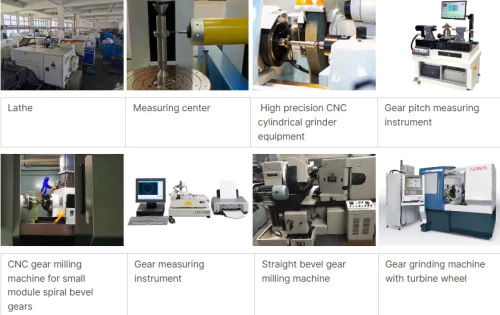
Checkpoint Summary: Tools Required and Pass/Fail Criteria
| # | Checkpoint | Tools Needed | Pass Criterion |
|---|---|---|---|
| 1 | Housing bore alignment | Bore gauge, precision rule | Centreline distances ±0.05 mm of drawing |
| 2 | Bearing preload | Torque wrench (0–10 Nm) | Rolling torque 0.8–3.5 Nm (application-specific) |
| 3 | Contact pattern | Engineer’s blue, brush, camera | Centred oval 40–65% tooth face area |
| 4 | Backlash measurement | Dial indicator (0.01 mm), mag base | Within module-specific jt min/max range |
| 5 | Shaft seal integrity | Visual inspection | Seated square, lip undamaged, oriented correctly |
| 6 | Oil fill and breather | Oil measure, sight glass | Correct grade, correct level, breather clear |
| 7 | Run-in and post-run check | Thermometer, hearing, leak check | Stable temp <80°C, no abnormal noise, no leaks |
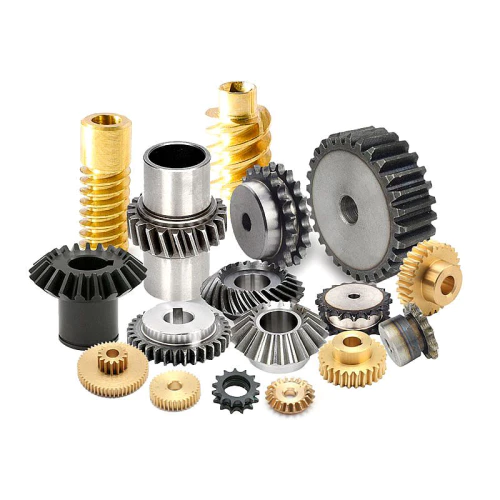
What Happens When Each Checkpoint Is Skipped
Field experience across Australian industrial, mining, marine, and agricultural bevel gear installations consistently shows that when failures occur within the first 20% of expected service life, they trace to one or more of the seven checkpoints having been skipped during installation. The failure mode from each missed checkpoint is predictable and specific:
Skip #1 (Housing)
Chronic incorrect contact pattern that cannot be corrected by shimming, because the housing bore geometry is inherently wrong. Often misdiagnosed as a gear manufacturing defect.
Skip #2 (Bearing Preload)
Contact pattern shifts under load because the shaft can move axially against loose bearings. Noise increases after load application. Progressive heel contact wear develops.
Skip #3 (Contact Pattern)
Most consequential omission. Incorrect contact pattern operates for hundreds or thousands of hours before manifesting as surface fatigue, by which time the damage is already advanced.
Skip #4 (Backlash)
Tight backlash causes gear heating and tip contact wear. Excessive backlash causes impact noise on reversal and progressive heel contact migration. Both shorten service life.
Skip #5 (Shaft Seals)
Oil loss and/or contamination ingress. The gear set may run for months before the oil level drops to a damaging point, at which time the gear surface condition may already be compromised.
Skip #6 (Oil Fill)
Wrong lubricant (most critical: GL-4 in hypoid application) causes scuffing within days. Low fill level causes lubricant starvation. Blocked breather forces oil past seals.
Installation Support Components and Accessories
Precision Shim Packs
Pre-cut sets in 0.05, 0.10, 0.15, 0.20, 0.25, 0.30, 0.50 mm thicknesses for rapid iterative adjustment during contact pattern and backlash setting. Order with the gear set for same-delivery logistics.
Engineer’s Blue Marking Compound
Thin-consistency Prussian blue for clear contact pattern transfer. Loctite and Dykem brands are widely available. Gel consistency is too thick and produces misleading oversized patterns.
Dial Indicator + Magnetic Base
0.01 mm resolution plunger-type dial indicator for backlash measurement. The magnetic base must be rigid enough that it does not flex under indicator spring pressure — cheap magnetic bases introduce measurement error.
Low-Range Torque Wrench (0–10 Nm)
Essential for bearing preload rolling torque measurement. Standard torque wrenches starting at 20–40 Nm cannot resolve the 0.8–3.5 Nm range needed for pinion bearing preload verification.
Replacement Shaft Seals
Replace shaft seals at every assembly, even if the existing seals appear undamaged. Used seals are the most common cause of post-maintenance oil leaks — new seals cost less than the first oil leak cleanup event.
Approved Gear Oil
Specify and purchase the correct gear oil before installation begins — not after the gearbox is sealed. GL-5 hypoid for hypoid applications; GL-4/GL-5 spiral bevel for standard bevel applications. Confirm the grade before filling.
Customer Commissioning Experiences
“Ever-Power’s commissioning checklist was part of the supply package. Following it step by step, we identified that our housing bores were 0.12 mm out of position from a machining error — caught before any gear installation. Saved a potential warranty dispute and expensive rework.”
“The bearing preload torque check at checkpoint 2 showed our rolling torque was 6.2 Nm — well above the 2.0–3.0 Nm spec. Added 0.10 mm to the crush sleeve and rechecked at 2.6 Nm. Two years of operation later, the unit has never shown overheating or contact pattern shift.”
“We installed three identical bevel gearboxes on the same shift. Checkpoint 3 (contact pattern) passed on two units but showed heavy toe contact on the third — the housing bore was out on that one. Identified and corrected before run-in rather than after a failure in service.”
“We found our gearbox temperature stabilised at 84°C during the run-in — above the 80°C guideline. Investigated and found an undersized oil fill. Topped up to correct level and temperature stabilised at 68°C. The run-in check caught this early before it caused any gear damage.”
Frequently Asked Questions: Bevel Gear Installation
Get Installation Support from Australia’s Bevel Gear Specialist
Australia Ever-Power · Condell Park NSW 2200 · Factory contact pattern reports, installation documentation, shim packs, and remote commissioning support for every gear set we supply.