
Product Description
Manufacturer Price Customized Metal Bevel Spur Differential Steering Spline Plastic
Nylon Stainless Steel Gear Small Worm Gear
| Material | 1) Aluminum: AL 6061-T6, 6063, 7075-T etc. |
| 2) Stainless steel: 303, 304, 316L, 17-4(SUS630) etc. | |
| 3) Steel: 4140, Q235, Q345B, 20#, 45# etc. | |
| 4) Titanium: TA1, TA2/GR2, TA4/GR5, TC4, TC18 etc. | |
| 5) Brass: C36000 (HPb62), C37700 (HPb59), C26800 (H68), C22000(H90) etc. | |
| 6) Copper, Bronze, Magnesium alloy, Delrin, POM, Acrylic, PC, etc. | |
| Finsh | Sandblasting, Anodize color, Blackenning, Zinc/Nickl Plating, Polish. |
| Power coating, Passivation PVD, Titanium Plating, Electrogalvanizing. | |
| Electroplating chromium, Electrophoresis, QPQ(Quench-Polish-Quench). | |
| Electro Polishing, Chrome Plating, Knurl, Laser etch Logo, etc. | |
| Main Equipment | CNC machining center(Milling), CNC Lathe, Grinding machine. |
| Cylindrical grinder machine, Drilling machine, Laser cutting machine, etc. | |
| Drawing format | STEP, STP, GIS, CAD, PDF, DWG, DXF etc or samples. |
| Tolerance | +/-0.01mm ~ +/-0.05mm |
| Surface roughness | Ra 0.1~3.2 |
| Inspection | Complete inspection lab with Micrometer, Optical Comparator, Caliper Vernier, CMM. |
| Depth Caliper Vernier, Universal Protractor, Clock Gauge, Internal Centigrade Gauge. | |
| Capacity | CNC turning work range: φ0.5mm-φ150mm*300mm. |
| CNC milling work range: 510mm*1571mm*500mm. |
About Runsom
Runsom, a company specializing in rapid prototyping and manufacturing, has decades of experience in
CNC machining, 3D printing, injection molding, sheet metal fabrication, and die casting. Our engineering
team with extensive knowledge and experience utilizes the latest prototyping technologies and top-notch
machining equipment to provide comprehensive services to satisfy global customers’ requirements,
timescales, and specific needs. We are able to take your concepts or designs to reality production in just
days with our advanced machining technologies, extensive manufacturing experience, and a wealth of
premium materials.
Our Mission
Runsom Precision was established to give support to companies in the industries fields who continually
need to reduce their costs and meet tight deadlines. Our purpose is to ensure customer satisfaction by
providing first-class project management control and problem-free products.
Get a Quote
Q1: What’s kinds of information you need for quote?
A1: Kindly please provide the 2D/3D drawings (PDF/DWG/DXF/IGS/STP/SLDPRT/etc) and advise material
, finish, quantity for quoting.
Q2: What is your MOQ?
A2: MOQ depends on our client’s needs, besides, we welcome trial order before mass-production.
Q3: What is the lead time?
A3: Depending on your specific project and quantity.
Q4: Available for customized design drawings?
A4: Yes, please send the technical drawings to us. It’s better if you can send both 2D and 3D drawings if
you have.
Q5: If the parts we purchase from your company are not good, what can we do?
A5: Please feel free to contact us after you got the products. Kindly send us some photos, we will
feedback to our engineers and QC departments and solve the problems ASAP.
Q6: Are you a manufacturer or trading company?
A6: We are a manufacturer, we are located in HangZhou, China.
Q7: Will my drawings be safe after sending to you?
A7: Yes, we will keep them well and not release to third party without your permission.
| Application: | Motor, Electric Cars, Motorcycle, Machinery, Marine, Toy, Agricultural Machinery, Car, Auto,Motorcycle,Aviation,Electonic,Medical,Home |
|---|---|
| Hardness: | According to The Drawing |
| Gear Position: | According to The Drawing |
| Manufacturing Method: | Machining,Milling,Turning,5axis,etc |
| Toothed Portion Shape: | Custom |
| Material: | Aluminum,Steel,Brass,Hardware,etc |
| Samples: |
US$ 5/Piece
1 Piece(Min.Order) | |
|---|
| Customization: |
Available
| Customized Request |
|---|
How do bevel gears differ from other types of gears?
Bevel gears have distinct characteristics that set them apart from other types of gears. Here’s a detailed explanation of how bevel gears differ from other gears:
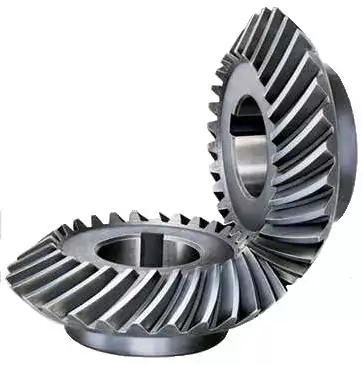
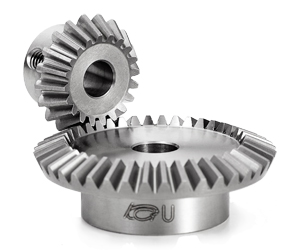
1. Tooth Geometry: Bevel gears have teeth cut on the cone-shaped surface of the gears, whereas other types of gears, such as spur gears and helical gears, have teeth cut on cylindrical surfaces. The tooth geometry of bevel gears allows them to accommodate intersecting shafts and transmit rotational motion at different angles.
2. Axis Orientation: Bevel gears have intersecting axes, meaning the shafts they are mounted on intersect each other. In contrast, other types of gears typically have parallel or skewed axes. The intersecting axis of bevel gears allows for changes in direction and allows for power transmission between shafts that are not in a straight line.
3. Types of Bevel Gears: Bevel gears come in different variations, including straight bevel gears, spiral bevel gears, and hypoid bevel gears. Straight bevel gears have straight-cut teeth and intersect at a 90-degree angle. Spiral bevel gears have curved teeth that are gradually cut along the gear surface, providing smoother engagement and reduced noise. Hypoid bevel gears have offset axes and are used when the intersecting shafts are non-parallel. Other types of gears, such as spur gears and helical gears, also have their own variations but do not typically involve intersecting axes.
4. Direction of Motion: Bevel gears can change the direction of rotational motion between intersecting shafts. Depending on the orientation of the gears, the dir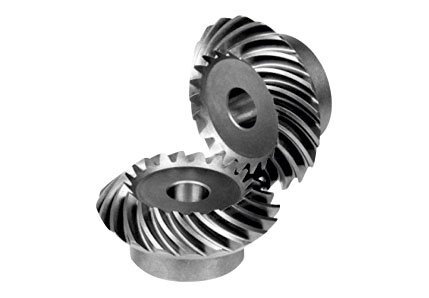
How do you prevent backlash and gear play in a bevel gear mechanism?
In a bevel gear mechanism, preventing backlash and gear play is essential for ensuring accurate and efficient power transmission. Backlash refers to the clearance or free movement between the mating teeth of gears, resulting in a brief loss of motion or a dead zone when changing direction. Here are some methods to prevent backlash and minimize gear play in a bevel gear mechanism:
- Precision Manufacturing: High-precision manufacturing processes are crucial for minimizing backlash and gear play in bevel gears. Accurate machining of gear teeth and precise control of tooth dimensions, profiles, and alignment help achieve tight meshing between the gears, reducing the clearance and backlash. Modern manufacturing techniques, such as CNC machining and gear grinding, can ensure the desired level of precision and minimize gear play.
- Proper Gear Design: The design of the bevel gears can influence the amount of backlash and gear play. An optimized gear design, including suitable tooth profiles, pressure angles, and tooth contact patterns, can help distribute the load evenly and minimize the clearance between the mating teeth. By carefully considering gear design parameters, designers can reduce backlash and improve gear meshing characteristics.
- Preload or Pre-Tension: Applying a preload or pre-tension to the bevel gears can help minimize backlash and gear play. This involves applying a slight force or tension to the gears, forcing them to maintain contact and reducing the clearance between the teeth. Preload can be achieved through various methods, such as using spring mechanisms, shimming, or adjusting the mounting position of the gears.
- Backlash Compensation: Backlash compensation methods aim to minimize the effects of backlash and gear play by introducing mechanisms or techniques that compensate for the clearance. One common approach is to use anti-backlash gears, which have special tooth profiles or arrangements that reduce or eliminate clearance between the mating teeth. Another method is to incorporate backlash compensation devices, such as spring-loaded mechanisms or adjustable shims, that actively reduce the backlash during operation.
- Tight Control of Tolerances: Maintaining tight tolerances during the manufacturing and assembly processes is critical for minimizing backlash and gear play. Close control of dimensions, alignment, and clearances ensures proper gear meshing and reduces the possibility of excessive play. Quality control measures, such as inspection, testing, and verification of gear dimensions, can help ensure that the gears meet the specified tolerances.
- Regular Maintenance: Regular maintenance practices, including inspection, lubrication, and adjustment, are essential for preventing and minimizing backlash and gear play over time. Periodic checks for wear, misalignment, and proper lubrication can help identify and rectify any issues that may contribute to increased backlash. Timely maintenance and replacement of worn or damaged gears can help maintain optimal gear meshing and minimize play.
By implementing these methods, it is possible to significantly reduce backlash and gear play in a bevel gear mechanism, resulting in improved accuracy, efficiency, and longevity of the gear system.
ection of rotation can be reversed. This capability makes bevel gears suitable for applications where changes in direction are required. In contrast, other gears, such as spur gears and helical gears, transmit motion in a specific direction along parallel or skewed axes.
5. Load Distribution: Bevel gears distribute loads differently compared to other gears. Due to the conical shape of the gears, the contact area between the teeth changes as the gears rotate. This can result in varying load distribution along the gear teeth. Other gears, such as spur gears and helical gears, have a consistent load distribution along their teeth due to their cylindrical shape.
6. Applications: Bevel gears are commonly used in applications where changes in direction or speed of rotational motion are required, such as automotive differentials, marine propulsion systems, and power transmission systems. Other types of gears, such as spur gears and helical gears, are more commonly used in applications where parallel or skewed shafts are involved and changes in direction are not necessary.
While bevel gears have their unique characteristics, it’s important to note that different types of gears have their own advantages and applications. The selection of the appropriate gear type depends on factors such as the application requirements, operating conditions, space limitations, and load considerations.
In summary, bevel gears differ from other types of gears in terms of tooth geometry, axis orientation, types of variations available, direction of motion, load distribution, and applications. Their ability to accommodate intersecting shafts and change the direction of rotational motion makes them suitable for specific applications where other types of gears may not be as effective.


editor by CX 2023-08-30