
Issue: New
Warranty: 1.5 many years
Shape: BEVEL, Electricity Transmission Parts
Applicable Industries: Manufacturing Plant, Equipment Restore Outlets, Retail
Showroom Place: None
Movie outgoing-inspection: Offered
Machinery Examination Report: Offered
Advertising Variety: Regular Merchandise
Warranty of main elements: 1 Year
Main Components: other
Content: Steel, Brass, Aluminum, Nylon, POM Plastic
Processing: Forging
Pressure Angle: 20°, fourteen.5°
Regular or Nonstandard: Regular
Outer Diameter: 11
Modulus: M0.3-M2
Tooth Profile: Involute
Dimensions: Customer’s Drawing
Diameter: 3mm-120mm
OEM: Accept
Capability: 20000 Piece/Parts for every Month
After Warranty Services: Online video technical help
Nearby Service Location: None
Port: ZheJiang
Goods Show Spur gears are broadly approved as the most productive kind of gearing resolution, when the software of transmitting energy and uniform rotary motion from 1 parallel shaft to an additional is necessary. Decided by the heart length, spur gears produce a steady operating speed travel. This push velocity can be reduced or enhanced by the variable amount of teeth that exist in the driving gear. Numerous of our custom made spur gears have been employed in equipment teach apps – exactly where numerous gears are needed to have the same strain angle and diameter pitch. They are offered in plastic, non-metallic, brass, steel and forged iron. In addition ,these components are made a lot of type sorts: plain, web, net with lightening holes, and web with spokes. Numerous are offered with or with out hubs. You Can Customize With Drawing , Click on Below To Get in touch with Us Specification
| Modulus | M0.3-M2 |
| Tooth Profile | Involute |
| Pressure Angle | 20°, fourteen.5° |
| Shape | Power Transmission Elements |
| Size | Customer’s Drawing |
| Material | Steel, Brass, Aluminum, Nylon, POM Plastic |
| Diameter | 3mm-120mm |
| Application | Manufacturing Plant, Machinery Restore Retailers, Retail, |
| OEM | Accept |
| Capacity | 20000 Piece/Pieces for each Month |
Connected Goods Firm Profile Given that the factory was established up in 2003, it has been specialised in the generation of equipment, sensible item style and steady high quality. Our manufacturing unit adheres to the principle of “good quality 1st, popularity initial”, and welcomes all new and aged clients to cooperate with us for frequent growth. As 1 of the companies in the stock normal gear market, we provide a wide selection of inventory gear creation and assistance customized gear production with our in depth professional and specialized understanding, flexibly conference the requirements of various consumers . As a gear manufacturer, our greatest energy is our lineup of inventory gear and custom equipment merchandise.These days most reducer manufacturers and buying and selling businesses are minimal to 1 of these product sorts.Simply because of the potential to provide these 2 kinds of products, occupy the leading place in the equipment sector.Our main merchandise contain spur gear, bevel gear, helical gear, worm equipment and rack equipment and ten other kinds. Click Right here To Discover A lot more Our Advantages Item Process Transportation & Goal Industry FAQ
Benefits and Uses of Miter Gears
If you’ve ever looked into the differences between miter gears, you’re probably wondering how to choose between a Straight toothed and Hypoid one. Before you decide, however, make sure you know about backlash and what it means. Backlash is the difference between the addendum and dedendum, and it prevents jamming of the gears, protects the mating gear surfaces, and allows for thermal expansion during operation.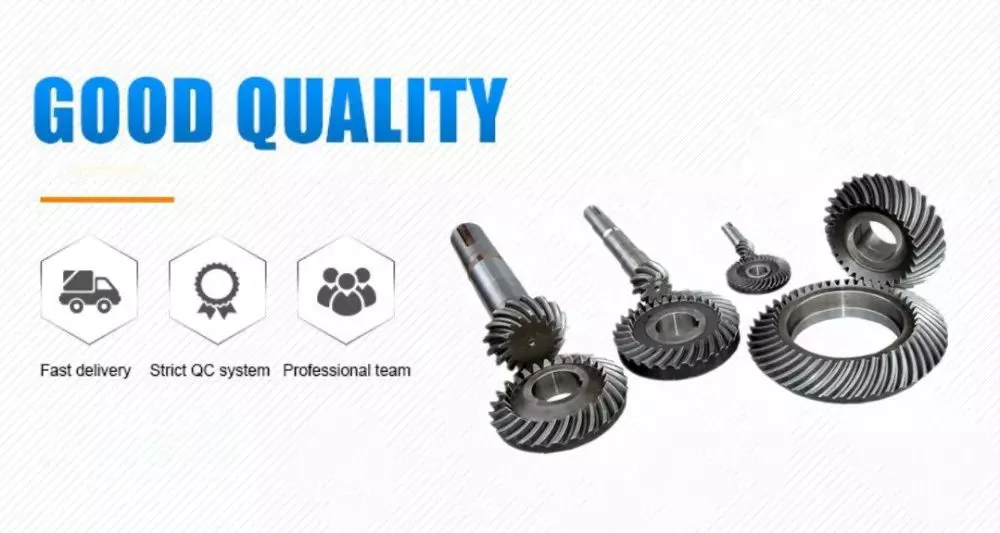
Spiral bevel gears
Spiral bevel gears are designed to increase efficiency and reduce cost. The spiral shape creates a profile in which the teeth are cut with a slight curve along their length, making them an excellent choice for heavy-duty applications. Spiral bevel gears are also hypoid gears, with no offsets. Their smaller size means that they are more compact than other types of right-angle gears, and they are much quieter than other types of gear.
Spiral bevel gears feature helical teeth arranged in a 90-degree angle. The design features a slight curve to the teeth, which reduces backlash while increasing flexibility. Because they have no offsets, they won’t slip during operation. Spiral bevel gears also have less backlash, making them an excellent choice for high-speed applications. They are also carefully spaced to distribute lubricant over a larger area. They are also very accurate and have a locknut design that prevents them from moving out of alignment.
In addition to the geometric design of bevel gears, CZPT can produce 3D models of spiral bevel gears. This software has gained widespread attention from many companies around the world. In fact, CZPT, a major manufacturer of 5-axis milling machines, recently machined a prototype using a spiral bevel gear model. These results prove that spiral bevel gears can be used in a variety of applications, ranging from precision machining to industrial automation.
Spiral bevel gears are also commonly known as hypoid gears. Hypoid gears differ from spiral bevel gears in that their pitch surface is not at the center of the meshing gear. The benefit of this gear design is that it can handle large loads while maintaining its unique features. They also produce less heat than their bevel counterparts, which can affect the efficiency of nearby components.
Straight toothed miter gears
Miter gears are bevel gears that have a pitch angle of 90 degrees. Their gear ratio is 1:1. Miter gears come in straight and spiral tooth varieties and are available in both commercial and high precision grades. They are a versatile tool for any mechanical application. Below are some benefits and uses of miter gears. A simple explanation of the basic principle of this gear type is given. Read on for more details.
When selecting a miter gear, it is important to choose the right material. Hard faced, high carbon steel is appropriate for applications requiring high load, while nylon and injection molding resins are suitable for lower loads. If a particular gear becomes damaged, it’s advisable to replace the entire set, as they are closely linked in shape. The same goes for spiral-cut miter gears. These geared products should be replaced together for proper operation.
Straight bevel gears are the easiest to manufacture. The earliest method was using an indexing head on a planer. Modern manufacturing methods, such as the Revacycle and Coniflex systems, made the process more efficient. CZPT utilizes these newer manufacturing methods and patented them. However, the traditional straight bevel is still the most common and widely used type. It is the simplest to manufacture and is the cheapest type.
SDP/Si is a popular supplier of high-precision gears. The company produces custom miter gears, as well as standard bevel gears. They also offer black oxide and ground bore and tooth surfaces. These gears can be used for many industrial and mechanical applications. They are available in moderate quantities from stock and in partial sizes upon request. There are also different sizes available for specialized applications.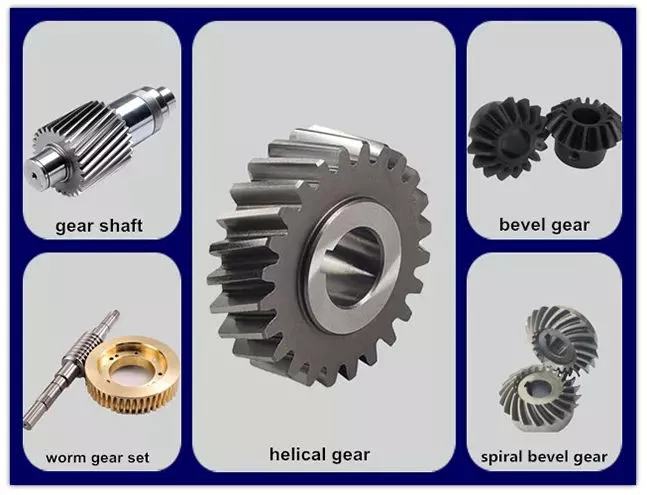
Hypoid bevel gears
The advantages of using Hypoid bevel and helical gears are obvious. Their high speed, low noise, and long life make them ideal for use in motor vehicles. This type of gear is also becoming increasingly popular in the power transmission and motion control industries. Compared to standard bevel and helical gears, they have a higher capacity for torque and can handle high loads with less noise.
Geometrical dimensioning of bevel/hypoid bevel gears is essential to meet ANSI/AGMA/ISO standards. This article examines a few ways to dimension hypoid bevel and helical gears. First, it discusses the limitations of the common datum surface when dimensioning bevel/helical gear pairs. A straight line can’t be parallel to the flanks of both the gear and the pinion, which is necessary to determine “normal backlash.”
Second, hypoid and helical gears have the same angular pitch, which makes the manufacturing process easier. Hypoid bevel gears are usually made of two gears with equal angular pitches. Then, they are assembled to match one another. This reduces noise and vibration, and increases power density. It is recommended to follow the standard and avoid using gears that have mismatched angular pitches.
Third, hypoid and helical gears differ in the shape of the teeth. They are different from standard gears because the teeth are more elongated. They are similar in appearance to spiral bevel gears and worm gears, but differ in geometry. While helical gears are symmetrical, hypoid bevel gears are non-conical. As a result, they can produce higher gear ratios and torque.
Crown bevel gears
The geometrical design of bevel gears is extremely complex. The relative contact position and flank form deviations affect both the paired gear geometry and the tooth bearing. In addition, paired gears are also subject to process-linked deviations that affect the tooth bearing and backlash. These characteristics require the use of narrow tolerance fields to avoid quality issues and production costs. The relative position of a miter gear depends on the operating parameters, such as the load and speed.
When selecting a crown bevel gear for a miter-gear system, it is important to choose one with the right tooth shape. The teeth of a crown-bevel gear can differ greatly in shape. The radial pitch and diametral pitch cone angles are the most common. The tooth cone angle, or “zerol” angle, is the other important parameter. Crown bevel gears have a wide range of tooth pitches, from flat to spiral.
Crown bevel gears for miter gear are made of high-quality materials. In addition to metal, they can be made of plastic or pre-hardened alloys. The latter are preferred as the material is less expensive and more flexible than steel. Furthermore, crown bevel gears for miter gears are extremely durable, and can withstand extreme conditions. They are often used to replace existing gears that are damaged or worn.
When selecting a crown bevel gear for a miter gear, it is important to know how they relate to each other. This is because the crown bevel gears have a 1:1 speed ratio with a pinion. The same is true for miter gears. When comparing crown bevel gears for miter gears, be sure to understand the radii of the pinion and the ring on the pinion.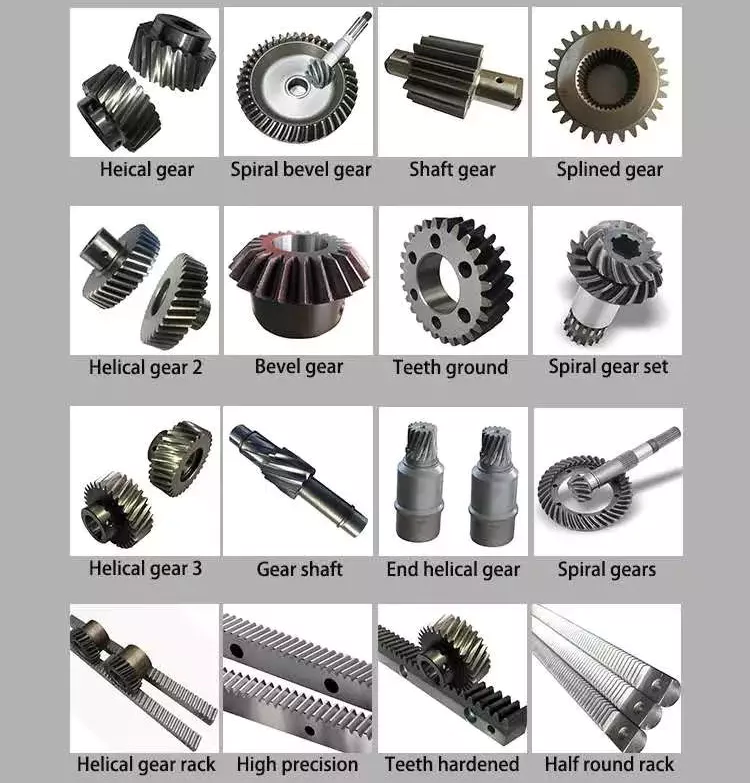
Shaft angle requirements for miter gears
Miter gears are used to transmit motion between intersecting shafts at a right angle. Their tooth profile is shaped like the mitre hat worn by a Catholic bishop. Their pitch and number of teeth are also identical. Shaft angle requirements vary depending on the type of application. If the application is for power transmission, miter gears are often used in a differential arrangement. If you’re installing miter gears for power transmission, you should know the mounting angle requirements.
Shaft angle requirements for miter gears vary by design. The most common arrangement is perpendicular, but the axes can be angled to almost any angle. Miter gears are also known for their high precision and high strength. Their helix angles are less than ten degrees. Because the shaft angle requirements for miter gears vary, you should know which type of shaft angle you require before ordering.
To determine the right pitch cone angle, first determine the shaft of the gear you’re designing. This angle is called the pitch cone angle. The angle should be at least 90 degrees for the gear and the pinion. The shaft bearings must also be capable of bearing significant forces. Miter gears must be supported by bearings that can withstand significant forces. Shaft angle requirements for miter gears vary from application to application.
For industrial use, miter gears are usually made of plain carbon steel or alloy steel. Some materials are more durable than others and can withstand higher speeds. For commercial use, noise limitations may be important. The gears may be exposed to harsh environments or heavy machine loads. Some types of gears function with teeth missing. But be sure to know the shaft angle requirements for miter gears before you order one.


editor by czh