
Bevel gears represent a fundamental category in mechanical power transmission, enabling efficient torque transfer between intersecting shafts. While the term bevel gears encompasses multiple configurations, straight bevel gears constitute the most basic form. Understanding the distinctions among bevel gear types—including straight bevel gears, spiral bevel gears, hypoid gears, zerol bevel gears, and miter gears—proves essential for engineers and maintenance professionals selecting components for demanding applications. This comprehensive guide explores bevel gear design, manufacturing processes, materials, performance characteristics, and practical selection criteria, with emphasis on real-world industrial scenarios encountered across Australian operations.
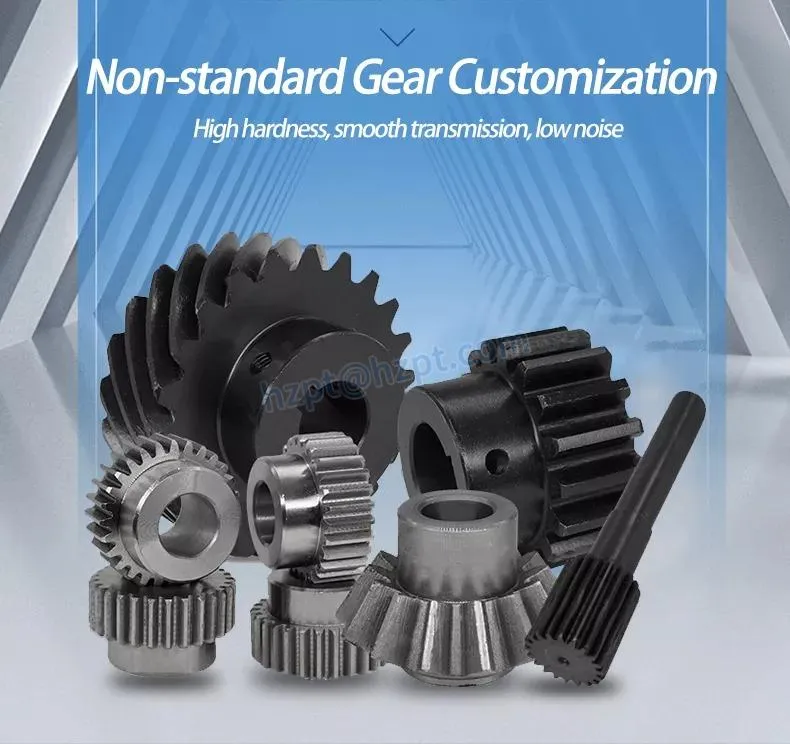
Bevel gear set illustrating intersecting shaft configuration
Understanding Bevel Gears: Core Geometry and Fundamental Principles
Bevel gears feature conical pitch surfaces that allow power transmission between shafts intersecting at angles, most commonly 90 degrees. Unlike spur gears operating on parallel shafts, bevel gears accommodate directional changes in rotational motion while maintaining precise speed ratios. The pitch cone angle defines the geometry, with the shaft angle equaling the sum of the two mating pitch cone angles. In standard designs, engineers calculate these angles based on tooth counts and required shaft orientation to ensure proper meshing without interference.
Key parameters include module, pressure angle (typically 20°), and cone distance. Bevel gear ratio, expressed as the number of teeth on the gear divided by the pinion, directly influences torque multiplication and speed reduction. Proper bevel gear design accounts for thrust loads generated along the shaft axes, necessitating robust bearing support. Australia Ever-Power engineers apply ISO 23509 standards during custom calculations to optimize tooth contact patterns and minimize noise in high-speed operations.
This geometry enables versatile applications ranging from low-speed heavy-duty drives to precision instrumentation. Selection begins with confirming shaft intersection angle and operational loads to avoid premature wear or catastrophic failure.
Straight Bevel Gears: Characteristics and Limitations
Straight bevel gears possess teeth cut straight across the cone face, parallel to the generator line. This simplicity facilitates economical manufacturing while delivering reliable performance in low-to-moderate speed applications. Tooth contact occurs instantaneously along the full face width, resulting in higher noise levels and vibration compared to curved-tooth variants at elevated speeds.
Engineers typically limit straight bevel gears to peripheral speeds below 5 m/s to maintain acceptable noise and durability. Common bevel gear ratios range from 1:1 (miter gears) to 5:1, with higher ratios possible but accompanied by reduced pinion cone angles and increased bending stress. Materials such as case-hardened alloy steel or stainless variants enhance surface durability against pitting and wear.
In Australian mining and agricultural equipment, straight bevel gears excel where cost control and straightforward maintenance outweigh smoothness requirements. However, for continuous high-speed duty, alternative configurations provide superior longevity.
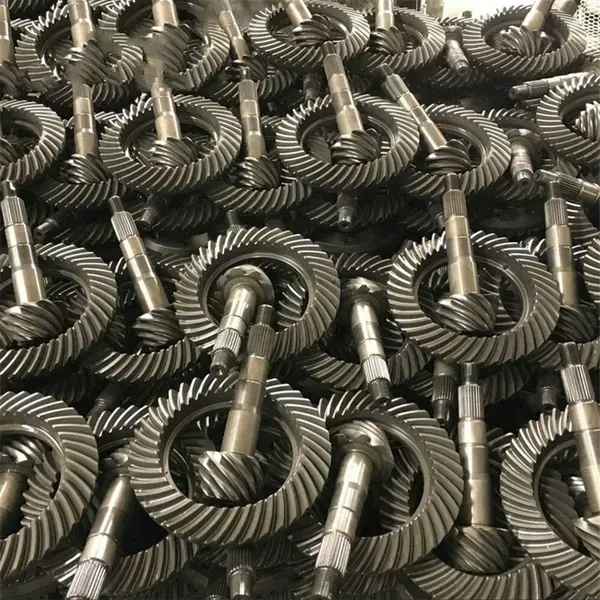
Straight bevel gear pair showing classic tooth geometry
Spiral Bevel Gears: Enhanced Performance Through Curved Teeth
Spiral bevel gears incorporate curved teeth machined along a spiral path, increasing the contact ratio and distributing load across multiple teeth simultaneously. This design yields smoother operation, reduced noise, and higher efficiency—often exceeding 98%—making them ideal for high-speed or heavy-torque transmissions. The spiral angle introduces axial thrust forces that require careful bearing selection and housing rigidity.
Compared to straight bevel gears, spiral variants support greater peripheral speeds while maintaining lower vibration levels. Zerol bevel gears represent a special case of spiral bevel gears with zero spiral angle, combining the smoothness of curved teeth with the mounting simplicity of straight designs. Hypoid gears extend the concept further by offsetting the shaft axes, enabling higher torque capacity and ground clearance advantages in vehicle differentials.
Australia Ever-Power manufactures spiral bevel gears using advanced CNC generators compliant with AGMA and ISO standards, ensuring precise tooth geometry for demanding applications.
Zerol Bevel Gears: Balanced Alternative
Zerol bevel gears bridge straight and spiral categories, offering quieter performance than straight designs without the pronounced axial thrust of full spiral configurations. They prove particularly valuable in precision machinery where moderate speeds and minimal backlash are required.
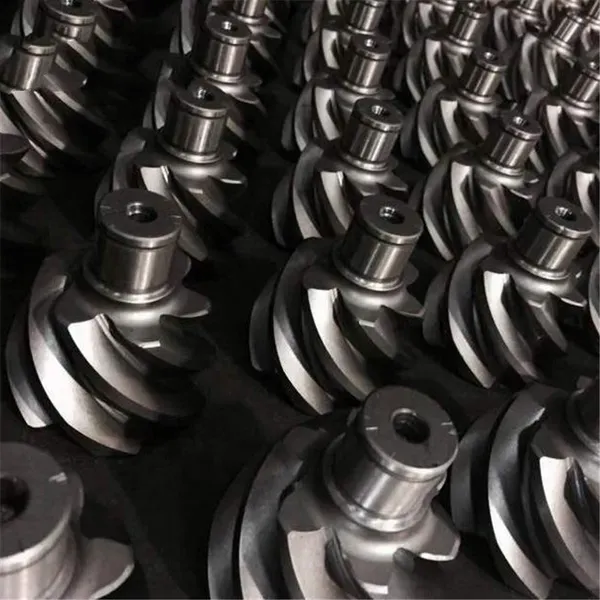
Spiral bevel gear set demonstrating curved tooth profile
Bevel Gear vs Spur Gear: Key Functional Differences
The primary distinction between bevel gears and spur gears lies in shaft orientation. Spur gears transmit power between parallel shafts with straight teeth parallel to the axis, generating only tangential and radial forces. Bevel gears handle intersecting shafts, producing additional axial thrust that demands specialized mounting arrangements.
Efficiency remains comparable in well-designed systems, yet bevel gear applications frequently involve directional changes impossible with spur configurations. Miter gears, a 1:1 bevel subset, function analogously to equal-ratio spur pairs but redirect motion at right angles. Crown gears represent an extreme where one member approaches a flat disc configuration for specialized face-gear drives.
Engineers evaluate bevel gear ratio, shaft angle, and load direction when contrasting options against spur gear alternatives in compact machinery layouts.
Bevel Gear Materials and Manufacturing Processes
Premium bevel gears utilize high-grade alloy steels such as 8620 or 9310, subjected to carburizing and quenching for surface hardness exceeding 58 HRC while retaining a tough core. Stainless steel variants resist corrosion in marine or food-processing environments, while engineering plastics serve low-torque, noise-sensitive applications. Australia Ever-Power sources materials meeting stringent Australian and international specifications to guarantee traceability and performance consistency.
Typical Manufacturing Workflow
Advanced CNC bevel gear cutter tools enable tight tolerances essential for high-performance spiral and hypoid sets. Post-processing includes shot peening to improve fatigue resistance in cyclic loading environments.
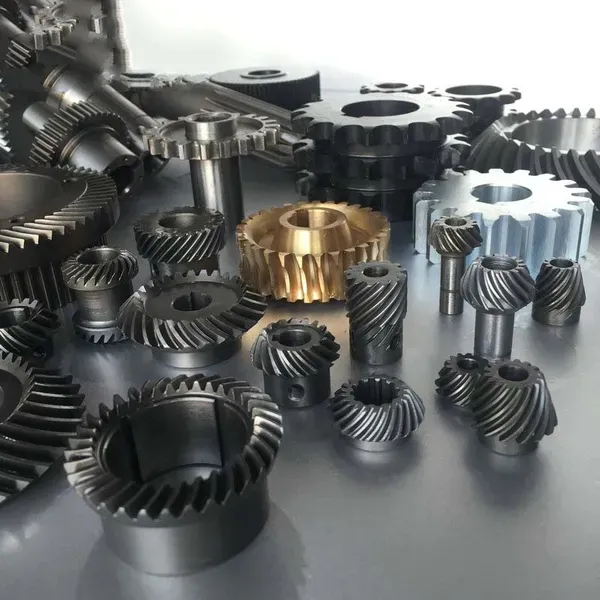
Precision manufacturing of spiral bevel gears
Bevel Gear Applications Across Industries
Bevel gear applications span numerous sectors requiring directional power transmission:
- Automotive and Heavy Vehicles: Differentials employ hypoid or spiral bevel gears to transmit torque to drive wheels while accommodating suspension movement.
- Mining and Quarrying: Conveyor drives and crusher mechanisms utilize robust straight or spiral bevel sets for reliable operation under shock loads.
- Agricultural Machinery: PTO drives, harvesters, and irrigation systems rely on miter and bevel configurations for compact right-angle transmissions.
- Marine and Offshore: Steering systems and winches benefit from corrosion-resistant stainless bevel gears.
- Robotics and Automation: Precision zerol or spiral bevel gears deliver smooth motion in joint actuators.
- Renewable Energy: Wind turbine yaw and pitch drives incorporate high-ratio bevel stages for accurate positioning.
Australia Ever-Power supplies custom bevel gear sets tailored to these demanding environments, ensuring compatibility with existing housings and performance requirements.
Bevel Gear Maintenance and Replacement Guidelines
Effective bevel gear maintenance begins with scheduled lubrication using EP oils or greases formulated for high-pressure contact. Monitor operating temperature, vibration, and noise levels as early indicators of misalignment or wear. Replacement becomes necessary when pitting depth exceeds 10% of tooth thickness, backlash increases beyond design limits, or tooth root cracks appear during inspection.
Lifespan assessment employs ISO 10300 calculations incorporating load spectrum, material properties, and lubrication conditions. In practice, well-maintained spiral bevel gears in industrial service often achieve 20,000–50,000 operating hours before major refurbishment.
Australia Ever-Power offers comprehensive inspection services and matched replacement pairs calculated to the exact shaft angle of customer housings.
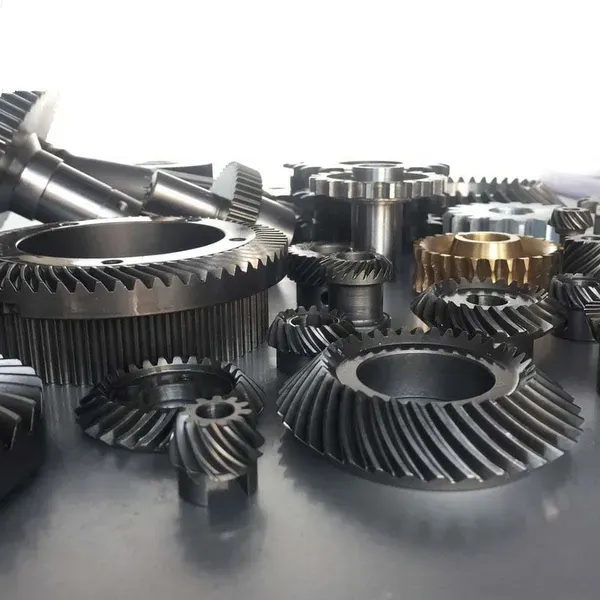
Bevel gear inspection and maintenance in industrial setting
Market Price Comparison for Bevel Gear Sets
Pricing varies significantly based on type, size, material, and customization level. The table below provides indicative Australian market ranges (AUD, excluding GST) for module 5, 90° shaft angle sets with approximately 20/40 tooth configuration.
Australia Ever-Power delivers competitive pricing through local technical support and rapid custom manufacturing, avoiding lengthy import lead times and compliance uncertainties.
Sustainability and Regulatory Compliance in Major Markets
Leading bevel gear consuming regions—including the United States, Germany, China, Japan, and Australia—enforce increasingly stringent environmental standards. Manufacturers adopt low-emission heat treatment processes, recyclable packaging, and conflict-free material sourcing to align with REACH, RoHS, and Australian GHS requirements. Australia Ever-Power maintains full traceability documentation supporting sustainability reporting for mining and renewable energy clients operating under ISO 14001 frameworks.
Responsible production reduces carbon footprint while ensuring long service life that minimizes replacement frequency and associated waste.
Related Product: Custom Spiral Bevel Gears for Demanding Applications
For high-performance requirements, explore our spiral bevel gears engineered for superior smoothness and load capacity. Available in modules 1–20 with custom shaft angles and materials, these sets integrate seamlessly with existing straight bevel installations when upgraded performance is needed.
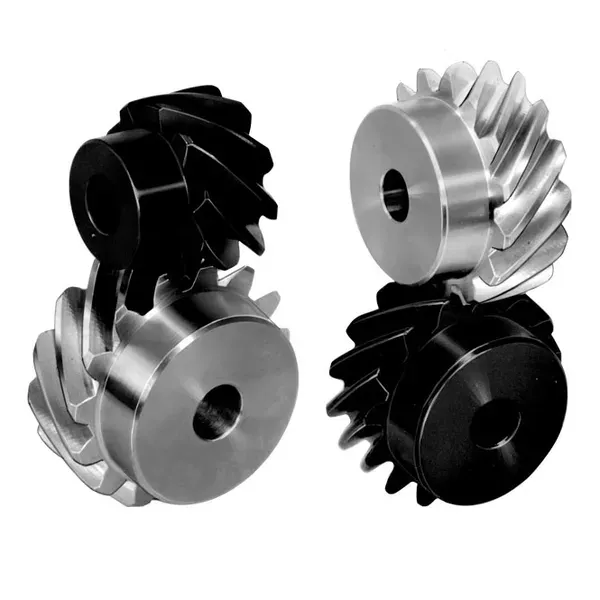
Custom spiral bevel gear assembly ready for industrial deployment
Customer Success Stories
“Switching to Australia Ever-Power spiral bevel gears in our conveyor drives eliminated the excessive noise we experienced with previous straight bevel sets. Tooth contact and service life exceeded expectations in our harsh mining environment.”
“The custom hypoid set supplied for our agricultural harvester prototype fitted perfectly on the first try. Engineering support during design phase was outstanding and saved weeks of iteration.”
Australia Ever-Power vs Competing Suppliers
Key Bevel Gear Components and Accessories
- Matched Pinion and Gear Sets: Precision-lapped pairs ensuring optimal backlash and contact pattern from initial installation.
- Bevel Gear Housings and Mounts: Custom-machined cast iron or aluminum housings designed for exact shaft alignment and thermal expansion compensation.
- High-Performance Bearings: Tapered roller or angular contact sets rated for combined radial and axial loads generated by bevel geometry.
- Lubrication Systems: Automatic grease dispensers or oil bath arrangements with temperature monitoring for continuous duty cycles.
- Seals and Protective Covers: Labyrinth or contact seals preventing contaminant ingress in dusty Australian field conditions.
- Inspection Tools: Backlash gauges and contact pattern marking compounds for field verification during maintenance.
Frequently Asked Questions
Need Expert Advice on Bevel Gear Selection or Custom Manufacturing?
Australia Ever-Power | 27 Harley Crescent, Condell Park NSW 2200 | [email protected]