
1:1
Mitre Gear Ratio Always
90deg
Standard Shaft Angle
45deg
Mitre Gear Pitch Cone Angle
5 Types
Mitre Gear Variants Available
Table of Contents
02 – Gear Geometry: What Defines a Mitre Gear
03 – Five Mitre Gear Tooth Forms
04 – How Bevel and Mitre Gears Differ in Use
05 – Spiral Miter Bevel Gears
06 – Angular (Non-90) Mitre Gear Variants
07 – Mitre Gear Materials and Standards
08 – Industrial Applications: Food and Pharma
09 – Industrial Applications: Automation and CNC
10 – Industrial Applications: Marine and Instruments
11 – Comparing Mitre Gear vs Standard Bevel Gear Selection
12 – Sizing and Specification Guide
13 – Price Comparison Table
14 – Sustainability and Compliance
15 – Case Studies
16 – Brand Comparison
17 – Customer Reviews
18 – FAQ
01
The Simple Answer: What Is the Relationship Between Mitre Gears and Bevel Gears?
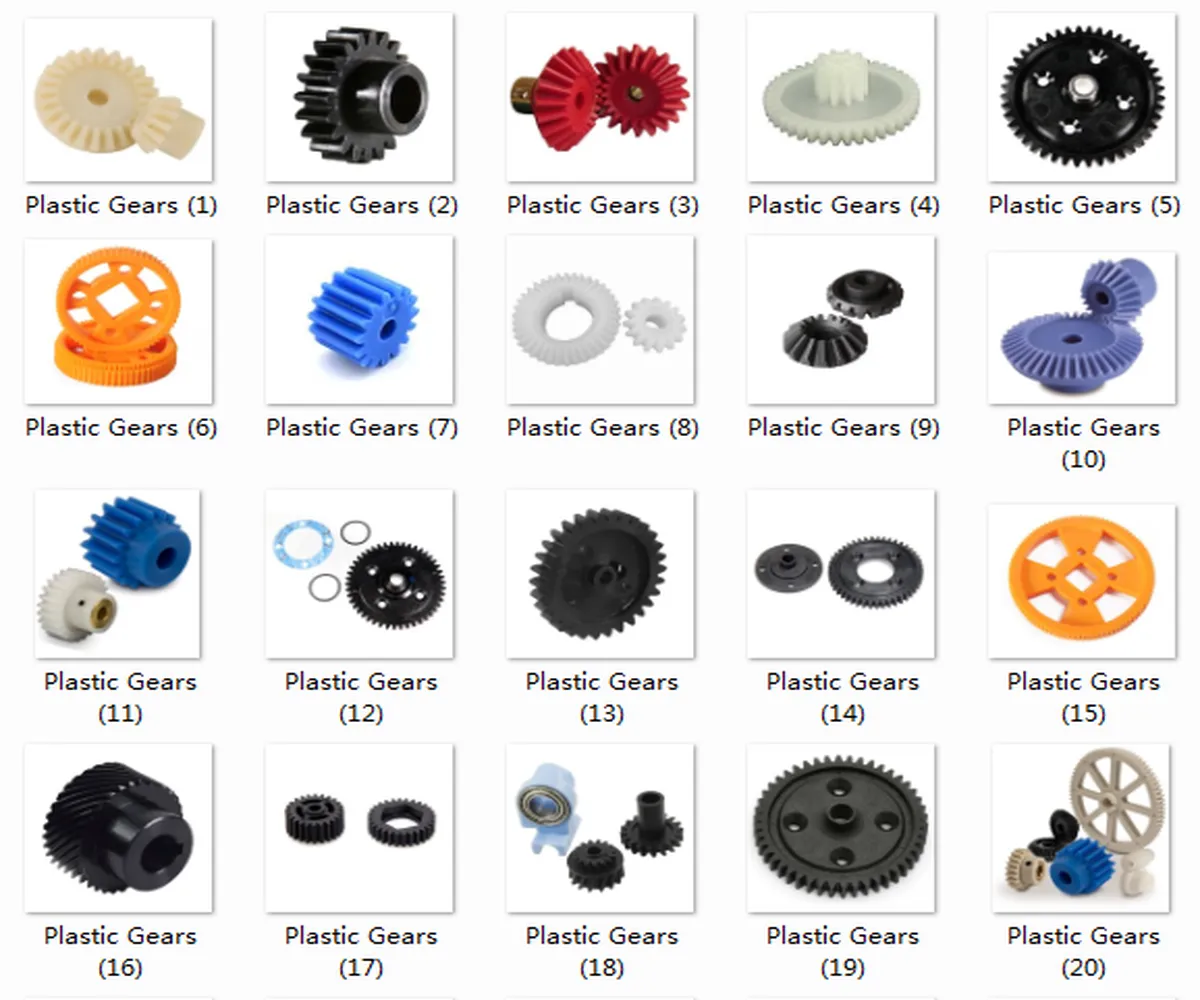
A mitre gear is a bevel gear. Specifically, it is a bevel gear with a 1:1 gear ratio — both gear and pinion have exactly the same number of teeth and the same pitch cone angle of 45 degrees, transmitting motion between two shafts at 90 degrees with no speed or torque change.
The term “mitre gear” (spelled “miter gear” in American English) is not the name of a different gear type — it is a specific subset of bevel gears defined entirely by its 1:1 ratio at 90-degree shaft intersection. Every mitre gear is a bevel gear, but the vast majority of bevel gears are not mitre gears. A bevel gear with 10 teeth on the pinion and 40 teeth on the ring gear is a standard bevel gear with a 4:1 ratio. A bevel gear with 20 teeth on each half is a mitre gear with a 1:1 ratio. Same geometric principles, same manufacturing processes, same quality standards — the only difference is the number of teeth and the resulting ratio.
This relationship is important to understand because it means all the engineering principles that apply to bevel gears apply equally to mitre gears: the same tooth forms (straight, spiral, zerol), the same materials (alloy steel, stainless, polymer), the same quality grades (AGMA 9-13), and the same selection criteria for load, speed, noise, and environmental compatibility. The only constraint unique to mitre gears is the 1:1 ratio — if you need any ratio other than 1:1, you need a standard bevel gear set, not a mitre gear pair.
The primary application of mitre gears is straightforward: to change the direction of rotation — specifically, to turn a drive shaft through 90 degrees — without changing the rotational speed or torque. This is the most common single-gear-pair function in light machinery, conveyors, instruments, laboratory equipment, food processing lines, packaging machines, and medical devices.
02
Gear Geometry: What Defines a Mitre Gear Within the Bevel Gear Family
The Bevel Gear Family Geometry
All bevel gears — including mitre gears — have teeth cut on the surface of a cone (the pitch cone) rather than on a cylinder. The pitch cone angle (delta) determines the gear ratio and the shaft angle. For a 90-degree shaft angle, the pitch cone angles of the gear and pinion always sum to 90 degrees. When the ratio is exactly 1:1, both cone angles are exactly 45 degrees — and this is the geometric signature of a mitre gear. The pitch cone surface of a mitre gear is exactly a right-circular cone at 45 degrees to the shaft axis, which makes the mitre gear pair visually symmetric: when assembled, both gears look identical (for standard straight tooth mitre gears), and the assembly has perfect geometric symmetry about the mesh point.
Module, Face Width, and Tooth Count for Mitre Gears
Mitre gears are specified by module (or diametral pitch in the older US system), tooth count, face width, and pressure angle — identical parameters to all other bevel gear types. Since both gears in a mitre pair have identical geometry (same module, same tooth count, same pitch cone angle), a mitre gear set is the simplest possible bevel gear specification: one part number for both halves. Standard mitre gear sets are available in tooth counts from 12 to 60+ teeth, in modules from M1 to M20, making them one of the most readily catalogued and stocked bevel gear types worldwide. Standard production mitre gear pairs are typically available from stock at Australia Ever-Power for common module/tooth count combinations in alloy steel, stainless steel, and acetal polymer.
What Makes Mitre Gears Unique in the Bevel Family
The 1:1 ratio of mitre gears has one important consequence beyond identical geometry: the input and output shafts rotate at the same speed, meaning the system receives no mechanical advantage from the gear pair itself. The mitre gear pair is purely a direction-change element in the driveline. All speed reduction or increase must be achieved elsewhere in the system — by the motor selection, belt ratios, gearbox ratios, or other gear stages. This is a fundamental design principle: if you want both a direction change and a speed ratio change in a single bevel gear pair, you need a standard bevel gear set, not a mitre gear pair.
03
Five Mitre Gear Tooth Forms and Their Characteristics
Mitre gears are available in every tooth form used for standard bevel gears. Each form has distinct performance characteristics that determine which is appropriate for a given application.
1. Straight Tooth Mitre Gears
The simplest and most widely produced form. Teeth run radially in a straight line across the pitch cone surface. Face contact ratio approximately 1.0-1.2. Suitable for pitch line velocities below 5 m/s. Lowest cost. Generates more noise than spiral form at equivalent speed. The default choice for low-speed, low-cost applications: instrument drives, valve actuators, light conveyors, hand tools, and small machinery.
2. Spiral Mitre Gears
Teeth follow a curved spiral arc across the face width at the standard 35-degree spiral angle. Face contact ratio 1.8-2.2. Suitable for pitch line velocities to 40+ m/s. Produces 8-15 dB(A) less noise than straight mitre gears at equivalent speed and load. Higher axial thrust than straight tooth form. The premium choice for speed-sensitive, noise-sensitive, or high-load applications. Available in left-hand and right-hand spiral, which must match between mating pair.
3. Zerol Mitre Gears
A curved tooth form with a spiral angle of zero degrees at the midpoint of the tooth, produced by the Gleason Zerol process. The tooth curvature provides some of the progressive engagement benefit of the spiral tooth form with lower axial thrust than spiral mitre gears. Suitable for applications where the noise advantage of spiral is desired but the housing cannot accommodate the full spiral mitre axial thrust. A niche choice between straight and spiral forms.
4. Coniflex Mitre Gears
A straight tooth mitre gear produced by the Gleason Coniflex process using two interlocking circular cutter blades. This produces a localized tooth contact that is more tolerant of mounting distance errors than conventional straight-cut mitre gears. Coniflex mitre gears are the standard form for straight tooth mitre gears in the USA and are widely available as catalogue items. Preferred over generic straight-cut mitre gears where installation accuracy may be limited.
5. Angular Mitre Gears (Non-90 degree)
A variant with a shaft angle other than 90 degrees but maintaining the 1:1 ratio. The two gears no longer have 45-degree cone angles — instead they share complementary non-right angles that still sum to the shaft angle. Used in specialty drives where the direction change is not exactly 90 degrees. Less common than standard 90-degree mitre gears and typically custom manufactured. Also called “angular bevel gears” or “miter gears at non-right angles.”
04
How Bevel Gears and Mitre Gears Differ in Practical Use
05
Spiral Miter Bevel Gears — The High-Performance Mitre Choice
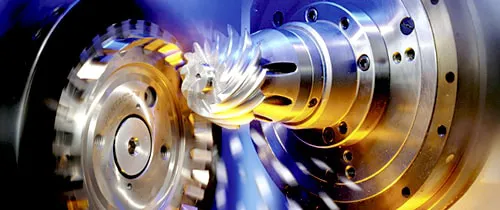
Spiral mitre gears are the premium mitre gear variant, combining the 1:1 ratio and 90-degree shaft change function of the standard mitre gear with the superior noise, vibration, and load capacity characteristics of the spiral bevel tooth form. They are the appropriate choice whenever a standard straight tooth mitre gear produces unacceptable noise, when the application requires higher power density than a straight mitre gear can provide at the available gear size, or when noise regulations (such as Australian WHS 85 dB(A) limits) cannot be met with a straight tooth mitre gear at the operating pitch line velocity.
The spiral tooth form introduces one additional consideration for mitre gear selection that does not arise with straight tooth mitre gears: hand of spiral. Left-hand and right-hand spiral mitre gears are not interchangeable — the mating pair must be one left-hand and one right-hand gear. When ordering a replacement spiral mitre gear, always specify the hand of the existing gear (and order the opposite hand for the mating gear) or order a matched left/right pair together. This is the most common ordering error for spiral mitre gears and can result in a non-meshing pair if the wrong hands are supplied.
Spiral Miter Gear Selection Checklist
Specify: Module (M) and number of teeth per gear (same for both gears in a 1:1 mitre pair)
Specify: Spiral angle (standard 35 degrees unless otherwise needed) and spiral hand (LH/RH pair)
Specify: Material (AISI 9310, 316L stainless, PEEK) and surface treatment (carburised, electropolished)
Specify: Bore diameter and keyway dimensions, AGMA quality grade (standard 10-11, or higher for low NVH)
Product: Australia Ever-Power Spiral Miter Bevel Gears
Available in alloy steel (AISI 9310, case hardened) and 316L stainless steel (electropolished, food grade). Standard modules M2-M10, tooth counts 16-40 per gear, AGMA 11. Matched LH/RH pairs supplied with contact pattern photo. Fast AU lead time from Condell Park NSW.
06
Angular (Non-90 Degree) Mitre Gear Variants
While the standard mitre gear is always defined at 90-degree shaft intersection, the same 1:1 ratio principle can be applied to any shaft angle to create “angular bevel gears” — sometimes loosely called “angular mitre gears.” A 60-degree shaft angle bevel gear with a 1:1 ratio, for example, has both gear and pinion pitch cone angles of 30 degrees. This is a valid bevel gear design but is not widely stocked as standard catalogue items — it is typically custom manufactured to order.
The practical applications for non-90-degree angular bevel gears include: agricultural implement drives where the PTO shaft and implement input shaft are not at 90 degrees to each other, specialty drive mechanisms in construction equipment and off-road vehicles where geometric constraints prevent a 90-degree arrangement, and laboratory instruments and scientific equipment with specific optical or measurement geometry requirements.
Standard 90-degree mitre gears represent by far the largest proportion of mitre gear usage — the term “mitre gear” is almost always used to mean 90-degree shaft intersection unless explicitly stated otherwise. When a non-90-degree shaft angle is required at 1:1 ratio, Australia Ever-Power can manufacture custom angular bevel gear pairs from drawings or from an angle and module specification. Contact [email protected] for angular bevel gear enquiries with the required shaft angle, module, and torque requirement.
07
Mitre Gear Materials and Standards
Mitre gears are manufactured in every material grade available for standard bevel gears. The material selection follows the same principles: load and fatigue requirements, environmental conditions, and regulatory requirements determine the correct grade.
Alloy Steel (AISI 8620 / 9310) – High Load
Case-hardened to 58-62 HRC, AGMA 10-12 quality. Standard for industrial conveyors, agricultural drives, and power transmission applications where load and fatigue life are primary requirements. AISI 9310 recommended for spiral mitre gears and any application requiring maximum fatigue resistance.
316L Stainless Steel – Food and Pharma
Electropolished to Ra 0.4 micrometres for EHEDG hygienic design compliance. Compatible with NSF H1 food-grade lubricants and caustic CIP cleaning agents. Standard for food processing conveyor drives, pharmaceutical blenders, and beverage filling lines. Required by FSANZ for direct-contact food zone drives in Australia.
Acetal (POM) – Light Duty, Self-Lubricating
Injection-moulded or machined from extruded rod. Fully self-lubricating, light (1.4 g/cm3), FDA-compliant for food contact, electrically non-conductive. Load capacity is significantly lower than steel — suitable for instrument drives, office equipment, light automation, and medical device drives. Inexpensive and available in very small modules (M0.5-M3).
Brass (CuZn) – Decorative and Marine
Traditionally used for visible mitre gears in instrument, clockwork, and decorative mechanisms. Low hardness limits load capacity, but brass mitre gears are well-suited to marine applications (corrosion resistance), instrument drives (low electromagnetic signature), and precision hobby mechanisms. The paired steel-pinion/brass-gear sacrificial arrangement is also used for low-maintenance marine steering.
08
Industrial Applications: Food, Pharma, and Hygienic Environments
Mitre gears are ubiquitous in food processing because their 1:1 direction-change function is exactly what is needed at every right-angle conveyor corner, filling station turning point, and packaging line directional drive. The mitre gear pair turns the driveshaft 90 degrees at the conveyor frame corner without changing the line speed or requiring a complex gearbox arrangement.
For food processing specifically, the standard specification is 316L stainless steel spiral mitre gears in IP69K sealed housings with NSF H1 food-grade lubricant. The reasons are clear: 316L is approved for food contact under FSANZ, IP69K provides the high-pressure washdown seal required for daily CIP procedures, and spiral mitre gears produce less noise than straight tooth gears — important in food processing environments that must comply with Australian WHS noise limits with workers in close proximity to the conveyor line.
In pharmaceutical manufacturing, the same 316L stainless + IP69K specification applies, with the additional requirement for validation documentation: material certificates, dimensional inspection reports, and surface finish measurement records. PEEK mitre gears are specified for applications in direct contact with pharmaceutical product where any metal contamination risk must be eliminated — tablet presses, blenders, and filling machines where the gear operates within the product zone rather than in a separate enclosed drive.
Electropolishing of 316L mitre gears to Ra 0.4 micrometres is the standard for EHEDG hygienic design compliance — the most stringent internationally recognised hygiene standard for gear drives in food and pharmaceutical equipment. All 316L mitre gears supplied by Australia Ever-Power for food and pharmaceutical applications are electropolished to this standard as the default specification.
09
Industrial Applications: Automation, Robotics, and CNC
In automation and CNC machinery, mitre gears serve a different but equally important function: they enable designers to change the orientation of a drive axis without introducing a speed change or requiring additional gearbox stages. This is valuable wherever a machine’s kinematic chain needs to turn a corner — in multi-axis CNC machine spindle drives, automated part transfer systems, modular conveyor systems with directional changes, and robotic joint orientations.
For robotics and precision automation, AGMA 12-13 quality spiral mitre gears provide the low transmission error and low backlash needed for precise positional control. In robot wrist joint designs, matched spiral mitre gear pairs — selected for minimum backlash within a specified operating backlash range — allow the joint to change direction between arm segments with minimal lost motion. The identical-gear geometry of mitre pairs simplifies the kinematic analysis compared to a standard bevel gear set with different ring and pinion sizes.
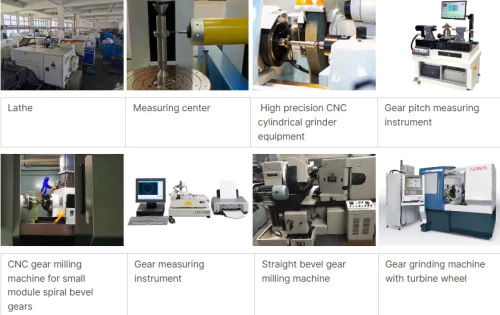
CNC machine tool spindle angle drives — used in 5-axis machining centres to orient the cutting spindle at angles to the main spindle axis — typically use high-precision spiral mitre gears at AGMA 12-13 with tight backlash specification. The transmission error of the mitre gear pair directly affects the smoothness of the spindle orientation motion and, through vibration, the surface finish of machined parts. High-quality spiral mitre gears with controlled ease-off topography are the standard for these applications.
10
Marine, Instrument, and Specialty Applications
Marine Applications
Marine steering gear systems use mitre gears extensively as direction-change elements between the helm wheel shaft (horizontal) and the rudder post drive shaft (vertical or angled). Straight tooth brass-gear/steel-pinion mitre pairs are traditional in smaller vessels. In larger and more demanding marine applications — commercial vessels, patrol craft, offshore platforms — 316L stainless spiral mitre gears in sealed housings are the current standard, providing the corrosion resistance required for saltwater environments combined with the noise and load advantages of the spiral tooth form.
Instrument and Scientific Equipment
Very small mitre gears in modules M0.5-M2 are used in a wide range of precision instruments: surveying equipment, optical instruments, measurement machines, spectroscopic instruments, and laboratory automation. At these sizes, the gears are most commonly manufactured from brass (for low electromagnetic signature and traditional instrument aesthetic) or acetal polymer (for lightweight, self-lubricating, corrosion-free operation). Instrument mitre gears are typically produced by precision hobbing or milling from small bar stock, not by Gleason or Klingelnberg bevel gear cutting processes — the scale of the gear is below the minimum practical machine size for those processes.
Agricultural and Off-Road Drives
Straight tooth alloy steel mitre gears are widely used in agricultural implement drives — header conveyor drives, auger right-angle drives, and PTO distribution boxes — where the primary requirements are robustness, replaceability, and low cost rather than low noise or high speed capability. At the low pitch line velocities typical of agricultural drives (1-4 m/s), straight tooth mitre gears provide entirely adequate service life when correctly lubricated with GL-5 gear oil and protected from abrasive contamination ingress.
11
When to Use a Mitre Gear vs a Standard Bevel Gear — Decision Framework
The choice between mitre gear and standard bevel gear is always determined by whether the drive requires a speed or torque change at the 90-degree shaft intersection. Follow this decision framework:
12
Mitre Gear Sizing and Specification Guide
Selecting the correct module and tooth count for a mitre gear application involves the same power-based tooth load calculation used for all bevel gears. The following worked example illustrates the approach for a food processing conveyor application.
Sizing Example: Food Conveyor Mitre Gear
Given: Conveyor motor 2.2 kW at 60 rpm. 90-degree direction change required. 316L stainless, IP69K, EHEDG compliant. Continuous duty.
Step 1 – Torque at gear mesh
T = 9550 x P / n = 9550 x 2.2 / 60 = 350.2 Nm
Step 2 – Apply service factor (continuous, moderate shock)
T_design = 350.2 x 1.5 = 525.3 Nm design torque
Step 3 – Select module and tooth count
Try M8, 20T mitre gear pair. Rated torque from AGMA catalogue for 316L stainless M8 spiral mitre at 60 rpm = approx 620 Nm. 620 Nm is above 525.3 Nm design torque. M8 x 20T adequate.
Specification
M8 x 20T x 20 deg pressure angle, 316L stainless, electropolished Ra 0.4, AGMA 11, spiral tooth form (LH/RH matched pair), bore to drawing
13
Price Comparison: Mitre Gears vs Equivalent Bevel Gears (AUD)
Indicative AUD pricing at qty 10 pairs. Alloy steel mitre gears are generally 15-25% cheaper than equivalent-ratio bevel gears of the same module, because the symmetric geometry reduces the number of distinct machining operations. Contact [email protected] for specific quotations.
14
Sustainability and Regulatory Compliance
Mitre gears, as a subset of the bevel gear family, share the same material sustainability profile: steel alloys are fully recyclable, stainless steel has high recycled content in production, and acetal polymer is technically recyclable but practically difficult to recover from mechanical assemblies in mixed-waste streams. The symmetric geometry of mitre gears provides a minor but genuine sustainability benefit — both halves of the pair share a single part number and production setup, meaning slightly lower per-pair manufacturing energy than a non-symmetric bevel gear set of the same module.
In the Australian regulatory context, the most important compliance consideration for mitre gears is food contact compliance under FSANZ (Food Standards Australia New Zealand) and the Work Health and Safety Regulations 2017. FSANZ requires that materials in contact or likely contact with food do not transfer harmful substances — satisfied by 316L stainless steel (electropolished) or food-grade polymer mitre gears with NSF H1 lubricant. The WHS 85 dB(A) noise limit favours spiral mitre gears over straight mitre gears in occupied food processing environments where the pitch line velocity exceeds approximately 4 m/s.
For global market compliance: EU Machinery Directive 2006/42/EC requires that noise emissions from machinery be documented and managed. For machine builders exporting food processing equipment from Australia to the EU, spiral mitre gears in stainless steel with documented NVH levels are the appropriate specification for EHEDG-compliant hygienic design combined with CE marking compliance on machinery noise.
15
Case Studies: Mitre Gear Applications in Practice
CASE 01 – FOOD, QLD
Spiral 316L Mitre Gears Achieve EHEDG Compliance
A Queensland fruit processing OEM needed to replace straight stainless mitre gears on a conveyor line for European export compliance to EHEDG standards. Australia Ever-Power supplied spiral 316L electropolished mitre gear sets (M6, 20T, AGMA 11, LH/RH pair) with IP69K housings and NSF H1 lubricant. The OEM received full EHEDG compliance documentation enabling CE marking of the exported machines.
Outcome: EHEDG compliance achieved. EU market access secured for conveyor line.
CASE 02 – AUTOMATION, VIC
Mitre Gear vs Bevel Gear: Correct Type Identified
A Victorian automation OEM asked whether they needed a “bevel gear or mitre gear” for a 90-degree direction-change drive in a packaging machine. Australia Ever-Power confirmed: since no speed change was needed, a mitre gear pair was correct — a standard bevel gear set would have introduced an unwanted ratio. The correct M4 AISI 9310 spiral mitre pair was supplied, saving the OEM from an incorrect and expensive gear set.
Outcome: Correct type identified. Speed-ratio error in OEM design prevented.
CASE 03 – MARINE, WA
Stainless Spiral Mitre Extends Steering Gear Service Life
A WA patrol vessel had a manual steering gear with brass straight mitre gears that required replacement every 18 months from saltwater corrosion and wear. Australia Ever-Power supplied a 316L stainless spiral mitre gear pair in a sealed housing with FKM seals and marine-grade synthetic lubricant. After 30 months of patrol service with no replacement, the operator confirmed service life had at least doubled.
Outcome: Service life doubled. Corrosion and wear failures eliminated.
16
Brand Comparison: Mitre Gear Supply in Australia
17
Customer Reviews
“I didn’t know whether I needed a mitre gear or a bevel gear for my packaging machine. Ever-Power explained the difference in 2 minutes on the phone and confirmed a mitre gear was correct. Supplied the right pair on the first order. Appreciated the clear explanation.”
Marcus Hendricks
Mechanical Engineer, Packaging OEM, NSW
“Needed spiral 316L mitre gears for a new food conveyor line designed to EHEDG standard for the European market. Ever-Power supplied with full material certs, electropolish Ra measurement report, and EHEDG-compatible documentation package. Made our CE marking process much smoother.”
Jennifer Stahl
Design Manager, Conveyor Systems OEM, QLD
“Replaced straight tooth stainless mitre gears with spiral mitre gears on a wash-down conveyor. The noise reduction was immediately noticeable to the operators. Contact pattern photo documentation gave our quality team the verification they needed for the installation record.”
Liam Curran
Maintenance Engineer, Beverage Manufacturing, SA
“Our robot wrist joint needed AGMA 12 spiral mitre gears with minimum backlash specification. Ever-Power matched a pair to within our 0.05 mm backlash window and provided CMM reports for each gear. Exactly what precision automation requires.”
Aiko Tanaka
Mechatronics Engineer, Robotics R&D, VIC
18
FAQ: Mitre Gears and Bevel Gears
Common questions answered by Australia Ever-Power.