
8
Material Classes
58–62
HRC Case Hardness
250°C+
PEEK Service Temp
316L
Food-Grade Standard
Table of Contents
02 — Case-Hardened Alloy Steel
03 — Through-Hardened Steel
04 — Stainless Steel
05 — Bronze & Brass
06 — Cast Iron & Ductile Iron
07 — Engineering Polymers
08 — Aerospace & Premium Grades
09 — Surface Treatments & Coatings
10 — Full Material Comparison Table
11 — Selection Guide by Application
12 — Price Impact of Material Choice
13 — Maintenance Considerations by Material
14 — Sustainability & Compliance
15 — Case Studies
16 — Customer Reviews
17 — FAQ
01
Why Material Selection Defines Bevel Gear Performance and Life
No single engineering decision has a greater impact on bevel gear service life than material selection. Two gear sets of identical geometry — same module, same tooth count, same spiral angle, same quality grade — can differ by a factor of five or more in service life simply because one is manufactured from the correct material for the application and the other is not. Material governs surface hardness, contact fatigue resistance, bending fatigue strength, corrosion behaviour, temperature capability, and the mode of failure when the gear eventually reaches the end of its service life.
The bevel gear material selection decision must account for several interacting factors simultaneously: the magnitude of the transmitted load and duty cycle, the operating speed and pitch line velocity, the environment (temperature, moisture, chemicals, food contact requirements), the required service life, and the budget available for both initial procurement and ongoing maintenance. Getting this balance right is not always straightforward — there are genuine trade-offs between, for example, maximum load capacity (which favours hard case-carburised alloy steels) and corrosion resistance (which favours stainless steel or polymer), and between minimum cost (which favours mild steel or cast iron) and minimum maintenance cost over the service life (which may favour a premium material).
This guide covers all eight principal bevel gear material categories used in current engineering practice, with technical depth on mechanical properties, heat treatment, appropriate applications, and the trade-offs each material presents. It concludes with a side-by-side comparison table and a practical selection framework organised by application type.
Australia Ever-Power supplies bevel gears in all standard material grades with full mill certificate traceability from Condell Park NSW. Contact [email protected] for material-specific recommendations for your application.
02
Case-Hardened Alloy Steel — The High-Performance Standard
AISI 8620 — The Production Workhorse
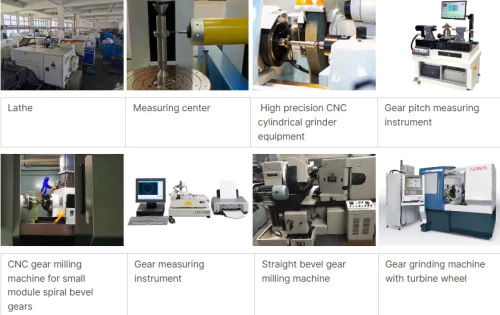
AISI 8620 is a nickel-chromium-molybdenum low-alloy steel that has been the standard production material for case-carburised bevel gears in automotive and general industrial applications for over six decades. Its combination of adequate hardenability, good machinability in the annealed state, and predictable response to carburising makes it the default specification for ring gears in passenger car differentials, agricultural PTO gears, and medium-duty industrial bevel gearboxes. The carburising process diffuses carbon into the surface of the gear blank at 920–950°C, building a hard surface layer (case) of 0.8–1.5 mm depth. Oil or press quenching then locks in surface hardness of 58–62 HRC while the core remains at 32–38 HRC — tough enough to absorb shock loads without brittle fracture. AISI 8620’s main limitation is its relatively modest core strength compared to higher-alloy grades: in very high-torque applications where subsurface fatigue or core yielding is a concern, a higher-alloy steel is specified.
AISI 9310 — The High-Performance Choice
AISI 9310 adds higher nickel content (3.0–3.5%) over 8620, which substantially improves core toughness and case hardenability. This makes 9310 the standard for bevel gear pinions — which complete more mesh cycles than ring gears and therefore require higher fatigue resistance — and the default for aerospace, defence, and high-performance automotive applications. Helicopter tail rotor gearboxes, aircraft accessory drives, and military vehicle final drives all use AISI 9310 as the baseline specification. The higher alloy content makes 9310 more expensive to procure and marginally more difficult to machine, but these are small costs compared to the improvement in fatigue life the material delivers. Vacuum arc remelted (VAR) AISI 9310 — produced with lower inclusion content than standard electric-arc furnace steel — is required for the most demanding aerospace and defence specifications, where inclusion-initiated subsurface fatigue is a life-limiting failure mode.
Other Notable Carburising Grades
AISI 8822 is an alternative nickel-chromium-molybdenum grade with higher carbon content than 8620, providing increased case and core hardness for moderately higher load applications. AISI 4820 (a nickel-molybdenum grade without chromium) is used in some industrial gear specifications. EN36 (UK/Australian standard equivalent, sometimes designated as 655M13) is a nickel-chromium carburising steel commonly specified in Australian industrial gear manufacture, with properties closely comparable to AISI 9310. All case-carburised steel bevel gears benefit from shot peening of the tooth root fillet — the impact-induced compressive residual stress at the root improves bending fatigue strength by 15–25% at no significant additional material cost.
For bevel gear design, the practical guideline is: use AISI 8620 as the starting point for ring gears in medium-duty industrial applications; upgrade to AISI 9310 for pinions in the same application (to balance fatigue life between the two mating gears) and for any application with safety-critical reliability requirements or elevated operating loads.
03
Through-Hardened Steel — The Mid-Range Compromise
Through-hardened steels — most commonly AISI 4140 (chromium-molybdenum) and AISI 4340 (nickel-chromium-molybdenum) — are hardened to 32–40 HRC throughout the full section of the gear, rather than developing the hard case and tough core profile of carburised gears. The through-hardening route (quench and temper) is simpler and less expensive than carburising, and the hardened gear can be finish-machined by grinding or turning more readily than a fully case-hardened gear because the hardness at the bore and machining surfaces is moderate rather than extreme.
Through-hardened bevel gears at 32–40 HRC provide roughly 60–70% of the tooth surface durability of case-hardened gears at the same module. They are the appropriate choice for medium-duty industrial bevel gears where the operating loads are substantial but not at the maximum capacity of the gear size, where full case-hardening is not economically justified for the production volume, or where the gear set must be manufactured quickly without access to carburising furnace capacity. AISI 4140 is the most commonly specified through-hardened gear steel in Australian industrial gear manufacture, with AISI 4340 reserved for larger sections requiring higher toughness and hardenability.
Nitriding is a variant of the through-hardening route in which nitrogen (rather than carbon) is diffused into the steel surface at lower temperature (500–550°C), producing a very hard, thin surface layer (0.1–0.3 mm) at case hardnesses of 65–70 HRC. The main benefit of nitriding is dimensional stability — no quenching means minimal distortion, eliminating the need for post-treatment grinding. Nitrided bevel gears are used in applications where dimensional accuracy is paramount and where the thin hard layer is sufficient for the contact load — precision instrument drives, measuring machine components, and lightly loaded automation drives.
04
Stainless Steel — Corrosion Resistance as the Primary Driver
When corrosion resistance is the primary material selection driver — in food processing, pharmaceutical manufacturing, marine, chemical plant, or offshore applications — stainless steel bevel gears are the standard solution. The two grades most commonly used for bevel gear manufacture are 316L and 17-4 PH (precipitation-hardening stainless steel).
316L austenitic stainless steel provides excellent resistance to chlorinated cleaning agents, food acids, salt spray, and a wide range of industrial chemicals. The “L” designation indicates low carbon content, which prevents sensitisation (chromium carbide precipitation at grain boundaries) during welding or heat-affected-zone conditions. 316L bevel gears and mitre gears are the standard choice for food processing conveyor drives, pharmaceutical blender gearboxes, beverage filling line drives, and marine instrument drives. The limitation of 316L is that it cannot be hardened to the degree of alloy steels — maximum achievable hardness with surface hardening treatments is approximately 42–45 HRC, limiting contact load capacity significantly compared to case-hardened alloy steel gears of the same size. Electropolishing of finished 316L gear surfaces to Ra ≤0.4 µm is standard for food-contact applications to achieve EHEDG hygienic design compliance and minimise bacterial retention sites.
17-4 PH stainless steel (Condition H900) achieves significantly higher hardness (44–47 HRC) than 316L through precipitation hardening — the dispersion of fine copper-rich precipitates in the martensitic matrix during ageing. This combination of corrosion resistance and elevated hardness makes 17-4 PH bevel gears the appropriate choice for aerospace and marine applications where both corrosion immunity and moderate-to-high load capacity are required simultaneously.
The cost premium for stainless bevel gears over equivalent alloy steel gears is typically 60–120% for raw material alone. For food processing and pharmaceutical applications, this premium is invariably justified — the cost of a corrosion-related product recall or regulatory non-compliance event far exceeds any gear material cost savings achieved through the use of less corrosion-resistant materials.
05
Bronze and Brass — The Sacrificial Partners
Phosphor bronze (C91700, C90700) and manganese bronze (C95400) are used for the gear (ring gear or large bevel gear) in a steel-pinion/bronze-gear pairing. This deliberately mismatched hardness combination — hard steel pinion at 38–45 HRC running against a softer bronze gear at 120–180 HB — produces a “sacrificial” arrangement where the bronze gear carries the majority of tooth wear, protecting the harder steel pinion from abrasive wear. The practical advantages of this pairing are well-established: the bronze gear can be replaced individually at relatively low cost when it wears, the steel pinion typically lasts through several bronze gear replacements, and the natural corrosion resistance of bronze eliminates the corrosion-related failure modes that affect steel gears in wet or marine environments.
Phosphor bronze (tin bronze with phosphorus addition) is the most common choice for lightly-to-moderately loaded applications: marine steering gear, valve actuators, instrument drives, and low-speed industrial right-angle drives. Manganese bronze provides higher tensile strength and is specified for heavier loads in marine propeller drives, crane slewing gear, and industrial applications requiring a bronze gear with greater load capacity than phosphor bronze can provide.
An important compatibility note: GL-5 extreme-pressure gear oils containing sulphur-phosphorus EP additives are corrosive to bronze and should not be used in drives containing bronze bevel gears. Specify a GL-4 rated gear oil or a sulphur-free industrial gear oil compatible with yellow metals. This is a critical point for any drive upgrade where a GL-5 lubricant might be considered — verify bronze component compatibility before changing lubricant grade.
06
Cast Iron and Ductile Iron — Large, Slow, and Economical
Grey cast iron and ductile (nodular) cast iron serve an important but specific niche in large, slow-speed bevel gear applications where their casting capability allows complex shapes to be produced economically in sizes that would be prohibitively expensive to machine from solid steel billet. Mining conveyor drive bevel gears, paper mill dryer section drives, cement plant auxiliary drives, and large kiln turning drives all routinely use cast iron bevel gears in module 12–25 range where forging and hobbing from alloy steel billet would multiply the gear cost severalfold.
Grey cast iron (ASTM A48 Class 35 or 40) provides good vibration damping (the graphite flake structure absorbs vibration energy), reasonable compressive strength, and low cost. Its tensile strength and impact resistance are limited by the same graphite flake structure that gives it good damping — grey iron is brittle and should not be used in applications subject to shock loads or tensile bending stress at the gear tooth root. Ductile iron (ASTM A536 Grade 80-55-06) replaces the graphite flakes with spheroidal (nodular) graphite precipitates, producing a material with substantially higher tensile strength (550 MPa minimum), elongation, and impact resistance. Ductile iron bevel gears can handle shock loads that would fragment grey iron gears, making ductile iron the appropriate choice wherever impact or overload events are foreseeable.
Neither grey iron nor ductile iron bevel gears should be operated above approximately 5 m/s pitch line velocity — at higher speeds, the relatively poor surface finish achievable by cast iron tooth machining and the material’s lower strength combine to produce accelerated wear and noise. Within the speed envelope of large slow-speed drives, cast iron remains a highly cost-effective bevel gear material for Australian mining and mineral processing installations.
07
Engineering Polymers — When Metal Is the Wrong Choice
Engineering polymer bevel gears occupy a distinct niche: applications where low load, modest speed, light weight, electrical non-conductivity, chemical inertness, or very low unit cost override the load capacity advantages of metal gears. The principal polymer materials used for bevel gear manufacture are acetal (POM), nylon (PA66 and PA12), glass-filled variants of these, and PEEK for premium performance requirements.
Acetal (POM)
Shore D hardness ~80. Excellent dimensional stability, low moisture absorption, good fatigue resistance for a polymer. Self-lubricating due to low surface energy. Temperature limit ~100°C continuous. Best choice for dry-running light instrument and automation drives. Delrin (DuPont) is the most recognised commercial grade.
Nylon PA66 / PA12
Higher toughness than acetal, absorbs lubricant to a degree (improving run-in performance), but absorbs moisture significantly — this changes dimensional tolerances in humid environments. PA12 has lower moisture absorption than PA66 and is preferred where dimensional stability in wet conditions is important. Service temperature limit ~120°C dry.
Glass-Filled PA66/POM
Addition of 15–30% short glass fibre reinforcement increases stiffness and compressive strength significantly. Load-carrying capacity improves by approximately 40–60% over unfilled grades. However, glass-filled polymers are abrasive to mating surfaces — if running against a metal pinion, the mating pinion material must be hard enough (>40 HRC) to resist the abrasive action of the glass fibres.
PEEK
Polyether ether ketone — the premium engineering polymer for bevel gears. Service temperature to 250°C continuous, excellent chemical resistance, very low moisture absorption. Load capacity 3–4× that of standard PA66. Used in medical devices, aerospace actuators, chemical plant drives. Unit cost 10–15× higher than standard polymer gears — justified only where metal is genuinely incompatible with the environment.
Polymer bevel gears are most commonly produced by injection moulding (for small gears in high volumes) or CNC machining from extruded rod or cast plate (for larger or lower-volume requirements). Moulding is the most cost-effective route for standard sizes but requires investment in tooling that may not be justified for small quantities. Machined polymer gears offer greater dimensional accuracy and allow non-standard specifications without tooling cost.
08
Aerospace and Premium Grades — When Standard Is Not Enough
A small category of bevel gear applications demands materials that exceed the performance envelope of standard engineering grades. Helicopter gearboxes, aircraft primary structure actuators, military vehicle final drives, and motorsport differentials represent this category. The materials used here are not exotic by chemical composition — they are often variants of the alloy grades described above — but they are processed and inspected to a significantly more demanding standard.
VAR (Vacuum Arc Remelted) AISI 9310: The standard AISI 9310 alloy steel, produced by vacuum arc remelting rather than conventional electric arc furnace steelmaking. The VAR process dramatically reduces the level of non-metallic inclusions (oxide particles, sulphide stringers) in the steel. Since subsurface rolling contact fatigue in highly loaded gears is often initiated at inclusions, reducing inclusion content directly improves fatigue life. VAR 9310 is the baseline specification for helicopter gearbox spiral bevel gears in most type-certificated rotorcraft designs.
M50 and CBS 600: Premium bearing and gear steels used in the highest-demand aerospace applications. M50 (a molybdenum-vanadium tool steel) provides outstanding hot hardness retention — maintaining adequate surface hardness at temperatures where standard carburised steels would temper back and soften. CBS 600 is a carbide-bearing secondary-hardening gear steel developed specifically for helicopter gearbox applications, offering higher surface hardness (62–65 HRC) and improved fracture toughness over AISI 9310 at comparable production cost.
The cost of premium-grade bevel gears produced from VAR 9310, M50, or CBS 600 may be 5–15× that of equivalent geometry gears in standard AISI 8620. For safety-critical aerospace and defence applications, this cost premium is non-negotiable. For commercial industrial applications without safety-critical reliability requirements, standard case-hardened AISI 8620 or 9310 is almost always the appropriate and sufficient specification.
09
Surface Treatments and Coatings — Enhancing Base Material Performance
Surface treatment and coating technologies allow the performance of a bevel gear to be enhanced beyond what the base material alone can achieve. These treatments are not substitutes for correct base material selection — they are performance enhancements applied to an already correctly specified gear. The most important treatments in current bevel gear practice are described below.
Shot Peening
Controlled blasting of the tooth root area with hard steel or ceramic shot at defined intensity. Introduces compressive residual stresses at the root fillet, improving bending fatigue resistance by 15–25%. Standard practice for all case-hardened bevel gears in automotive and industrial applications. Low cost relative to the fatigue life improvement delivered.
Manganese Phosphate
A chemical conversion coating that produces a microscopically porous iron-manganese phosphate layer on steel surfaces. Applied to finished bevel gears for run-in friction reduction and mild corrosion protection during storage. The porous structure retains lubricant at the tooth surface during initial meshing, preventing adhesive wear during the critical run-in period. Automotive differential ring-and-pinion sets are almost universally phosphate-coated before assembly.
DLC Coating (Diamond-Like Carbon)
PVD-deposited amorphous carbon coating, 1–5 µm thick, with extreme hardness (1500–3000 HV) and very low coefficient of friction. Applied to hypoid pinions and in some spiral bevel applications to reduce scuffing risk during cold-start marginal lubrication conditions and to improve efficiency through friction reduction. Standard in motorsport differentials; increasingly specified in premium commercial vehicle and aerospace bevel gear assemblies.
Electropolishing (Stainless)
Electrochemical process that removes material from stainless steel surfaces to achieve Ra ≤ 0.4 µm and a smooth, crevice-free surface topology. Mandatory for EHEDG hygienic design compliance in food and pharmaceutical bevel gear applications. Also improves corrosion resistance by removing surface inclusions that act as initiation sites for pitting corrosion.
10
Full Material Comparison Table
CH = Case-Hardened (carburised). TH = Through-Hardened. Cost scale: $ = budget, $$ = mid-range, $$$ = premium, $$$$ = aerospace grade.
11
Material Selection Guide by Application Type
The following decision framework maps common bevel gear application scenarios to the appropriate material selection, accounting for the dominant performance requirement in each case.
12
How Material Choice Affects Bevel Gear Pricing (AUD)
The material specification is one of the largest single cost drivers for a bevel gear set. The table below illustrates how material choice affects pricing for a representative spiral bevel gear pair, M5 module, 90-degree shaft angle, 20+4 teeth, 50 mm face width, at a quantity of 10 matched pairs including full material certification.
Indicative AUD pricing for M5 spiral bevel gear pairs at qty 10, with full material certs. Contact [email protected] for project-specific quotations.
13
Maintenance Considerations by Bevel Gear Material
The maintenance regime for a bevel gear installation is partly determined by the material used. Different materials have different failure modes, different inspection requirements, and different sensitivities to the main wear mechanisms. Understanding these differences allows maintenance schedules to be optimised rather than applying a single generic interval to all gear types.
Case-hardened alloy steel gears are most vulnerable to lubricant-related failures — oil starvation or incorrect lubricant grade causes scuffing (adhesive wear) that destroys the case-hardened surface within minutes of operation. Regular oil level checks and oil analysis at scheduled intervals are the most effective maintenance actions. Tooth surface inspection at major overhauls should look for pitting (contact fatigue), spalling (subsurface fatigue), or wear pattern migration as indicators of misalignment or overloading. Shot-peened roots do not require inspection — the compressive layer is stable throughout the gear life unless mechanical damage occurs.
Stainless steel gears are most vulnerable to the formation of crevice corrosion at contact interfaces if the lubricant is allowed to become contaminated with water or chlorides, and to stress corrosion cracking in highly stressed areas if the environment contains chloride ions. Seal integrity is critical — water ingress to the oil fill quickly degrades a stainless gear set’s corrosion immunity. NSF H1 lubricant quality and level should be verified at each cleaning cycle inspection for food industry installations.
Bronze gears are sacrificial components — their wear is expected and planned. Tooth thickness inspection at scheduled intervals allows replacement before wear reaches the point where the tooth profile is sufficiently degraded to generate excessive noise or transfer damaging loads to the steel pinion. Bronze gear replacement does not require replacing the steel pinion if pinion wear is within tolerance.
Polymer gears are vulnerable to thermal degradation if the operating temperature rises above the material’s rated service temperature — which can occur if the gear is overloaded or if the lubricant (where used) is of incorrect viscosity. Polymer gears should not be operated continuously at more than 80% of the rated load for extended duty cycles. Regular visual inspection for tooth discolouration (brownish — heat degradation) or dimensional growth (moisture absorption in nylon gears) provides early warning of impending failure.
14
Sustainability and Regulatory Compliance in Bevel Gear Material Selection
The environmental impact of bevel gear materials extends across three phases: raw material extraction and processing, manufacturing, and end-of-life disposal or recycling. Steel alloys — which constitute the majority of bevel gear production globally — are highly recyclable, with established scrap metal collection and steelmaking infrastructure globally. Stainless steels are similarly recyclable. Bronze and brass have well-developed recycling infrastructure due to their significant copper content value. Engineering polymers are theoretically recyclable but in practice difficult to recover cost-effectively from mechanical components in mixed-waste streams.
In Australia, the most significant regulatory dimension for bevel gear material selection is the food contact requirement under the Australia New Zealand Food Standards Code (FSANZ), which specifies that materials in contact or likely contact with food must not transfer harmful substances. This effectively mandates 316L stainless steel (or food-grade polymer) for direct-contact bevel gear components in food processing machinery, and NSF H1 food-grade lubricants for all lubricated drive components within the processing envelope. EHEDG (European Hygienic Engineering and Design Group) certification of gear units — relevant for export to European food industry customers — requires electropolished 316L or equivalent hygienic design materials throughout.
For mining and resources sector applications — where the dominant demand for bevel gears in Australia lies — the principal compliance framework is the relevant state mining safety regulation (e.g. NSW Mines Safety Act, Queensland Mining Act) combined with AS 4024 Safety of Machinery. These require that drivetrain components be rated for the maximum expected loads with appropriate safety factors, and that material and quality specifications be documented and traceable. Australia Ever-Power provides full mill certificate documentation and first-article inspection reports to support customer compliance demonstration for all supplied bevel gear sets.
15
Case Studies — Material Selection Making the Difference
CASE 01 — MINING, WA
Material Upgrade from 4140 to 9310 Doubles Gear Life
A Goldfields mineral processing plant was replacing spiral bevel gears in a classifier drive annually. Failure analysis showed subsurface fatigue initiating at inclusions in the through-hardened 4140 gear set. Australia Ever-Power specified a replacement in case-hardened AISI 9310 at AGMA 12 quality. The first replacement set has now exceeded 26 months of service with no detectable fatigue damage at the scheduled inspection.
Outcome: Gear replacement interval doubled. Annual maintenance cost reduced by AUD $68,000.
CASE 02 — FOOD, NSW
316L Stainless Gears Achieve FSANZ Compliance
A NSW poultry processing facility faced regulatory notice over carbon-steel bevel gear corrosion products detected in the processing zone. Australia Ever-Power replaced all conveyor drive bevel gear sets with electropolished 316L stainless spiral mitre gears in IP69K housings with NSF H1 lubricant. The facility achieved FSANZ compliance and passed the subsequent regulatory inspection without any further notices.
Outcome: Regulatory compliance restored. Zero corrosion product detection in 24-month follow-up audit.
CASE 03 — MARINE, QLD
Bronze Pinion Pairing Reduces Maintenance Cost on Patrol Vessel
A Queensland marine patrol operator was replacing both gear and pinion on a steering system drive every 18 months due to corrosive wear. Australia Ever-Power introduced a phosphor bronze ring gear paired with a hardened steel pinion, allowing ring gear replacement without disturbing the steel pinion. Maintenance cost per replacement dropped by 45% and the steel pinion has not required replacement in three service cycles.
Outcome: 45% reduction in per-service maintenance cost. Steel pinion service life extended to 4+ years.
16
Customer Reviews
“We specified 9310 VAR gears for a critical defence vehicle drive. Ever-Power provided full material traceability, chemistry certs, heat treatment records, and CMM reports. Everything a defence procurement requires, without chasing multiple suppliers.”
— Col. Brendan Ashworth (Ret.)
Procurement Consultant, Defence Sector
“Needed 316L stainless mitre gears for a wash-down conveyor. Most suppliers couldn’t confirm the grade or provide mill certs. Ever-Power had both in-stock and delivered to Brisbane in 5 days. The electropolished finish was exactly to the EHEDG spec we needed.”
— Katerina Papadopoulos
Hygienic Design Engineer, Food Machinery OEM
“Ordered PEEK bevel gears for a pharmaceutical isolator drive. Correctly identified the material requirement without upselling to something heavier than needed. Machining quality was excellent — the gears ran quietly from first assembly.”
— Dr. Alyssa Thornton
R&D Engineer, Pharmaceutical Equipment Manufacturer
“Three years ago I switched our mining conveyor drive spec from 4140 through-hardened to 8620 case-hardened based on Ever-Power’s recommendation. Inspection intervals have gone from 12 months to 30+ months. The data speaks for itself.”
— Gary Hutchinson
Maintenance Engineer, Bulk Materials Terminal, Port Hedland
17
FAQ — Bevel Gear Materials
Common material questions answered by Australia Ever-Power’s engineering team.
Australia Ever-Power · Condell Park NSW 2200
Need Bevel Gears in a Specific Material Grade?
All standard grades supplied with full mill certification. Custom material specifications available. Short Australian lead times.