
📋 TABLE OF CONTENTS
2. Bevel Gear Types Explained
3. Straight Bevel Gears: Deep Dive
4. Design & Engineering Principles
5. Materials & Metallurgy
6. Manufacturing Process
7. Industry Applications
8. Bevel Gear vs Spur Gear
9. Related Components & Accessories
10. Market Price Comparison
11. Replacement & Maintenance Guide
12. Sustainability & Compliance
13. Case Studies
14. Brand Comparison
15. Customer Reviews
16. FAQ
What Are Bevel Gears? — Foundations and Function
Bevel gears are a fundamental class of mechanical transmission components designed to transfer rotational motion and torque between shafts that intersect at an angle — most commonly at 90 degrees, though other angles are equally achievable. Their distinguishing physical characteristic is a conical pitch surface, with teeth cut along the surface of a cone rather than a cylinder. This geometry makes them irreplaceable in applications where a change in shaft direction is required within a compact mechanical envelope.
The history of bevel gears stretches back centuries, with early wooden versions appearing in mills and agricultural machinery. Modern bevel gears, however, are precision-machined from high-grade alloy steels, cast irons, bronzes, and engineering polymers to meet the exacting demands of industries ranging from aerospace and automotive to food processing and renewable energy. Their geometry — defined by the pitch cone angle, number of teeth, module, pressure angle, and spiral angle — directly governs performance, noise, efficiency, and load capacity.
Understanding the difference between bevel gear subtypes is not merely academic. Selecting the wrong gear type for a given application can result in premature failure, elevated noise, costly downtime, or catastrophic equipment damage. Whether you are sourcing bevel gears for a new machine design, replacing worn components, or evaluating suppliers for a production run, this guide provides the technical depth needed to make informed, confident decisions.
Australia Ever-Power, based in Condell Park NSW, supplies and supports the full range of bevel gear types to engineering and manufacturing clients across Australia and the wider Asia-Pacific region. Our team combines deep application knowledge with precision manufacturing partnerships to deliver gear solutions that perform reliably across the harshest operating conditions.
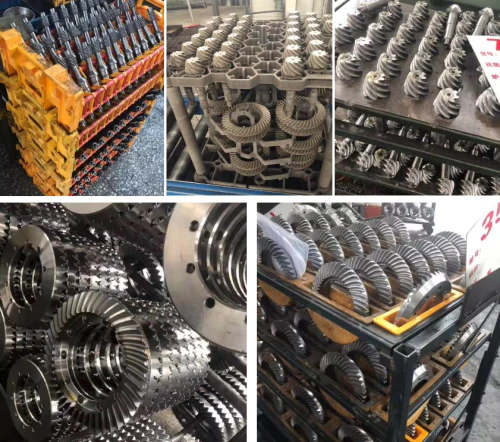
Bevel Gear Types Explained — A Comprehensive Classification
Bevel gears are not a monolithic product category. Within the broader family, several distinct subtypes exist, each optimised for different operational requirements. Understanding these differences is the starting point for any serious gear selection process. The five principal types are examined below in detail.
Straight Bevel Gears
The simplest and most widely manufactured bevel gear type. Teeth are cut radially — straight along the cone surface, converging at the apex. They are cost-effective, straightforward to manufacture, and highly suitable for low-to-moderate speed applications where noise is not a critical factor. A classic choice for bevel gear differentials in agricultural machinery and hand tools.
Spiral Bevel Gears
Teeth are curved and oblique, cut along a spiral arc. This geometry creates a gradual, overlapping tooth engagement that dramatically reduces noise and vibration while increasing load capacity and transmission efficiency. Spiral bevel gears dominate in high-speed, high-torque environments such as automotive differentials, aircraft gearboxes, and CNC machine tool spindles.
Hypoid Gears
A variant of spiral bevel gears where the pinion axis is offset from the gear axis. This offset allows for a larger pinion diameter, increasing torque capacity and enabling the driveshaft to be positioned lower — a key benefit in automotive rear axle design. Hypoid gears require extreme-pressure (EP) lubricants due to the sliding contact between teeth surfaces.
Zerol Bevel Gears
Zerol bevel gears feature curved teeth like spiral gears but with a zero-degree mean spiral angle. This hybrid design replicates the rolling contact of straight bevel gears while retaining the manufacturing benefits of spiral bevel cutting processes. They generate no net axial thrust load and are ideal for applications demanding quiet operation without the complexity of thrust bearing management.
Mitre Gears & Crown Gears
Mitre gears (also spelled miter gears) are a special case of straight bevel gears where the gear ratio is exactly 1:1, meaning both gears have an identical number of teeth. Crown gears have a pitch angle of exactly 90 degrees, with teeth projecting at right angles to the gear face. Both are valued for their ability to redirect shaft rotation efficiently within precise mechanical assemblies.
Each gear type within the bevel gear family occupies a distinct performance niche. The decision between them is driven by speed requirements, noise budget, available envelope space, manufacturing budget, and the availability of suitable supporting bearings and lubrication systems. Australia Ever-Power stocks and supplies all five types, with custom machining available for non-standard specifications.
Straight Bevel Gears — Technical Deep Dive
Tooth Geometry and Contact Mechanics
The defining characteristic of a straight bevel gear is that its tooth trace lies along a straight line that, if extended, would pass through the apex of the pitch cone. Each tooth has a taper along its length, narrowing toward the apex. Contact between mating teeth begins and ends abruptly across the full face width simultaneously — a pattern known as “line contact.” This abrupt engagement is the primary reason straight bevel gears generate more noise and vibration at elevated speeds compared to their spiral counterparts. However, at lower speeds (typically below 5 m/s pitch line velocity), the noise difference becomes negligible, and the cost and simplicity advantages of straight bevel gears make them the preferred choice for many applications.
The Shaft Angle Advantage
Straight bevel gears are most commonly manufactured for a 90-degree shaft angle, producing what is called a right-angle drive. However, they can be produced for practically any intersecting shaft angle — including acute and obtuse configurations — making them adaptable to unconventional machine layouts. When both mating gears have the same number of teeth and a 90-degree shaft angle, the result is a mitre gear set: an elegant solution for pure direction change without any speed or torque ratio alteration.
Why Straight Bevel Gears Remain Relevant
In an era where spiral bevel gears have become more affordable thanks to advanced CNC machining, some engineers assume straight bevel gears are obsolete. This is a misconception. Their lower manufacturing cost, simpler mounting requirements (no net axial thrust forces), and compatibility with basic bearing arrangements keep them in active production for hand tools, agricultural equipment, bevel gear differentials in light vehicles, food-grade machinery, and low-speed industrial drives. For any application where pitch line speed stays below 3–5 m/s and operating noise is not a key specification, straight bevel gears remain the most economical and practical solution.
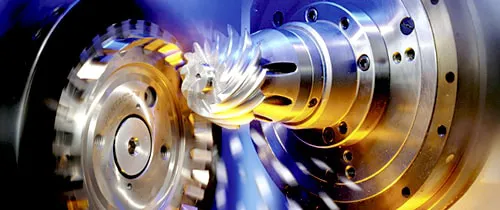
Bevel Gear Design & Engineering Principles
Key Design Parameters
Successful bevel gear design begins with a thorough understanding of the operating requirements: power to be transmitted (kW), input and output speeds (rpm), gear ratio, shaft angle, duty cycle, and environmental conditions. From these inputs, engineers derive the critical geometric parameters — module (or diametral pitch), pitch cone angle, mean cone distance, face width, number of teeth on each gear, and pressure angle. The bevel gear ratio is straightforwardly determined by the ratio of tooth counts between the gear and pinion, identical in principle to any gear pair. However, unlike parallel-shaft gears, bevel gear design must also account for the cone geometry to ensure that both gears share the same apex point — misalignment of the apex creates rapid wear and noise.
Pressure Angle, Spiral Angle, and Tooth Proportions
The pressure angle — typically 20 degrees for modern bevel gears, though 14.5-degree and 25-degree designs exist — defines the direction of the normal force between mating teeth. A higher pressure angle reduces the risk of undercutting in small-pinion designs and increases tooth strength, but it also generates higher separating forces that place greater demands on bearings. For spiral bevel gears, the spiral angle (typically 35 degrees for Gleason system gears) controls the degree of overlap between successive teeth, which is the primary driver of smooth, quiet operation. The face contact ratio — the number of teeth simultaneously in contact — must exceed 1.25 for reliable smooth power transmission; well-designed spiral bevel gears commonly achieve ratios of 2.0 or higher.
Gleason System vs Klingelnberg/Oerlikon System
Two dominant standards govern the geometry of spiral bevel gears globally. The Gleason system — originally developed in Rochester, New York — uses a circular arc tooth profile generated by face-milling or face-hobbing. It is the dominant standard in North America, Australia, Japan, and much of Asia. The Klingelnberg (palloid) and Oerlikon systems, more prevalent in European industry, use a different generation principle producing involute-based teeth. These two systems are geometrically incompatible: Gleason-cut gears can only be correctly meshed with other Gleason gears. When sourcing replacement bevel gears or specifying new equipment, confirming the cutting system is an essential first step — one that Australia Ever-Power’s engineering team routinely helps customers navigate.
Bevel Gear Materials — Selection, Properties, and Trade-offs
The choice of bevel gear material is one of the most consequential decisions in gear system design. Material selection affects load capacity, surface hardness, fatigue life, corrosion resistance, weight, machinability, and cost. Below are the principal material categories used in modern bevel gear manufacturing.
🔧 Case-Hardened Alloy Steel
Grades such as AISI 8620, 9310, and 4340 are the workhorse materials for high-performance bevel gears. Carburising followed by quenching and tempering produces a hard, wear-resistant surface layer (58–62 HRC) over a tough, ductile core. This combination delivers outstanding contact and bending fatigue strength, making case-hardened steel gears the standard choice for automotive differentials, aircraft transmissions, and heavy industrial drives.
🔩 Through-Hardened Steel
Grades like AISI 4140 and 4340, hardened to 32–40 HRC through heat treatment, offer a balance between surface hardness and machinability. They are easier to finish-machine after heat treatment than fully case-hardened gears, reducing cost for medium-duty applications. Through-hardened gears are common in agricultural equipment, construction machinery, and general industrial gearboxes where operating loads are substantial but not at the maximum extreme.
🌟 Stainless Steel
316L and 17-4 PH stainless steels are selected when corrosion resistance is paramount — in food processing, pharmaceutical, marine, and chemical plant applications. Stainless steel gears can be cleaned with aggressive detergents and caustic wash systems without surface degradation. Their lower carbon content compared to alloy steels limits achievable surface hardness, so load ratings are typically lower than for equivalent case-hardened steel gears.
🟤 Bronze & Brass
Phosphor bronze and manganese bronze offer excellent sliding properties and natural corrosion resistance, making them a preferred material for the gear in a steel-pinion/bronze-gear pair. Bronze gears run quietly, are self-lubricating to a degree, and provide a sacrificial wear component that protects the harder steel pinion. They are widely used in marine steering systems, valve actuators, and low-to-moderate load industrial drives.
⚡ Cast Iron
Grey and ductile (nodular) cast irons remain relevant for large, slow-speed bevel gears — particularly in mining, paper mill, and cement plant equipment — where their good damping properties, low cost, and ease of casting in complex shapes offer clear advantages. Ductile iron (Grade 80-55-06) provides significantly higher strength and impact resistance than grey iron while retaining castability for large components.
🧪 Engineering Polymers
Acetal (POM), nylon (PA66/PA12), and PEEK are used for small, lightly loaded bevel gears in instruments, consumer electronics, medical devices, and light automation equipment. They are lightweight, self-lubricating in many formulations, electrically non-conductive, and corrosion-proof. Injection moulding allows mass production at very low unit cost. Their load capacity is a fraction of metals, and they are unsuitable for elevated-temperature environments above 100–150°C.
Material selection should always be validated through formal gear rating calculations per AGMA 2003 or ISO 10300 standards, particularly for safety-critical applications. Australia Ever-Power’s engineering team can assist with material selection reviews and provide test certificates with full traceability for all supplied gear materials.
Bevel Gear Manufacturing Process — From Blank to Finished Gear
Producing a high-precision bevel gear involves a carefully sequenced series of operations. Each stage influences the final geometry, surface quality, and mechanical properties of the finished component. The full production sequence for a typical alloy steel spiral bevel gear is described below.
Design & Engineering Review
Application parameters — torque, speed, duty cycle, shaft angle — are analysed. Gear geometry is calculated per AGMA or ISO standards. Tooth geometry files are generated for CNC programming. Material specifications and heat treatment requirements are locked in at this stage.
Blank Forging & Normalising
Steel billets are forge-shaped to produce a blank with refined grain structure and appropriate stock for machining. Forging enhances mechanical properties compared to bar-stock blanks by aligning grain flow with the tooth profile. Normalising heat treatment relieves forging stresses and ensures uniform hardness before rough machining.
Rough Turning & Bore Machining
CNC lathes produce the outer cone profile, back face, bore, and keyway to within grinding allowance. Precise bore concentricity established at this stage is critical — it determines the accuracy of all subsequent gear tooth machining operations and the final mounting position of the gear on its shaft.
Gear Tooth Cutting (Face Milling / Face Hobbing)
This is the core operation, performed on dedicated bevel gear cutting machines such as the Gleason No.16 or modern CNC equivalent (e.g., Gleason 245HC). Straight bevel gears use either a form-milling cutter or a Coniflex-style twin-cutter head. Spiral bevel gears are produced by face milling (batch production) or face hobbing (continuous-cut for high-volume). Bevel gear cutter tools — circular face-mill cutters with carbide inserts — must be maintained to exacting tolerances.
Heat Treatment — Carburising & Hardening
Case-hardened gears are placed in a carburising furnace at 920–950°C in a carbon-rich atmosphere. Carbon diffuses into the surface to a controlled case depth (typically 0.5–1.5 mm). The gear is then quenched — oil or press-quench for distortion control — and tempered at 160–180°C. Surface hardness typically reaches 58–62 HRC while the core remains at 32–38 HRC for toughness.
Hard Finishing — Grinding or Lapping
Heat treatment introduces distortion. Hard finishing restores geometric accuracy. Precision bevel gears are either tooth-ground (CBN or conventional grinding wheels on Gleason or Höfler machines, achieving AGMA 13 / DIN 4 quality) or gear-lapped in matched pairs using a fine abrasive compound. Lapping produces excellent surface finish and matched contact patterns but does not correct geometric errors the way grinding does.
CMM Inspection & Contact Pattern Testing
Every production bevel gear undergoes coordinate measuring machine (CMM) inspection verifying tooth profile, lead, pitch, runout, and surface finish against specification. Matched gear pairs undergo contact pattern testing under load using marking compound — the contact ellipse must be centred on the tooth mid-face for correct bearing positioning. Test reports accompany each gear shipment.
The described seven-step process represents the production route for precision-quality spiral bevel gears in the AGMA 11–13 quality range. Straight bevel gears for lower-precision applications follow a simplified version — typically omitting tooth grinding and relying on lapping for the final contact match. Australia Ever-Power works with manufacturing partners operating fully certified quality systems to ISO 9001:2015 and IATF 16949 where automotive-grade traceability is required.
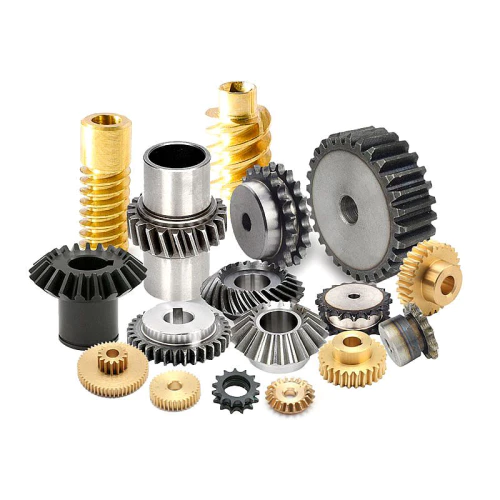
Bevel Gear Applications — Industry by Industry
Few mechanical components appear across such a diverse range of industries as bevel gears. Their ability to transmit torque between intersecting shafts — with high efficiency and in a compact space — makes them indispensable wherever a direction change in power flow is required. Below is a detailed survey of key sectors and the specific machinery in which bevel gears operate.
🚗 Automotive & Transportation
The bevel gear differential — present in virtually every road vehicle since the early 20th century — is the most produced bevel gear application on earth. Spiral bevel and hypoid gear sets in rear axle and transfer case assemblies handle the full drive torque of passenger cars, light commercial vehicles, and heavy trucks. Hypoid gears in particular allow the prop shaft to sit below the differential centreline, reducing floor height in saloons and SUVs. CV-axle final drives and 4WD transfer cases also rely on bevel gear sets for torque split functionality.
✈️ Aerospace & Defence
Aircraft gearboxes driving propellers, helicopter main and tail rotor drives, and accessory gearboxes (driving hydraulic pumps, generators, and fuel controls) all rely on case-hardened, precision-ground spiral bevel gears manufactured to AGMA 13 or higher quality. Military vehicle final drives, tank turret drives, and ship shaft-drive systems also depend on heavy-duty bevel gear assemblies. Material purity, gear quality, and full traceability are non-negotiable requirements in this sector.
🌾 Agriculture & Construction
Tractor PTO gearboxes, header drives on combine harvesters, rotary tiller gearboxes, and mower conditioner drives all incorporate straight or spiral bevel gears to redirect power from the horizontal PTO shaft to vertically-oriented working components. In construction, concrete mixer drive units, paver screeds, and crane slewing rings incorporate bevel gear stages. The harsh dusty environment demands robust sealing and robust materials — typically case-hardened alloy steel with liberal oil bath lubrication.
⛏️ Mining & Heavy Industry
Continuous mining machines, longwall shearers, conveyor drives, and large grinding mills present some of the most demanding bevel gear applications in existence. Gear sets routinely transmit 500 kW to several megawatts of power, often in wet, abrasive, and shock-loaded conditions. Large-module, wide-face bevel gears in ductile iron or high-alloy steel are common. Bevel gear maintenance intervals in mining are carefully managed — unplanned downtime in a production mining environment carries enormous financial consequences.
🍽️ Food & Beverage Processing
Conveyor right-angle drives, mixer gear units, bottling line drives, and bakery equipment all incorporate bevel gears. Stainless steel or food-grade polymer gears are used in direct-contact zones. NSF-approved food-grade lubricants are mandatory. The frequent wash-down cycles in food plants demand IP69K-rated gear units and careful material compatibility — a factor that affects both gear material and housing specification. This sector prioritises hygiene-design compliance (EHEDG guidelines) alongside mechanical performance.
🌊 Marine & Offshore
Marine propulsion systems using V-drive and Z-drive configurations rely on bevel gear stages to redirect engine torque. Outboard and sterndrive units incorporate bevel gear sets in their lower gearcase to change the power direction from vertical to horizontal propeller shaft. Offshore platform equipment — including deck cranes, winches, and ROV thrusters — also uses bevel gears. Salt air, spray, and immersion demand superior corrosion-resistant materials and robust sealing.
🌬️ Energy & Renewables
Wind turbine pitch and yaw drive systems incorporate right-angle bevel gear stages. Hydroelectric turbine governor drives and variable-pitch propeller mechanisms on tidal generators also use precision bevel gears. As renewable energy installations in Australia expand — driven by the targets of state-level clean energy policies — demand for long-life, low-maintenance bevel gear components in energy infrastructure is growing steadily.
🤖 Robotics & Automation
Articulated robot wrist joints, SCARA robot elbow drives, and automated guided vehicle (AGV) steering units rely on compact, high-precision bevel gear stages. The demand for low backlash, high stiffness, and repeatable positioning drives the use of precision-ground or lapped bevel gears in robotic applications. The rapid expansion of warehouse automation and manufacturing robotics in Australia is creating strong new demand in this segment.
Bevel Gear vs Spur Gear — When to Choose Which
The comparison between bevel gears and spur gears comes down primarily to the shaft configuration demanded by the application. Spur gears — the most common gear type — connect parallel shafts and transmit torque with high efficiency and low axial force. They are simpler to manufacture, less expensive, and require less precise alignment than bevel gears. However, they are fundamentally incapable of changing power direction between intersecting shafts.
Bevel gears are the only viable solution when power must be transmitted between shafts that intersect at an angle. No amount of gearbox engineering can substitute for this when the machine geometry demands a directional change. In applications where both parallel and right-angle drive configurations are technically feasible, the designer must weigh cost, space envelope, efficiency, noise, and maintenance accessibility. For most industrial right-angle drives, a right-angle bevel gear unit delivers significantly higher efficiency (96–99%) compared to a worm gear reducer (50–90%), particularly at high gear ratios. This efficiency advantage translates directly to reduced energy consumption and lower operating temperatures over the service life of the machine.
In summary: where shafts are parallel, spur or helical gears are the natural choice. Where shafts intersect, bevel gears are the primary engineered solution — and within the bevel gear family, the specific type (straight, spiral, hypoid, zerol) is then selected based on the performance criteria outlined throughout this guide.
Related Components, Accessories & Complementary Products
A bevel gear set rarely operates in isolation. Understanding the full ecosystem of related components is essential for correct system design, sourcing, and maintenance planning. The following accessories and associated components are commonly specified alongside bevel gears.
- ▸
Tapered Roller Bearings: The standard bearing choice for bevel gear shafts, capable of handling both radial loads and the significant thrust loads generated by spiral and hypoid gears. Correct preloading of tapered roller bearings is critical to contact pattern quality and gear life.
- ▸
Angular Contact Ball Bearings: Used in precision bevel gear assemblies where lighter loads and lower noise are priorities. Common in robotics, aerospace accessory drives, and high-speed machine tools.
- ▸
Gear Housing / Gearbox Castings: Ductile iron or aluminium alloy housings that precisely locate the bevel gear pair at the correct cone distance and mounting distance. Housing rigidity directly influences gear contact and noise.
- ▸
Shaft Seals (Rotary Lip Seals): Prevent lubricant leakage and contamination ingress around rotating shafts. Critical for long-term gear health — dry-running or contaminated-oil conditions dramatically accelerate wear.
- ▸
Shims & Adjusting Nuts: Used to set the correct mounting distance and cone distance during assembly. The contact pattern produced by a bevel gear pair is highly sensitive to these adjustments — they must be set precisely using the manufacturer’s specified contact pattern as a reference.
- ▸
Gear Lubricants (EP90, 80W-90, Synthetic 75W-90): Hypoid and spiral bevel gears require extreme-pressure (EP) lubricants to protect the sliding contact zones between teeth. Synthetic lubricants extend drain intervals and improve performance at temperature extremes.
- ▸
Keyways, Splines & Flanges: Torque transmission from gear bore to shaft is achieved via key-and-keyway, involute spline, or interference fit connections. Correct specification of the connection method is essential to avoid fretting wear or fatigue failure at the shaft-gear interface.
- ▸
Bevel Gear Cutter Tools: Circular face-mill cutters with carbide insert blades used in Gleason-type bevel gear cutting machines. Cutter geometry must be precisely matched to the gear design — incorrect cutter selection produces systematic tooth geometry errors.
- ▸
Vibration Monitoring Sensors: Accelerometers and acoustic emission sensors mounted on bevel gear housings enable condition monitoring, providing early warning of wear, misalignment, or bearing damage before catastrophic failure occurs.
- ▸
Oil Sight Glasses & Drain Plugs: Practical fittings that simplify lubrication maintenance. Magnetic drain plugs collect ferrous wear debris, providing a simple and effective early indicator of gear wear.
Featured Product
Spiral Miter Bevel Gear — Precision Right-Angle Drive
Our spiral miter bevel gear combines the quiet, high-efficiency characteristics of spiral tooth geometry with the 1:1 ratio elegance of a miter configuration. Ideal for high-speed direction changes in food processing, robotics, and automation equipment.
Market Price Comparison — Bevel Gear Cost Guide
Bevel gear pricing varies enormously depending on type, size, material, quality grade, and order quantity. The table below provides indicative AUD price ranges for common configurations sourced in the Australian market. Prices are for gear pairs (one gear + one pinion) unless otherwise noted, and assume moderate quantities (10–50 units) from a reputable industrial supplier.
* All prices are indicative AUD estimates for moderate quantities. Actual pricing depends on exact specifications, order volume, heat treatment requirements, and lead time. Contact Australia Ever-Power at [email protected] for a precise quote.
Custom gear sets — produced to a customer’s drawings or reverse-engineered from a sample — carry a premium of typically 20–50% above standard catalogue pricing due to programming, tooling set-up, and first-article inspection costs. For production volumes above 100 units, the per-unit cost drops substantially and custom production becomes increasingly competitive with standard catalogue parts.
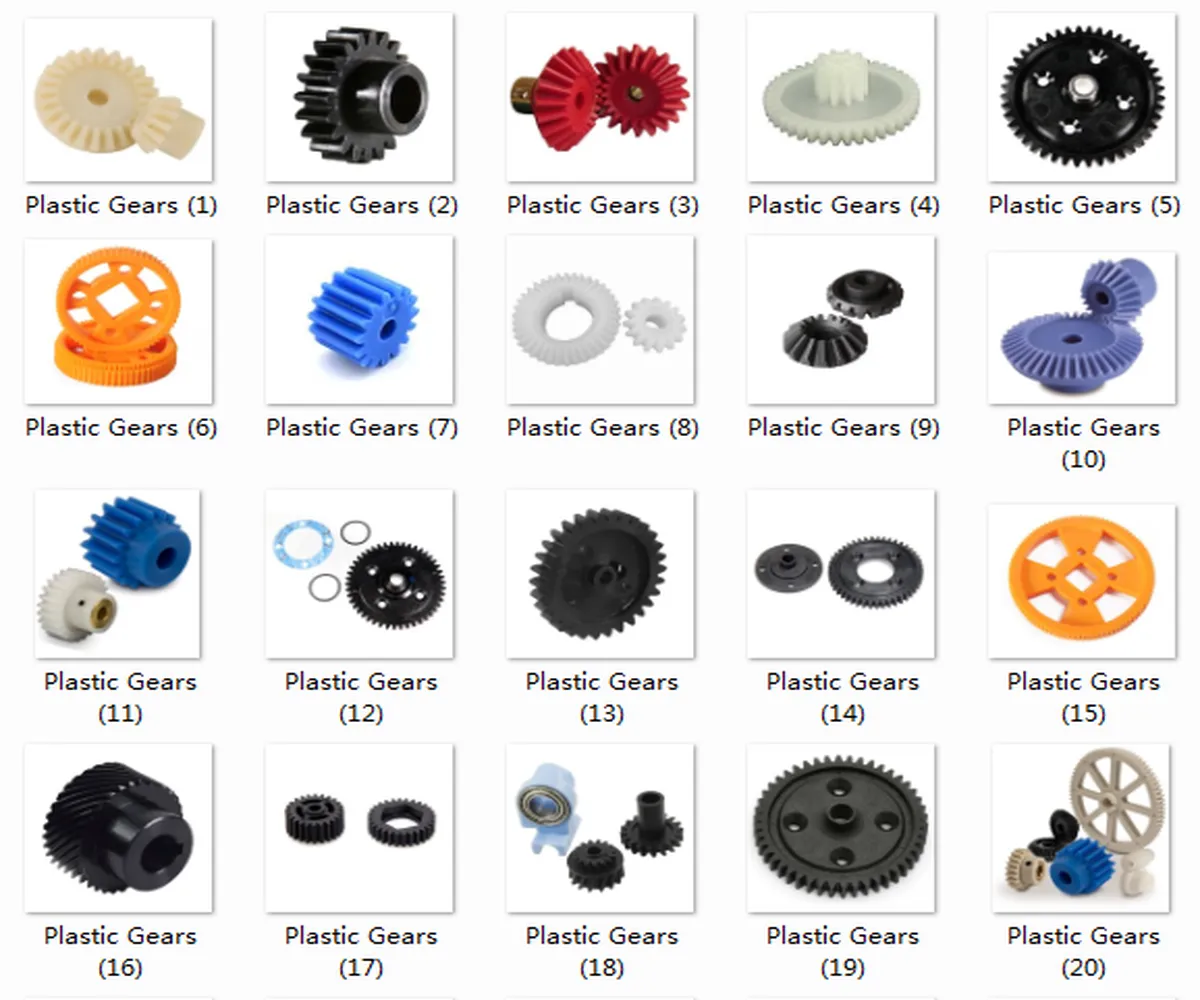
Bevel Gear Replacement Guide & Maintenance Best Practices
Recognising the Signs of Gear Wear
Bevel gear deterioration rarely presents suddenly. More typically, it announces itself through a gradual increase in operating noise — a whine, growl, or knocking that worsens under load and at specific speed ranges. Vibration analysis of the gear housing will typically reveal sidebands around the gear mesh frequency. Inspection of a drained oil sample for metallic particle content (ferrography) provides quantitative evidence of wear rate. Physical inspection of the gear teeth reveals the mode of failure: pitting (fatigue-driven contact damage), spalling (subsurface fatigue), scuffing (adhesive wear from lubrication breakdown), or abrasive scoring (contamination).
Replacement Best Practices
Bevel gear replacement should always be performed in matched pairs — gear and pinion together — even if only one component shows visible damage. The teeth of mated bevel gears wear together and develop a specific contact pattern. Installing a new pinion against a worn ring gear (or vice versa) results in mismatched contact and rapid failure of the new component. When sourcing replacement gears, provide the supplier with the module or diametral pitch, number of teeth, pressure angle, spiral angle, shaft angle, Gleason system designation (if applicable), and mounting dimensions (cone distance, mounting distance). If the gear is a standard catalogue item, the part number simplifies the process; for legacy equipment with no available documentation, a reverse-engineering approach using precision CMM measurement of the worn component is the standard approach.
Scheduled Maintenance Schedule
🔍 Daily / Weekly
Check oil level via sight glass. Listen for unusual noise during operation. Check housing temperature (should not exceed 70°C above ambient). Inspect seal areas for leakage.
📋 Monthly
Drain a small oil sample for visual inspection of colour and particle content. Check mounting fastener torque. Inspect for any abnormal vibration trend. Clean and re-inspect seal condition.
🛠️ Annual / 2,500 Hours
Drain and refill gear oil. Replace shaft seals. Inspect gear tooth surfaces through inspection cover for pitting, scuffing, or wear. Send oil sample to lab for wear metal analysis. Record and trend results.
🔧 Major Overhaul (5,000+ Hours)
Full disassembly, cleaning, and dimensional inspection of all gear and bearing components. Replace bearings regardless of apparent condition. Re-establish contact pattern with marking compound. Reassemble with new seals and correct lubricant fill.
Lubrication Fundamentals
Correct lubrication is the single most impactful factor in bevel gear service life. The lubricant must provide a hydrodynamic or elastohydrodynamic film to separate the tooth surfaces, extreme-pressure additives to protect during metal-to-metal contact events, and rust/corrosion inhibitors for housing protection. For automotive hypoid drives, GL-5 rated gear oils (API GL-5, typically 80W-90 or 75W-140 viscosity grade) are mandatory. For industrial spiral bevel gearboxes, ISO VG 220 or VG 320 mineral or synthetic gear oil is typical. Synthetic gear oils (PAO-based) are preferred for high-speed units or where ambient temperatures span a wide range — as is common in Australian outdoor equipment operating across the climate zones from tropical Queensland to alpine Victoria.
Sustainability, Regulatory Compliance & Global Market Considerations
The global bevel gear market spans a wide geography, with the heaviest concentrations of production and consumption in the United States, Germany, Japan, China, India, South Korea, and Australia. Each of these markets applies its own regulatory and standards framework to mechanical power transmission components, and suppliers active across multiple regions must navigate these frameworks carefully.
Key Standards and Compliance Frameworks
In Australia, mechanical power transmission equipment is subject to the Work Health and Safety (WHS) Act and its associated regulations, which require that machinery using gear drives be designed and maintained to prevent foreseeable mechanical hazard. Bevel gear assemblies in mobile plant must meet the requirements of AS 4024 (Safety of Machinery). In the United States, AGMA standards — particularly AGMA 2003 (Rating of Bevel Gear Teeth) and AGMA 2001 (Fundamental Rating Factors for Spur and Helical Gears) — are the dominant technical reference. European supply chains are governed by DIN/ISO standards (ISO 10300 series for bevel gear rating) and, for geared machinery, the EU Machinery Directive (2006/42/EC), requiring CE marking and Technical File documentation. China’s GB standards increasingly align with ISO standards, facilitating cross-border supply chains. For aerospace applications, AS9100 certification of the supply chain is mandatory in most procurement programmes.
Sustainability Initiatives in Gear Manufacturing
The bevel gear manufacturing industry is actively responding to sustainability pressures from OEM customers, regulatory bodies, and investment frameworks focused on ESG (Environmental, Social, Governance) criteria. Key sustainability themes include: reduction of quenching oil consumption through press-quench and induction-hardening processes, replacement of conventional cutting fluids with near-dry machining (NDM) techniques using minimal quantity lubrication (MQL), recycling of steel swarf and grinding debris, and transition to renewable-energy-powered machining facilities. In Australia, the Federal Government’s Safeguard Mechanism reform and the expansion of the AUS-ISO 14001 adoption in manufacturing are driving industry-wide reductions in the carbon intensity of gear production.
Extended Gear Life as a Sustainability Strategy
From a lifecycle perspective, the most sustainable bevel gear is one that lasts as long as possible. Designing for extended service life — through accurate load analysis, premium material selection, precision manufacturing, correct lubrication, and proactive maintenance — reduces the total material and energy consumed over the operational life of a machine. Australia Ever-Power actively advises customers on design and maintenance practices that extend gear life, reducing total cost of ownership while simultaneously shrinking the environmental footprint of their gear systems.
Customer Success Stories & Application Case Studies
Western Australian Iron Ore Operation
Mining Conveyor Drive — 850 kW
A major iron ore producer in the Pilbara was experiencing repeated bevel gear failures in overland conveyor drives at 18-month intervals — well below the target 5-year service life. Australia Ever-Power conducted a failure analysis revealing that the original gears were specified to an inadequate AGMA quality level for the shock loads present in the application. Replacement gears were specified to AGMA 12 quality, manufactured from AISI 9310 steel with a deeper carburised case depth, and paired with a revised lubrication regime using synthetic EP gear oil. The result was a service life exceeding 56 months on the first replacement set — more than tripling the previous performance.
Result: Service life tripled. Estimated savings: AUD $480,000 in replacement and downtime costs over 5 years.
Queensland Meat Processing Facility
Conveyor Right-Angle Drive — Stainless Steel Gears
A large protein processing operation needed to replace aging carbon-steel bevel gear units on their chilled boning room conveyors. The existing units were corroding in the wash-down environment despite regular repainting, creating a potential food safety contamination risk. Australia Ever-Power supplied stainless-steel (316L) spiral bevel gear pairs housed in electropolished 316L housings with food-grade synthetic lubricant fills. The units achieved full IP69K rating. After two years of daily high-pressure hot-water cleaning, there has been zero evidence of corrosion or lubricant contamination.
Result: Zero corrosion failures over 2 years. Full compliance with HACCP and FSANZ food safety standards achieved.
Victorian Automotive Parts Manufacturer
6-Axis Robot Wrist Gear Assembly
An automotive sub-assembly plant was experiencing positioning drift in its welding robot fleet after approximately 8,000 operating hours. The root cause was identified as backlash increase in the wrist-axis bevel gear sets, caused by wear accelerated by the use of incorrect lubricant viscosity. Australia Ever-Power supplied precision-ground zerol bevel gear replacements (AGMA 12 quality) and recommended a switch to a dedicated robot joint lubricant. Repositioning accuracy was restored to within 0.05 mm and the new gear sets have now surpassed 14,000 operating hours without detectable backlash growth.
Result: Robot positioning restored. Component life increased by over 75%. Line throughput improved by 12%.
Brand Comparison — How Australia Ever-Power Measures Up
Several international suppliers compete in the Australian bevel gear market. The comparison below provides an honest, factual overview of how Australia Ever-Power’s offering compares with typical alternatives across the criteria that matter most to engineering buyers.
Australia Ever-Power’s position in the market is not built on being the absolute cheapest or the most prestigious European brand. Rather, it delivers a combination of competitive pricing, genuine local engineering support, full material traceability, and short Australian lead times that no overseas-only supplier can match. For Australian manufacturers and operators who cannot afford long equipment downtime waiting for imported gear sets, this combination represents exceptional total-cost value.
What Customers Are Saying — Product Reviews
“We’ve been sourcing spiral bevel gear sets from Australia Ever-Power for our conveyor drives for three years now. The quality is consistent, the certification documentation is complete, and the team actually understands the application when you explain it to them. Previous suppliers would just quote the cheapest option — these guys asked the right questions upfront.”
— James Hartley
Maintenance Manager · Bulk Materials Handler, NSW
“Needed a matched pair of straight bevel gears reverse-engineered from a worn sample on an old agricultural tractor attachment. Sent the sample down to Condell Park, had a quote within two days and finished gears in under three weeks. The contact pattern was spot on. Genuinely impressive turnaround for a custom one-off.”
— Sarah Nguyễn
Workshop Owner · Agricultural Machinery Repairs, VIC
“Switched from a European brand to Ever-Power stainless steel mitre gears for our pharmaceutical packaging line. Identical quality at about 35% less cost. Full material certs, electropolished finish, and the dimensional tolerances were actually tighter than the European product. Only reason it’s not five stars is that the first quote took a couple of extra days — but the end result was worth waiting for.”
— Dr. Priya Sharma
Project Engineer · Pharmaceutical Packaging OEM, QLD
“I manage a fleet of automated guided vehicles for a large distribution centre. The wrist bevel gears on our picking robots were a recurring maintenance headache — we were replacing them every eight months. Ever-Power supplied a precision-ground alternative with improved case depth and the right lubricant recommendation. We’re now past fourteen months with no sign of wear. The ROI on the upgrade paid out in under six months.”
— Marcus O’Brien
Robotics & Automation Lead · Distribution Logistics, WA
Bevel Gear Technical FAQ
Engineering support for bevel gear selection, installation, and custom fabrications — Australia Ever-Power.
Ready to Source the Right Bevel Gears?
Whether you need standard catalogue stock, precision custom gear sets, or a full application review — Australia Ever-Power’s team in Condell Park NSW is ready to help. Get in touch for a fast, obligation-free technical consultation.
📍 Condell Park NSW 2200, Australia | Australian Ever-Power Industrial Solutions